
Views: 212 Author: Welons Prefab Houses Publish Time: 2026-08-01 Origin: Site


Content Menu
● Space Capsule House and Shipping Container House Explained
● Guest Appeal and Brand Positioning
● Climate Resistance and Durability
● FAQs
Luxury glamping resorts are moving beyond tents and cabins toward high-design modular units that improve guest experience, speed up deployment, and strengthen return on investment. In this article, I compare the Space Capsule House and the Shipping Container House from an operator's perspective, using current market signals and manufacturer capabilities to help resort developers choose the right format.

The glamping market was valued at USD 3.46 billion in 2024 and is projected to reach USD 7.31 billion by 2032, which shows why premium outdoor stays continue to attract capital. Within that growth, cabins, pods, and luxury modular stays are especially strong because travelers want comfort, privacy, and a stronger visual identity than standard camping can provide. For resort owners, the real question is not only which unit looks better, but which one performs better across guest appeal, cost, climate resistance, logistics, and long-term scalability.
A Space Capsule House is a compact prefabricated unit designed with a futuristic profile, strong insulation, and fast modular installation, making it suitable for premium resort clusters and scenic sites. A Shipping Container House starts from a steel container-inspired structure and is adapted into a hospitality unit with reinforced openings, luxury interiors, and resort-grade finishes. Both can work well in glamping resorts, but they create very different guest experiences and development advantages.
| Factor | Space Capsule House | Shipping Container House |
|---|---|---|
| Visual appeal | Futuristic, premium, highly Instagram-friendly | Industrial-modern, strong, customizable |
| Guest experience | Better for "wow factor" stays and boutique positioning | Better for larger room layouts and familiar comfort |
| Installation | Fast modular assembly; some systems need 3–4 workers and 2–3 days per unit | Fast deployment through flat-pack or modular assembly |
| Transport efficiency | Flat-pack modular systems can reduce shipping volume and save over 50% on transport costs | Standardized transport works well, but full-size units can be heavier and more logistics-sensitive |
| Climate performance | 150mm polyurethane insulation and wide temperature tolerance from -40°C to +55°C | Good structural durability, especially with galvanized steel and upgraded insulation |
| Best use case | High-end pods, scenic signature suites, premium glamping resorts | Family units, larger rooms, multi-unit resort clusters, service buildings |
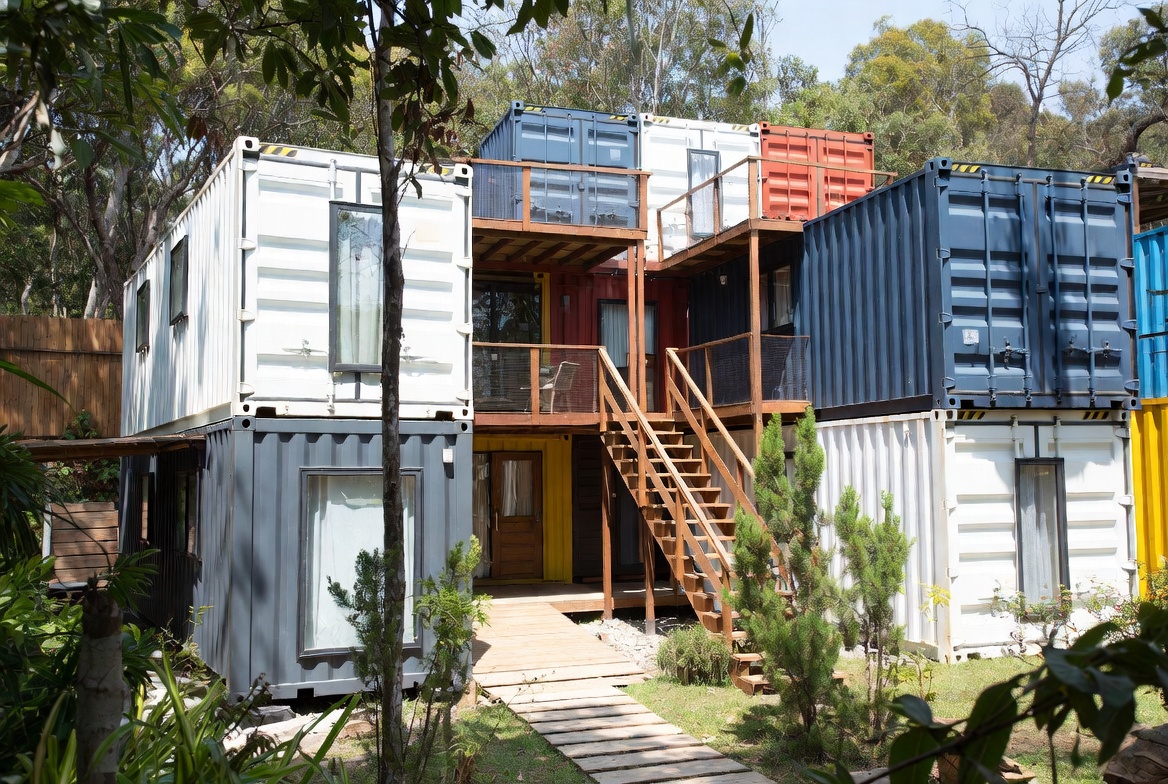
For luxury glamping, first impressions matter. A Space Capsule House usually creates a more distinctive silhouette, which helps a resort stand out in photos, short-form video, and booking platforms. This makes it especially attractive for boutique operators who want to sell exclusivity, novelty, and a premium lifestyle story.
A Shipping Container House often delivers a more grounded and architectural feel. It can still look luxurious, especially with large glazing, timber finishes, and polished interiors, but its visual identity is less "new" than a capsule-style unit. That said, if the resort brand wants a rugged-luxe or eco-industrial style, container units can fit the story very well.
From a project execution perspective, both systems reduce construction time compared with conventional building, but the logistics differ. Modular capsule systems can be delivered in smaller volumes, which improves container loading efficiency and lowers freight pressure on overseas projects. In practical terms, that matters for island resorts, mountain resorts, and remote sites where shipping and handling costs can decide whether a project is viable.
Container houses are also efficient, especially when based on standardized flat-pack systems with bolted steel frames and repeatable assembly processes. Their big advantage is structural familiarity: they are easier for many project teams to understand, engineer, and maintain over time. If a developer is building a larger resort with repeatable room modules, container-based systems can be a highly practical choice.
Luxury glamping resorts often operate in coastal, humid, windy, or high-UV environments, so durability is not optional. Capsule systems with high-grade insulation and weather-resistant steel can perform well in extreme temperatures, and the product data highlights performance from -40°C to +55°C. For resorts targeting cold-weather glamping or hot coastal locations, that range is a strong advantage.
Container structures have an equally strong reputation for load-bearing strength because the original steel frame was designed for harsh marine and transport conditions. When properly modified, galvanized, and insulated, they can handle coastal and tropical environments very effectively. The difference is that capsule houses often emphasize thermal comfort and finish quality first, while container houses emphasize structural robustness and larger architectural flexibility.
Not every luxury glamping site needs the same building system. The right choice depends on the guest profile, location, and brand story.
- Choose a Space Capsule House if your resort targets premium couples, design-driven travelers, scenic-view suites, or social-media-led bookings.
- Choose a Shipping Container House if your resort needs larger practical layouts, stacked configurations, staff housing, or a stronger industrial-luxury identity.
- Choose a hybrid strategy if your master plan includes both signature units and support buildings, such as reception, dining, or back-of-house facilities.
One of the most useful lessons for resort investors is that unit choice should match revenue strategy, not just aesthetics. Capsule houses are often better for high nightly rate, low footprint, signature stays, while container houses may be better for clustered inventory, broader room mixes, and phased expansion. Because the glamping market is still expanding rapidly, the most successful projects usually combine a strong guest story with practical operations and manageable logistics.
Another important insight is production scalability. If a manufacturer can deliver high daily output and offer OEM or wholesale customization, that helps developers reduce lead time and create consistent resort clusters. For large resort rollouts, repeatability matters as much as design quality, because it lowers risk during expansion.
If I were advising a resort investor, I would use this simple decision path:
1. Define the target guest.
2. Confirm the site conditions.
3. Decide the brand style.
4. Compare freight and installation costs.
5. Test the unit mix against expected nightly rates.
6. Select the system that supports both design and operations.
If your resort competes on visual novelty and premium guest experience, the Space Capsule House is often the stronger hero product. If your resort prioritizes room scale, modular consistency, and flexible construction logic, the Shipping Container House is often the safer operational choice. For many projects, the best answer is not one or the other, but a planned mix of both.

For luxury glamping resorts, the Space Capsule House usually wins on visual impact, thermal comfort, and premium guest appeal, while the Shipping Container House often wins on structural familiarity, layout flexibility, and scalable resort planning. If the goal is a standout boutique resort, choose capsule units; if the goal is a practical resort platform with repeatable modules, choose container houses. Welons Prefab can position both options as part of a one-stop modular hospitality solution for developers who want speed, customization, and export-ready production.
For resort developers planning a new glamping project, request a layout recommendation, unit mix suggestion, and quotation based on your land size, target market, and climate conditions.
1. Which is better for luxury glamping resorts, a Space Capsule House or a Shipping Container House?
A Space Capsule House is usually better for premium visual appeal and boutique positioning, while a Shipping Container House is better for larger layouts and scalable resort planning.
2. Which option is faster to install?
Both are fast, but modular capsule systems and flat-pack container systems are designed for rapid assembly compared with conventional construction.
3. Which one performs better in harsh weather?
Both can perform well when properly engineered. Capsule systems highlight wide temperature tolerance and strong insulation, while container houses benefit from steel-frame robustness and marine-grade structural logic.
4. Which option is more suitable for remote resort sites?
Capsule houses can be especially attractive for remote sites because flat-pack delivery can reduce shipping volume and logistics burden. Container houses also work well where transport infrastructure and repeatable assembly are available.
5. Can I use both types in one resort project?
Yes. Many resort developers use capsule units for signature guest rooms and container units for supporting accommodation or service spaces.
6. Are these units suitable for year-round glamping?
Yes, provided the insulation, HVAC, waterproofing, and foundation design are matched to the local climate.
- [Glamping Market Size, Share, Growth, Trends and ...]
- [NOMADE Resort Homes | Luxury Modular Homes & Glamping Tents]
- [Modern Shipping Container Houses for Hotel Resort Use - Wellcamp]
- [Prefabricated Space Capsule House: The Technical Edge for Coastal Investment & Modular Living]


