
Views: 229 Author: Welons Prefab Houses Publish Time: 2026-08-02 Origin: Site


Content Menu
● Why Emergency Housing Matters Now
● Fastest Ways to Deliver Shelter
● Modular Housing as a Crisis Solution
● What Good Emergency Housing Should Include
● How Agencies Can Plan Deployment
● A Practical Purchase Checklist
● FAQ
When homelessness rises after a crisis, the most urgent need is not a permanent building plan but immediate, safe, and dignified shelter. Emergency housing for the homeless must be fast to deploy, practical to manage, and flexible enough to support different climates, budgets, and community needs.
For housing providers, governments, charities, and relief organizations, the challenge is clear: they need a solution that can be installed quickly, scaled in volume, and used as temporary or transitional accommodation without sacrificing comfort or durability. This is where quick-assembly prefab units, flat-pack container homes, and modular shelter systems are becoming increasingly valuable.
Emergency housing is more than a temporary roof. It is often the first step that helps a person move from the street into safety, and then into case management, employment support, or long-term housing placement.
In practice, effective emergency housing should do four things well:
- Provide rapid occupancy.
- Support basic privacy and safety.
- Reduce pressure on overcrowded shelters.
- Create a path toward longer-term stability.
This is why governments and housing agencies continue to invest in crisis accommodation, voucher programs, and short-term shelter systems. The goal is not only to house people quickly, but to do so in a way that is organized, scalable, and resilient.
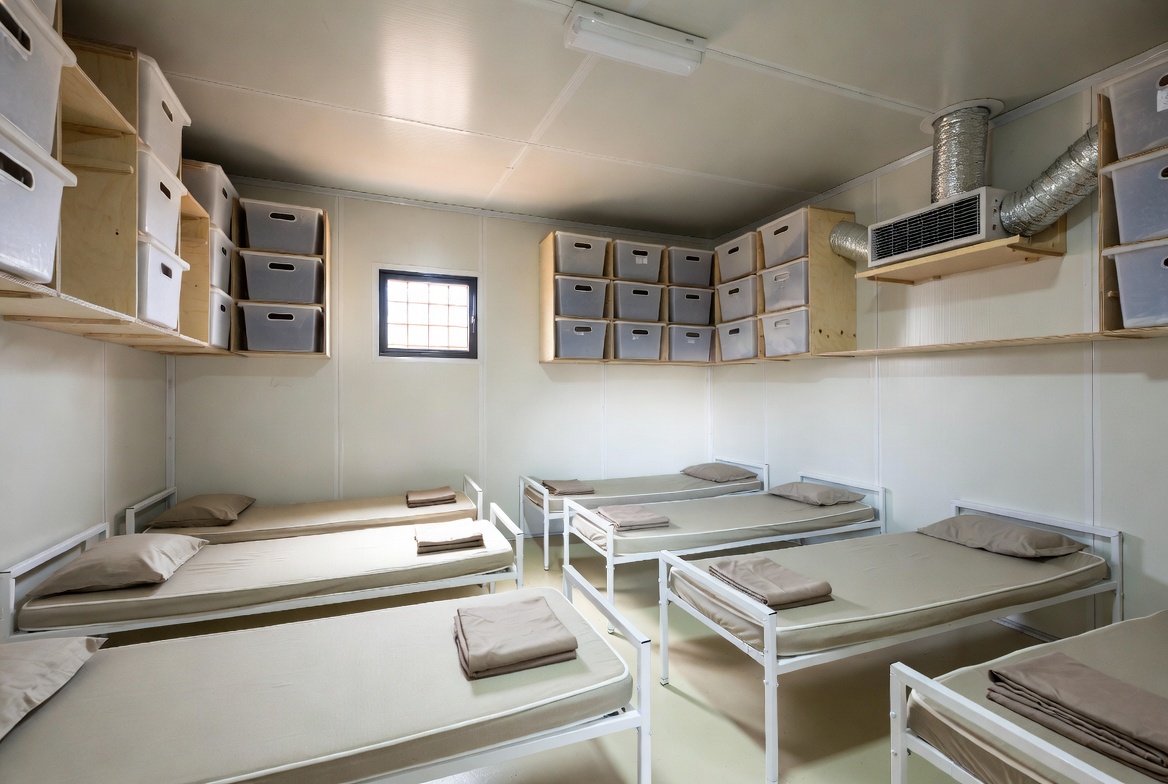
Traditional construction often moves too slowly for crisis response. Emergency situations demand a housing format that can be prefabricated off-site, transported efficiently, and assembled in a short time on location. Modular units are especially effective because they can be configured as dormitories, family shelters, staff housing, treatment rooms, or temporary community facilities.
A strong emergency housing system usually includes:
1. Pre-engineered modular units for faster deployment.
2. Standardized layouts for sleeping, washing, and shared living.
3. Simple utility connections for electricity, water, and drainage.
4. Expandable capacity for seasonal demand or disaster spikes.
For organizations managing large-scale response, this operational simplicity matters just as much as the shelter itself. The less time spent on construction complexity, the faster people move indoors.
Modular housing is not limited to long-term residential use. It can also support urgent housing needs because it is built around controlled factory production and repeatable quality standards. GS Housing's flat-pack container systems, for example, are positioned for rapid-deployment use cases such as emergency shelters, worker accommodation, and temporary communities.
For homeless housing programs, modular systems are especially useful because they can be adapted to different scenarios:
- Single-person emergency shelters.
- Family units with privacy partitions.
- Women and children protection housing.
- Transitional housing villages.
- Support service centers and intake offices.
That flexibility helps agencies avoid a one-size-fits-all model. It also makes it easier to match the housing type to the resident group, local regulations, and available land.
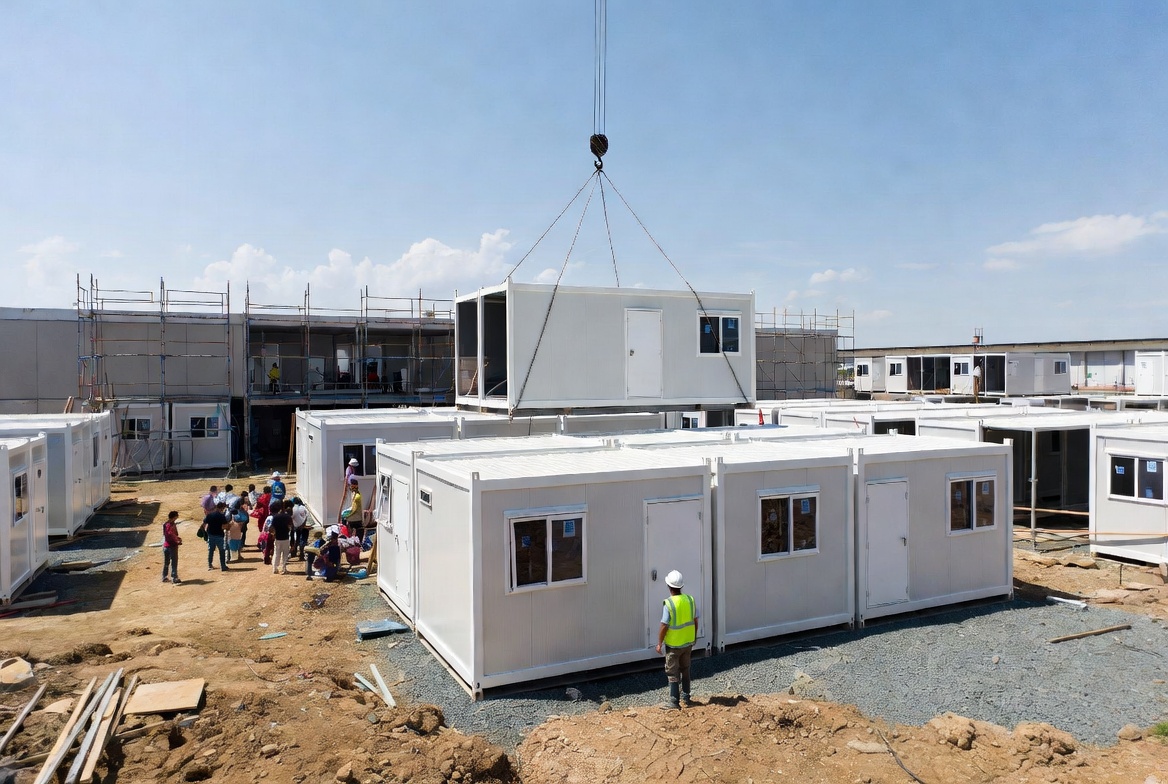
A high-performing shelter unit needs more than walls and a bed. It should support daily life in a way that feels safe, stable, and humane. For that reason, a well-designed quick-assembly unit should prioritize insulation, ventilation, fire safety, durability, and functional interior planning.
Key features to look for include:
- Thermal insulation for hot or cold climates.
- Strong steel structure for transport and repeated use.
- Efficient layout design to maximize usable space.
- Easy maintenance for long operating cycles.
- Customizable configurations for different end users.
One practical benchmark is deployment speed. Some modular housing systems can be assembled at a high daily output, making them suitable for urgent resettlement or emergency relief projects. That speed matters when a city, nonprofit, or employer needs to house many people in days rather than months.
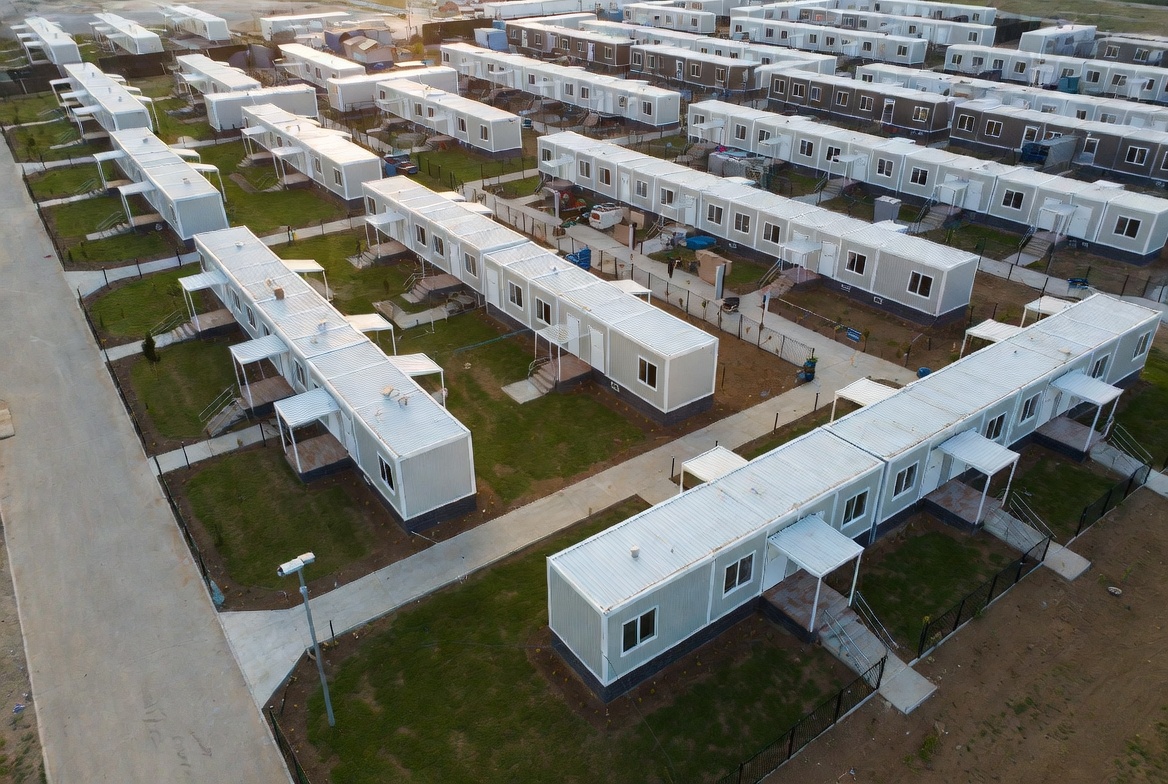
Emergency housing works best when the response plan is ready before the crisis peaks. Agencies should define land use, occupancy patterns, utility access, and resident flow before procurement begins. That preparation reduces delays and helps the housing perform smoothly after installation.
A practical deployment workflow looks like this:
1. Assess the population size and unit mix needed.
2. Choose a modular layout based on the target users.
3. Confirm transport and site access.
4. Prepare utility connections and foundation conditions.
5. Install, inspect, and commission the units.
6. Add support services such as sanitation, security, and intake coordination.
This approach is especially effective for temporary communities, disaster response housing, and large-scale homeless support programs. It also helps public and private operators maintain better control over cost, timeline, and occupancy quality.
The strongest market trend in emergency housing is the move toward scalable prefabrication. Buyers are no longer looking only for emergency beds; they want housing that can also function as offices, service rooms, dorms, clinics, classrooms, or storage space after the initial crisis period.
That multi-use mindset is important because funding and land availability are often limited. A shelter that can later become a workforce camp, relocation unit, or service hub creates far greater long-term value than a single-purpose temporary structure.
This is where experienced manufacturers have an edge. With 11 years of production experience and high daily capacity, a supplier can support volume projects, OEM needs, and custom configurations without forcing the client to start from zero every time. That combination of speed and adaptability is becoming a major competitive advantage in emergency housing procurement.
When selecting a modular housing supplier, organizations should evaluate both product quality and project support. The best supplier is not only a factory; it is a solution partner that understands emergency timelines, transportation limits, and the realities of large-scale installation.
Useful questions include:
- Can the supplier support custom layouts?
- Do they offer OEM or wholesale supply?
- Is the unit suitable for different climate conditions?
- Can they support rapid production for urgent demand?
- Do they provide one-stop service from design to delivery?
For homeless housing projects, this matters because speed without reliability creates risk. A supplier should be able to balance delivery speed with structural stability, safety, and consistent quality control.
Welons Prefab is positioned for projects that need more than standard prefab products. With 11 years of experience, a production capacity of 300 units per day, and solutions for offices, dormitories, canteens, meeting rooms, warehouses, exhibition halls, and industrial facilities, the company can support both humanitarian and commercial modular needs.
That broad application range is useful in emergency housing because the same manufacturing logic can support shelter units, administration offices, medical support rooms, and storage spaces within one integrated site plan. For governments, NGOs, and industrial buyers, this means better consistency across the entire project.
Before ordering emergency housing units, decision-makers should review these points:
- Project purpose: relief shelter, transitional housing, or mixed-use village.
- Occupancy target: single residents, families, or staff housing.
- Site conditions: climate, wind exposure, transport access, drainage.
- Required services: power, sanitation, ventilation, heating, cooling.
- Future use: temporary relief only or reuse after the crisis.
- Procurement model: direct purchase, OEM, or bulk wholesale.
This checklist helps reduce design mistakes and keeps the project aligned with real operating needs.
Emergency housing for the homeless must be fast, reliable, and human-centered. Modular construction offers a practical way to deliver that balance because it combines rapid production, flexible configuration, and scalable deployment.
For organizations planning crisis shelter, transitional housing, or large temporary accommodation projects, the best next step is to work with a manufacturer that can turn urgent needs into a workable housing system. Welons Prefab is built for that kind of challenge.
1. What is emergency housing for the homeless?
Emergency housing is short-term accommodation designed to give people immediate safety when they have no stable place to stay. It may include shelters, temporary units, or transitional housing programs.
2. Why are modular units suitable for emergency housing?
Modular units can be produced quickly, transported efficiently, and assembled faster than conventional buildings. They are also easier to scale for large relief programs.
3. Can prefab housing be used beyond emergency shelter?
Yes. The same units can often be repurposed as offices, dormitories, canteens, clinics, or storage spaces after the emergency phase.
4. What should a good temporary shelter include?
It should include insulation, safe structure, practical layout, utility access, and easy maintenance. These features improve comfort and long-term usability.
5. How do agencies choose the right housing supplier?
They should look for production capacity, customization options, project support, climate suitability, and the ability to deliver at scale.
- [Emergency Housing for the Homeless | Where to Get Help Fast]


