
Views: 272 Author: Welons Prefab Houses Publish Time: 2026-07-29 Origin: Site


Content Menu
● Why Container Homes Fit the Philippines
● How the Philippine Climate Shapes Design
● Cost Factors That Influence Budget
● Better Design for Daily Comfort
● Resilience and Safety Considerations
● Why Manufactured Solutions Matter
● User Cases Worth Considering
● FAQ
>> 1. Are container homes suitable for the Philippines?
>> 2. How long does a container home take to build?
>> 3. Can container homes be used for business projects?
>> 4. Are container homes customizable?
>> 5. What should I check before buying one?
>> 6. Can container homes be expanded later?
The Philippines is becoming a strong market for container homes because buyers want housing that is faster to deliver, more adaptable, and better suited to tropical conditions. For projects ranging from private residences to staff housing and rental units, a well-engineered container home can offer a flexible and durable solution.
Container homes are gaining attention in the Philippines because they can be planned around heat, humidity, heavy rain, and coastal exposure. These are not minor considerations; they directly affect comfort, maintenance, and long-term structural performance. A properly designed container home can address all of these factors with insulation, ventilation, waterproofing, and corrosion-resistant finishes.
From a buyer's perspective, the main appeal is clear: speed, predictability, and flexibility. Off-site fabrication reduces on-site disruption and helps projects move faster than many traditional builds. It also makes it easier to standardize quality before the structure reaches the site.
For developers, business owners, and families, container homes are especially useful when the project must be practical from day one. They can be used as compact homes, guest units, office spaces, dormitories, staff quarters, resort cabins, or temporary housing.

Any container house for the Philippines must be designed for tropical weather, not just assembled as a steel box with windows. Strong sun, high humidity, typhoon exposure, and frequent rain all influence material selection and layout. A project that ignores these realities may look modern at first, but it will be costly to maintain later.
Good design begins with airflow. Cross-ventilation, shaded openings, roof insulation, and moisture control are essential. In coastal areas, corrosion protection is equally important because salt air can reduce service life if finishes are not selected carefully.
The best container homes in this market often include:
- Elevated foundations for flood-prone areas.
- Thermal insulation for hot climates.
- Protective roof systems to reduce heat gain.
- Durable exterior coatings for rain and salt exposure.
- Smart window placement for natural light and airflow.
These details matter because they transform a basic container into a usable home that performs well in daily life.
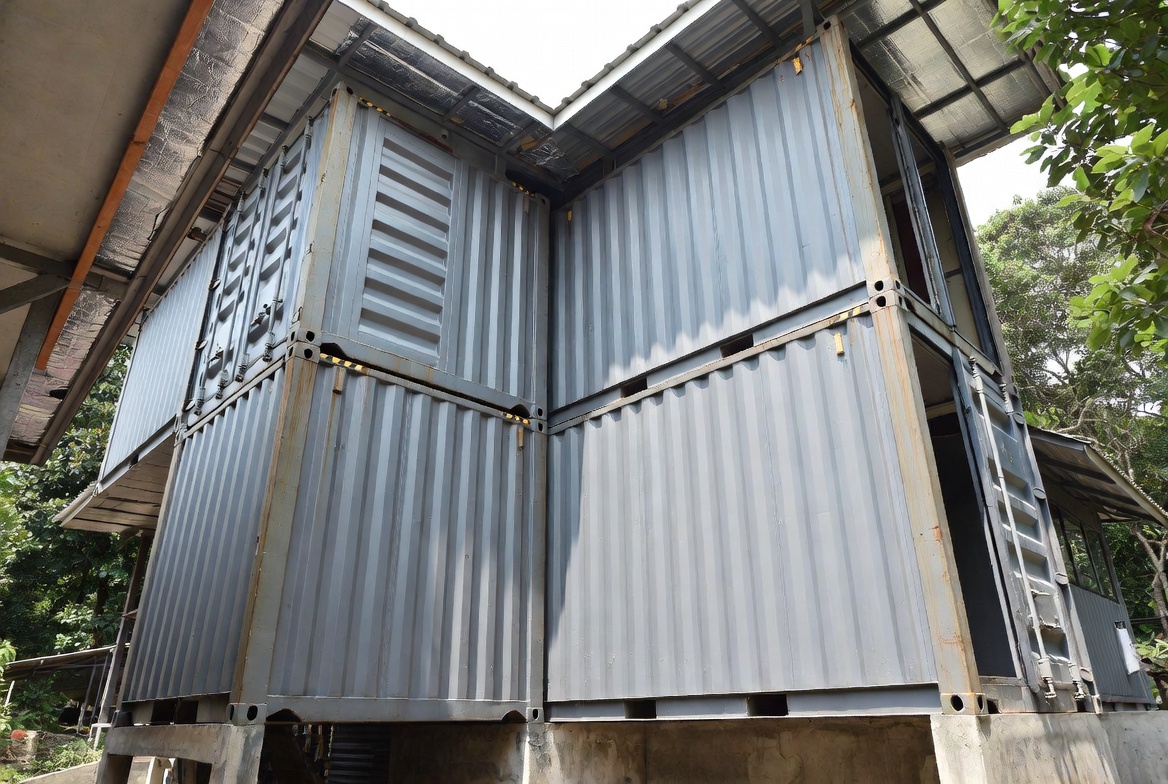
Container homes are often discussed as residences, but their usefulness goes far beyond that. In the Philippines, they are increasingly suitable for projects that need speed, mobility, and efficient use of land. This is one reason they appeal to companies, property owners, and project developers.
Typical applications include:
- Office spaces for project sites or remote teams.
- Dormitories for workers or students.
- Dining areas and canteens for factories or construction sites.
- Meeting rooms for temporary or expanding businesses.
- Storage and warehouse units for industrial use.
- Showrooms for product display or sales activity.
- Industrial support buildings for factories and workshops.
This versatility is one of the strongest selling points. A container-based structure can start as a temporary unit and later be expanded into a more permanent setup if business needs grow.
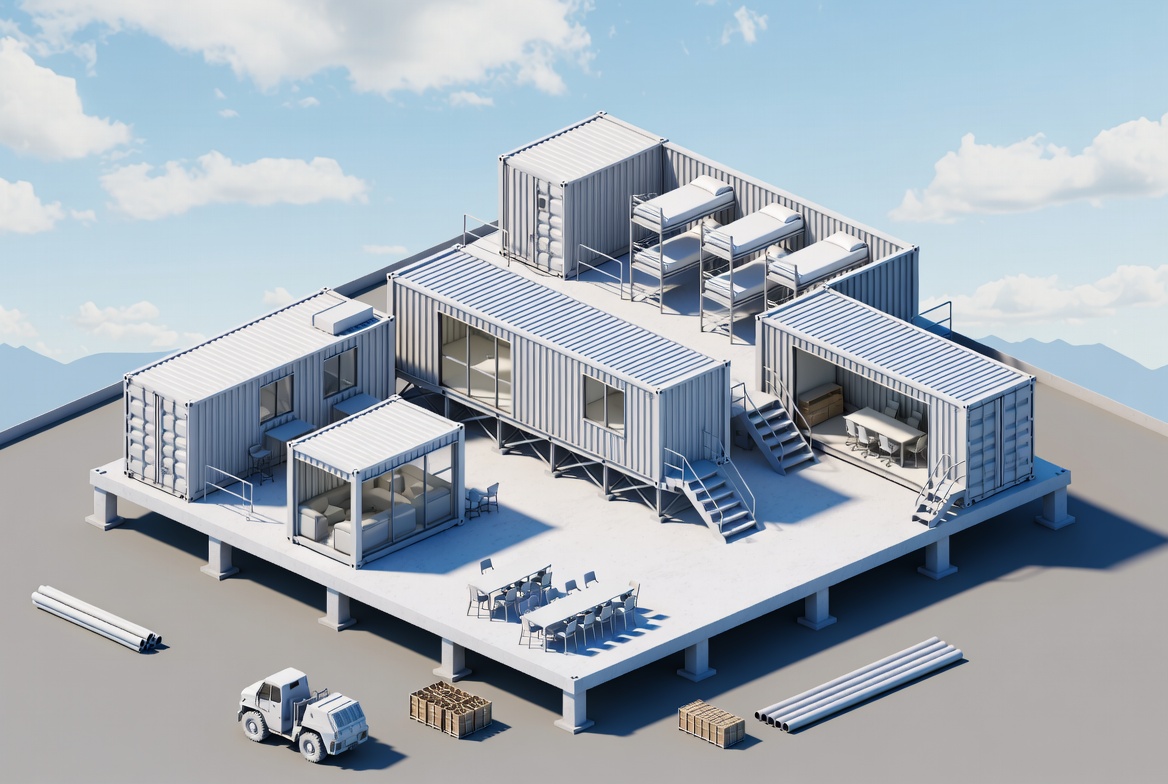
Many buyers compare container homes only by price, but that is not enough. The real value comes from how well the structure is engineered, delivered, and supported over time. In the Philippine market, the most important factors are structural reliability, climate resistance, layout efficiency, and after-sales support.
Before making a decision, buyers should check:
1. Steel quality and structural strength. The frame must be suitable for long-term use.
2. Insulation system. This affects comfort, energy use, and indoor temperature.
3. Anti-corrosion treatment. Essential for humid and coastal environments.
4. Foundation plan. Stability depends on correct site preparation.
5. Custom layout options. The space should match the intended use.
6. Delivery and installation capability. A good product still fails if logistics are poor.
7. Maintenance requirements. Lower maintenance usually means better lifecycle value.
A reliable supplier should be able to explain these points clearly and provide project guidance, not just a price quote.
Container home cost in the Philippines depends on more than size alone. Two houses with the same footprint can have very different budgets depending on finish level, insulation, transport distance, utility connections, and foundation work.
The main cost drivers usually include:
- Number of container units used.
- Interior specification and finish quality.
- Custom doors, windows, and façade treatment.
- Site access and transportation distance.
- Foundation type and ground conditions.
- Electrical, plumbing, and drainage integration.
- Climate-related upgrades such as insulation and corrosion protection.
A practical way to think about cost is to divide it into three layers: structure, site works, and interior completion. This makes it easier to compare quotations and avoids the common mistake of choosing the lowest upfront price while ignoring hidden expenses.
The strongest container home designs are not just efficient; they are comfortable to live in every day. In a tropical country, this means the interior must feel cool, breathable, and easy to maintain. The layout should also make the space feel larger than its actual footprint.
Useful design choices include:
- Open-plan living areas.
- Large windows with shading.
- Light-colored interior surfaces.
- Built-in storage.
- Moisture-resistant flooring and wall finishes.
- Covered outdoor areas for added living space.
For residential projects, small details make a major difference. For example, placing the kitchen and bathroom in a way that supports plumbing efficiency can reduce construction complexity. Similarly, using shaded entry zones can improve both function and comfort.
In the Philippines, resilience should be treated as a core design requirement, not an optional upgrade. Typhoons, heavy rainfall, earthquakes, and flooding all create technical demands that the structure must meet. That is why container homes should be engineered by professionals who understand local site conditions.
A safer project usually includes:
- Proper anchoring to the foundation.
- Structural reinforcement where needed.
- Water management around the site.
- Roof design that helps with runoff.
- Corrosion protection in exposed locations.
This is especially important for long-term use. A unit that is easy to install is not automatically suitable for repeated storm seasons unless the technical details are correct.
One of the biggest advantages of prefab container housing is process control. Major parts of the build can be completed in a factory environment before delivery, which improves quality consistency and reduces delays caused by weather or labor shortages. For buyers in the Philippines, that can make a major difference.
This approach also helps with planning. Since production is more predictable, it is easier to coordinate budgets, site work, and occupancy timelines. For commercial users, this can directly reduce downtime and allow operations to start sooner.
There is another benefit that is often overlooked: scalability. A project can begin with one unit and expand later. That makes container housing useful for growing businesses, phased developments, and families who want room to adapt over time.
Welons Prefab brings 11 years of manufacturing experience to modular buildings and prefab container houses. With a daily output of 300 units, the company is positioned to support global buyers who need consistent quality, flexible customization, and efficient delivery. That production capability is especially valuable for clients managing multiple units or time-sensitive projects.
The company's solutions are suitable for office spaces, dormitories, canteens, meeting rooms, warehouses, showrooms, and industrial buildings. This range matters because buyers often need more than one product type within the same project. A single supplier who can coordinate these needs helps reduce complexity.
Welons Prefab also supports OEM, wholesale, and one-stop solutions, which is important for distributors, contractors, and project developers. For clients who need repeatable specifications and scalable supply, that combination is a practical advantage.
A successful container home project usually follows a clear sequence. This helps avoid delays, budget overruns, and design mismatches.
1. Define the use case.
2. Confirm site conditions.
3. Select the structure type and layout.
4. Review climate-related requirements.
5. Finalize finishes and utility integration.
6. Confirm transport and installation needs.
7. Prepare for future expansion if needed.
This process is simple, but each step affects the final result. Buyers who clarify their goals early usually get better layouts, better pricing clarity, and fewer technical surprises.
To understand where container homes work best, it helps to think in practical scenarios. A small family may need a compact residential unit with a shaded porch and two bedrooms. A construction company may need multiple dormitory units with shared facilities. A retailer may prefer a showroom with a clean exterior and fast setup. Each use case requires a different floor plan, but the same structural logic can be adapted across them.
This adaptability is one reason container homes continue to gain momentum. They are not a one-size-fits-all product. They are a format that can be shaped around different operational needs.
Yes. When properly designed for heat, humidity, rainfall, and corrosion resistance, they can work well in Philippine conditions.
The timeline depends on project size and customization, but prefabrication typically shortens overall delivery compared with many on-site builds.
Yes. They are widely used for offices, dormitories, canteens, warehouses, showrooms, and industrial support spaces.
Yes. Layout, size, finishes, windows, doors, and exterior appearance can all be adjusted to match project needs.
Focus on steel quality, insulation, corrosion protection, foundation planning, and the supplier's ability to manage delivery and installation.
Yes. Many projects are designed with future expansion in mind, which makes them suitable for phased investment.
1. [Karmod: Container Homes in the Philippines]
2. [Karmod: Container Homes in Thailand]
3. [HIG Housing: Container Houses in the Philippines]
4. [Business Wire: Philippines Prefabricated Construction Industry Intelligence Databook]
5. [Verified Market Research: Philippines Prefabricated Buildings Market]
6. [Pinoy Builders: Important Things to Know Before Building a Container Home]
7. [Money Box House: Important Things to Know Before Building Container Houses in the Philippines]
8. [Wellcamp: Can a Foreigner Buy Container House in Philippines]


