
Views: 259 Author: Welons Prefab Houses Publish Time: 2026-07-26 Origin: Site


Content Menu
● Why Container Homes Fit Guyana's Needs
● What Makes Container Homes Different
● Climate Performance in Guyana
● Cost Factors Buyers Should Know
● How to Choose the Right Specification
● Why Factory-Built Quality Matters
● Why Welons Prefab Is a Strong Partner
● FAQ
>> 1. Are container homes suitable for Guyana's climate?
>> 2. How long does it take to build a container home?
>> 3. Can container homes be used for business projects?
>> 4. What affects the price of a container home?
>> 5. Do container homes need special maintenance?
Guyana is entering a new housing phase, and container homes in Guyana are becoming a serious option for families, developers, and businesses that need fast, durable, and cost-aware space solutions. For buyers exploring modern housing, prefab container homes offer speed, flexibility, and strong performance in tropical conditions when they are designed correctly.
Guyana's housing demand is rising, while government plans continue to push large-scale home delivery across multiple regions. That makes construction speed, predictable cost, and scalable design especially valuable for both public and private projects. Container homes answer those needs because they can be planned, fabricated, shipped, and installed far faster than conventional buildings.
They are also practical for users who need more than just residential units. In Guyana, modular units can support offices, dormitories, canteens, meeting rooms, warehouses, showrooms, and light industrial facilities, which makes them useful for contractors, mining projects, logistics teams, and commercial operators. This flexibility is one reason container-based construction has moved beyond temporary use and into long-term planning.

Container homes are not simply shipping containers placed on a plot. A quality container home is a prefabricated steel structure that is modified with insulation, openings, wiring, plumbing, ventilation, flooring, and interior finishes to suit local use and climate requirements. The real value comes from controlled factory production, which improves consistency and reduces on-site delays.
For buyers, the biggest advantages are easy to understand:
- Fast delivery, because major components are built off-site.
- Cost control, because labor waste and schedule overruns are reduced.
- Design flexibility, because layouts can be expanded or combined.
- Mobility, because units can be relocated or reused.
- Business value, because the same system can serve residential or commercial needs.
A well-designed container home is more than affordable housing. It is a flexible construction system that supports growth.
Guyana's tropical climate makes material selection and thermal design extremely important. The country experiences high humidity, heavy rainfall, and warm temperatures throughout the year, with annual rainfall often ranging from roughly 1,500 mm to 3,500 mm depending on location. In this environment, the wrong building specification can lead to condensation, corrosion, mold, and uncomfortable indoor temperatures.
That is why container homes in Guyana should include moisture protection, anti-corrosion coatings, roof drainage, wall insulation, and cross-ventilation strategies. Elevated foundations, shaded openings, and reflective roofing can improve long-term comfort and reduce energy use. For coastal and inland projects alike, climate adaptation is not optional; it is a core design requirement.
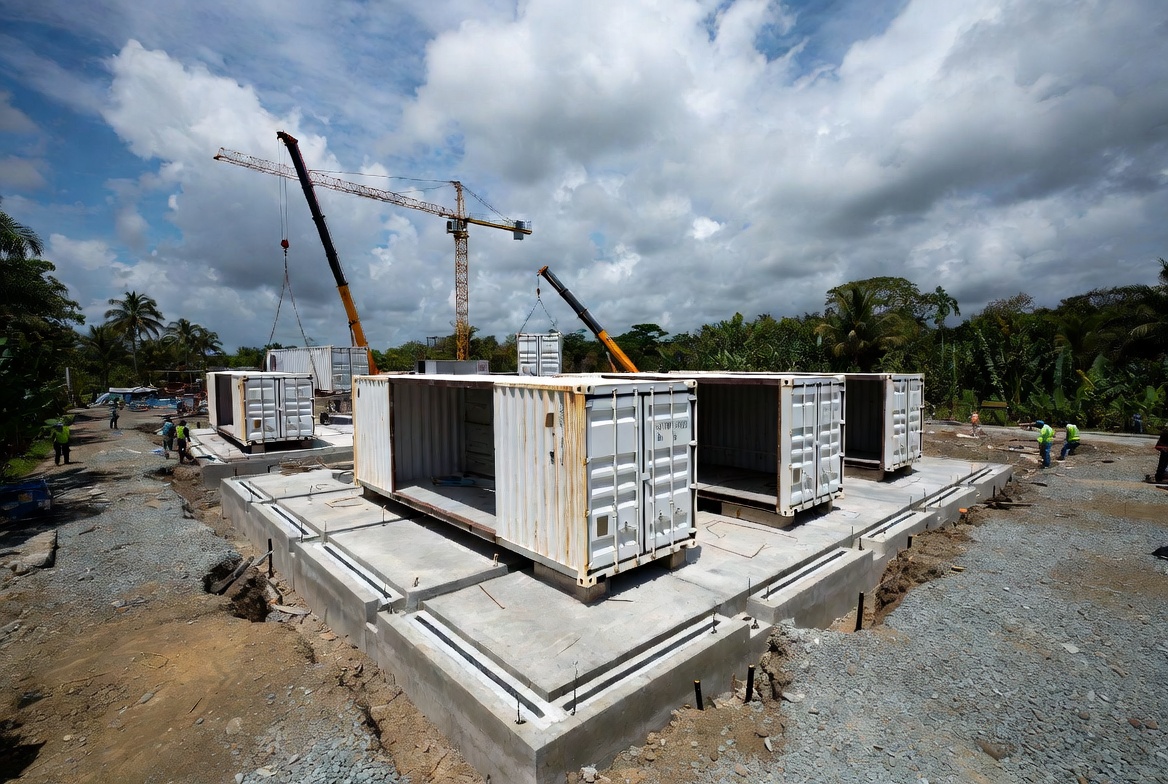
The original article gives a useful starting point, but buyers need more than a single price range to make a decision. The final cost of a container home depends on size, number of units, insulation grade, custom interiors, transport distance, foundation type, and utility integration. A basic one-unit solution will cost far less than a multi-room family home or a commercial compound with bathrooms, kitchens, and office partitions.
The following table can help buyers understand the price drivers more clearly:
| Cost Factor | Impact on Budget | Buyer Note |
|---|---|---|
| Unit size | High | Larger layouts require more steel, insulation, and finishes. |
| Interior customization | High | Kitchens, bathrooms, and partitions increase cost. |
| Climate upgrades | Medium to High | Humidity and heat protection matter in Guyana. |
| Transport and logistics | Medium | Remote sites can increase delivery cost. |
| Foundation and site prep | Medium | Ground condition affects installation complexity. |
| Utilities | Medium to High | Electrical, plumbing, and solar-ready systems add value. |
For budget planning, the smartest approach is to compare initial price and lifecycle value together. A cheaper unit that fails in humid conditions can become more expensive over time than a properly engineered system.
One reason container homes are gaining traction is that the same modular logic can solve many site challenges. In Guyana, businesses and institutions can use container-based units in ways that go far beyond family housing. This broad utility increases ROI and makes planning simpler for projects that need fast expansion.
Common applications include:
- Site offices for construction and infrastructure projects.
- Worker dormitories for mining, energy, and remote industrial sites.
- Canteens and kitchens for teams that operate on fixed schedules.
- Meeting rooms and training spaces for project coordination.
- Warehouses and storage units for tools, parts, and supplies.
- Showrooms or sales offices for commercial display and customer service.
This is especially important in fast-developing markets, because one building system can solve several operational problems at once.
Not every container home is suitable for Guyana. Buyers should evaluate the structure based on climate, purpose, and expected service life. A compact residential unit has different requirements from a dormitory, a retail space, or an industrial office.
Before ordering, check these points:
1. Steel thickness and structure strength for long-term durability.
2. Insulation type to manage heat and humidity.
3. Roof design to handle heavy rain.
4. Ventilation plan to reduce condensation and improve comfort.
5. Window and door placement for daylight and airflow.
6. Bathroom and plumbing layout if the unit will be lived in full-time.
7. Surface protection for corrosion resistance.
8. Transport plan for island, coastal, or inland delivery routes.
These details determine whether the project feels temporary or truly permanent. For end users, the difference is significant.
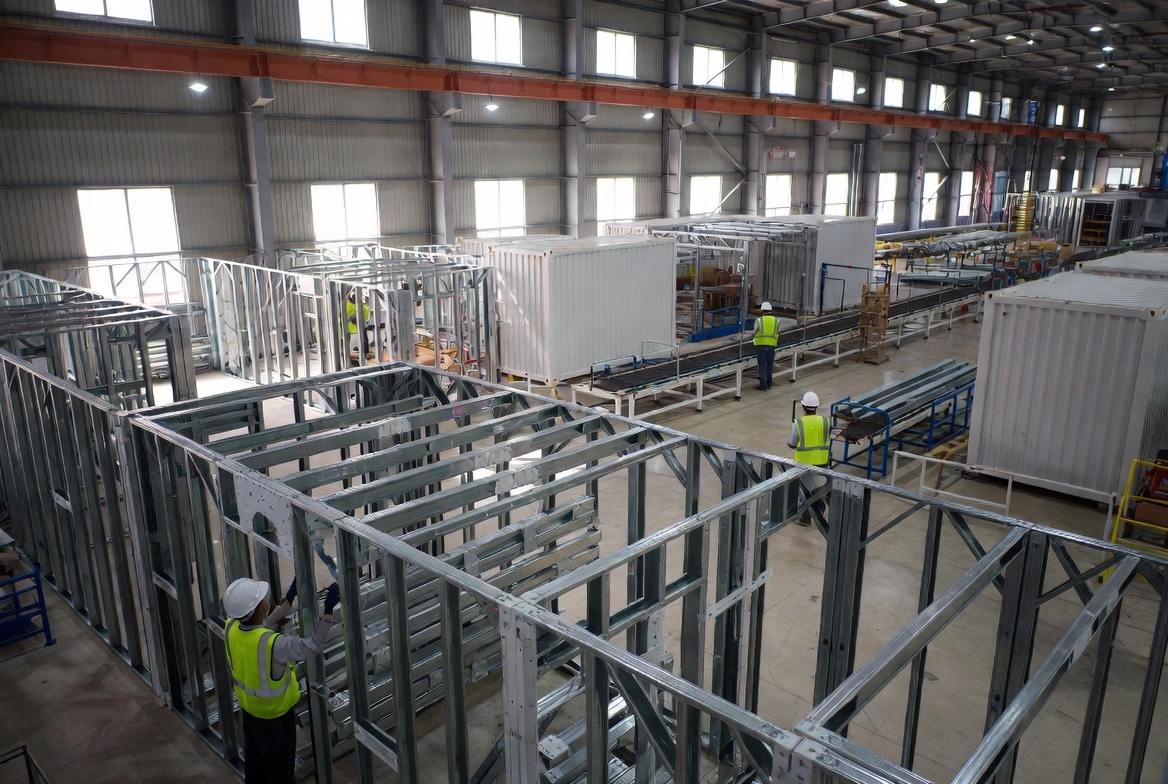
A strong container home depends on precision. When units are built in a controlled factory environment, the manufacturer can standardize welding, cutting, insulation, finishing, and quality checks. That creates more predictable results than a fully site-built approach, especially in regions where weather can interrupt outdoor construction.
For international buyers, this also simplifies procurement. The manufacturer can prepare technical drawings, confirm dimensions, pre-install key systems, and reduce the number of surprises during delivery and assembly. In practical terms, that means lower project risk and faster occupancy.
To avoid costly mistakes, buyers in Guyana should treat container home procurement as a structured process rather than a one-time purchase. The best projects usually follow a clear sequence.
1. Define the use case: housing, office, dormitory, storage, or mixed use.
2. Confirm site conditions: access, soil, drainage, and local weather exposure.
3. Choose unit size and layout: single unit, multi-unit, or expandable system.
4. Select insulation and finish level: standard, upgraded, or premium.
5. Review transport and installation requirements.
6. Confirm technical drawings before production.
7. Ask for after-sales support and replacement-part policy.
This process helps buyers compare options on more than price alone. It also makes the project easier to manage from planning to delivery.
Welons Prefab brings 11 years of manufacturing experience and a production capacity of 300 units per day, which supports fast project delivery for global customers. Our solutions cover prefab container houses, modular buildings, and one-stop customization for residential, commercial, and industrial use. For buyers who need OEM, wholesale, or tailored project supply, that kind of scale matters because it improves lead-time control and supply reliability.
Our products are designed for offices, dormitories, canteens, meeting rooms, warehouses, showrooms, and industrial facilities. In markets like Guyana, where climate resilience and delivery efficiency are both important, a manufacturer with stable production and flexible configuration options can reduce project friction from the start. That is why a direct factory partnership is often better than buying through multiple intermediaries.
If you are planning a housing or business project in Guyana, container homes deserve serious consideration. They are faster to deploy, easier to customize, and well suited to humid, rainy, tropical conditions when properly engineered. More importantly, they can support both residential and commercial needs with the same modular logic.
For organizations that need scalable housing, site offices, or multipurpose buildings, prefab container construction offers a practical path forward. The key is choosing a manufacturer that understands climate, structure, logistics, and long-term usability.
Request a custom layout, technical specification, and quotation from Welons Prefab to match your Guyana project with the right modular solution.
Yes. With proper insulation, ventilation, corrosion protection, and roof drainage, container homes can perform well in Guyana's hot, humid, and rainy conditions.
Most prefab container homes can be completed much faster than traditional construction because major parts are manufactured off-site and assembled quickly on location.
Yes. They are widely used for offices, dormitories, canteens, meeting rooms, warehouses, and showrooms, which makes them ideal for commercial and industrial sites.
Size, customization, insulation, transport, foundation work, and utility setup all affect the final price. A simple one-unit layout will cost far less than a fully finished multi-room project.
They need regular checks for corrosion, seals, drainage, and insulation performance. With proper maintenance, they can remain durable and functional for years.
- [Karmod: Container Homes in Guyana]
- [Karmod: Prefab Modular Homes Guyana]
- [Guyana Government Budget 2026 Housing Expansion]
- [Guyana Weather and Climate Guide]
- [Prefab Shipping Container Houses: Rules and Regulations]


