
Views: 261 Author: Welons Prefab Houses Publish Time: 2026-08-31 Origin: Site


Content Menu
● Why Source Tent Housing From China?
● Top 10 Tent Housing Manufacturers
>> 1. Welons Prefab — Flexible Modular and Tent Housing Projects
>> Why Buyers May Shortlist Welons Prefab
>> 2. Liri Architecture Technology — Large-Span Structural Tent Systems
>> 3. Jumei Tent Technology — Glamping and Hospitality Tents
>> 4. Stars Glamping Tent — Resort-Focused Tent Accommodation
>> 5. Changzhou Huanyu Tent & House — Multi-Category Tent Sourcing
>> 6. Chuangcai Tents — Longstanding Luxury Shade and Tent Production
>> 7. Mobi Garden — Outdoor Brand and Volume OEM Capability
>> 8. Zhejiang Nature Outdoor — Scaled Outdoor Manufacturing
>> 9. Yangzhou Jinquan — Export-Oriented OEM/ODM Production
>> 10. Shandong Taipeng Intelligent Home — Tent and Canvas Product Experience
● Material and Engineering Requirements
>> Fabric and Membrane Materials
>> Environmental and Compliance Documents
>> 1. The “Same Thickness” Trap
>> 2. Decorative Drawings Without Structural Data
>> 3. Misleading “Waterproof” Claims
>> 4. Incomplete Quotation Scope
>> 5. Certificate Copying or Expired Certificates
● Buyer’s Verification Process
>> Step 1: Create a Technical Brief
>> Step 2: Compare Like for Like
>> Step 3: Order a Sample or Pilot Unit
>> Step 4: Conduct a Factory Audit
>> Step 5: Use Pre-Shipment Inspection
>> 1. How can I verify whether a manufacturer’s ISO certificate is still valid?
>> 2. Does an ISO 9001 certificate prove that a tent house meets local building rules?
>> 3. What MOQ should I expect for customized tent housing?
>> 4. Can a Chinese tent housing manufacturer provide CE or RoHS documents?
>> 5. What should I inspect before paying the final balance?
China is one of the world’s most important sourcing bases for tent housing, glamping accommodation, modular shelters, and prefabricated building systems. For international buyers, the country combines tent-fabric supply chains, aluminum and steel fabrication, insulation materials, container-house production, furniture sourcing, and export logistics in a way that few other markets can match.
The opportunity is substantial, but supplier selection requires discipline. A “tent house” can range from a lightweight seasonal safari tent to a semi-permanent insulated lodge, a steel-frame membrane building, or a hybrid structure combining a prefab container module with a tensile-fabric extension. These products differ sharply in structural design, fire performance, insulation, transport volume, installation complexity, and project life cycle.
China’s prefabricated construction ecosystem continues to expand. Government policy has promoted factory-made construction components, with prefabricated buildings targeted to account for more than 30% of new construction in China. Official information also reported that new prefabricated building projects under construction reached 672 million square metres in 2024.
For procurement managers, resort developers, distributors, camp operators, engineering contractors, and brand owners, the practical question is not simply “Who sells the lowest-priced tent house?” It is: Which manufacturer can reliably deliver the specified materials, documentation, customization level, production schedule, and after-sales support for the intended project?
This guide introduces ten China-based manufacturers and supplier types worth evaluating. The order is not a universal performance ranking. Instead, it reflects different purchasing needs: flexible OEM projects, modular building integration, large-span engineering tents, glamping accommodation, branded outdoor products, and export-oriented production.

A dependable tent housing supplier should be assessed as a project partner—not only as a quotation source. The companies below were selected based on publicly available company information, product focus, export orientation, manufacturing background, and relevance to professional tent housing procurement.
The evaluation framework includes the following factors:
Manufacturing relevance: Whether the supplier produces glamping tents, safari tents, membrane structures, prefab tent houses, modular buildings, or related engineered accommodation systems.
Production capability: Factory scale, production capacity, supply-chain integration, ability to manage repeat orders, and ability to support project-based delivery.
Customization depth: Availability of OEM, ODM, size modification, layout changes, branding, interior integration, and climate-specific adaptations.
Material and engineering transparency: Ability to specify frame grades, membrane or fabric composition, insulation layers, hardware, flooring, fasteners, and weather-performance criteria.
Quality-control capability: Incoming-material inspection, in-process checks, welding and coating inspection, fabric cutting accuracy, pre-shipment inspection, and packaging control.
Compliance readiness: Availability of certifications, test reports, declarations, factory-management documents, or third-party inspection cooperation where applicable.
Export support: Experience with container loading plans, packing lists, HS-code classification, installation instructions, spare-parts planning, and destination-market documentation.
Communication efficiency: Responsiveness during technical clarification, quotation accuracy, drawing revision control, and support for buyers without large in-house engineering teams.
An important clarification: certifications are product- and market-specific. A factory’s ISO 9001 certificate does not automatically certify every tent house model, and a CE-related document may apply only to a defined product scope. Buyers should request the certificate number, issuing body, validity date, scope, test standard, and the exact product model covered before treating a document as evidence of compliance.
China’s advantages are not limited to lower labor cost. For serious buyers, the stronger benefit is the density of specialized supply chains.
Guangdong is particularly relevant for modular buildings, aluminum fabrication, membrane structures, hardware, furniture, lighting, and export logistics. Zhejiang and Jiangsu have strong clusters for outdoor products, tent manufacturing, technical textiles, and mass-production export programs. Shandong and Hebei also support steel structures, industrial shelters, and outdoor leisure products.
The result is a sourcing environment where buyers can often combine multiple elements in one project:
Aluminum-alloy or galvanized-steel structural frames
PVC-coated polyester fabrics and architectural membranes
Canvas safari-tent covers and inner linings
Sandwich panels, insulation boards, and modular wall systems
Raised platforms, WPC decking, flooring, doors, windows, and bathrooms
Electrical, lighting, HVAC, furniture, and solar-ready options
Flat-pack or containerized shipment plans
On-site installation manuals, drawings, and remote support
China’s broader prefabricated-building export category also has meaningful international scale. The General Administration of Customs of the People’s Republic of China tracks prefabricated buildings within HS Chapter 94 trade data, under the furniture, lighting, and prefabricated-buildings category.
However, China is not one uniform market. A supplier specializing in camping tents may not be suitable for a resort project requiring insulated walls, elevated platforms, electrical integration, drainage planning, and 10-year structural performance. Likewise, a container-house factory may have limited capability in fabric tensioning, membrane detailing, or safari-tent aesthetics.
The right supplier depends on the intended use case.
| Manufacturer | Location | Main Strength | Suitable Buyer Type | Publicly Reported Capacity / Scale | MOQ Approach | Documentation Focus |
|---|---|---|---|---|---|---|
| Welons Prefab | Guangzhou, Guangdong | Modular buildings, prefab container houses, frame tent integration | Distributors, SMEs, project buyers, OEM customers | Reported daily capacity of 300 units | Project-based and customization-oriented | Product drawings, project configuration, export support |
| Liri Architecture Technology | Zhuhai, Guangdong | Large-span aluminum-PVC structures | Events, warehouses, sports, industrial applications | Long-established architectural tent specialist | Usually project-based | Structural and engineering documentation |
| Jumei Tent Technology | Guangzhou, Guangdong | Glamping tents and commercial tent structures | Resorts, campsites, hospitality projects | Established in 2018 | Project-dependent | Tent-system and accommodation planning |
| Stars Glamping Tent | Guangzhou, Guangdong | Luxury glamping tents and resort tent systems | Boutique resorts and eco-lodges | 20,000 m² base; up to 500 tents/month reported | Project-based | CE-related documentation for specified scope |
| Changzhou Huanyu Tent & House | Changzhou, Jiangsu | Hotel tents, safari tents, domes, event tents | Resort and event buyers | Multi-category tent supplier | Varies by design | Product-specific confirmation required |
| Chuangcai Tents | Foshan, Guangdong | Luxury shades, tents, and outdoor structures | Commercial shading and tent projects | Founded in 1996 | Project-based | Factory and product scope verification |
| Mobi Garden | Quzhou, Zhejiang | Branded outdoor gear and tent manufacturing | Outdoor brands and retail programs | Founded in 2003 | Generally volume-oriented | Brand/OEM program documentation |
| Zhejiang Nature Outdoor | Taizhou, Zhejiang | Outdoor and air-supported products | Large retail and outdoor brands | Public-company-scale outdoor manufacturing | Better suited to volume programs | OEM/ODM and product testing |
| Yangzhou Jinquan | Yangzhou, Jiangsu | Export-oriented outdoor equipment | International brands and large-volume buyers | Publicly listed manufacturer | Usually volume-oriented | OEM/ODM production controls |
| Shandong Taipeng Intelligent Home | Tai’an, Shandong | Tents, canvas products, outdoor leisure goods | Buyers needing textile and tent sourcing | Founded in 2002 | Product- and order-dependent | Export-oriented product documents |
Note: Capacity, MOQ, certification, and technical-scope requirements must be reconfirmed directly with each supplier during RFQ. Publicly stated figures can change and may refer to specific product lines rather than all tent housing systems.
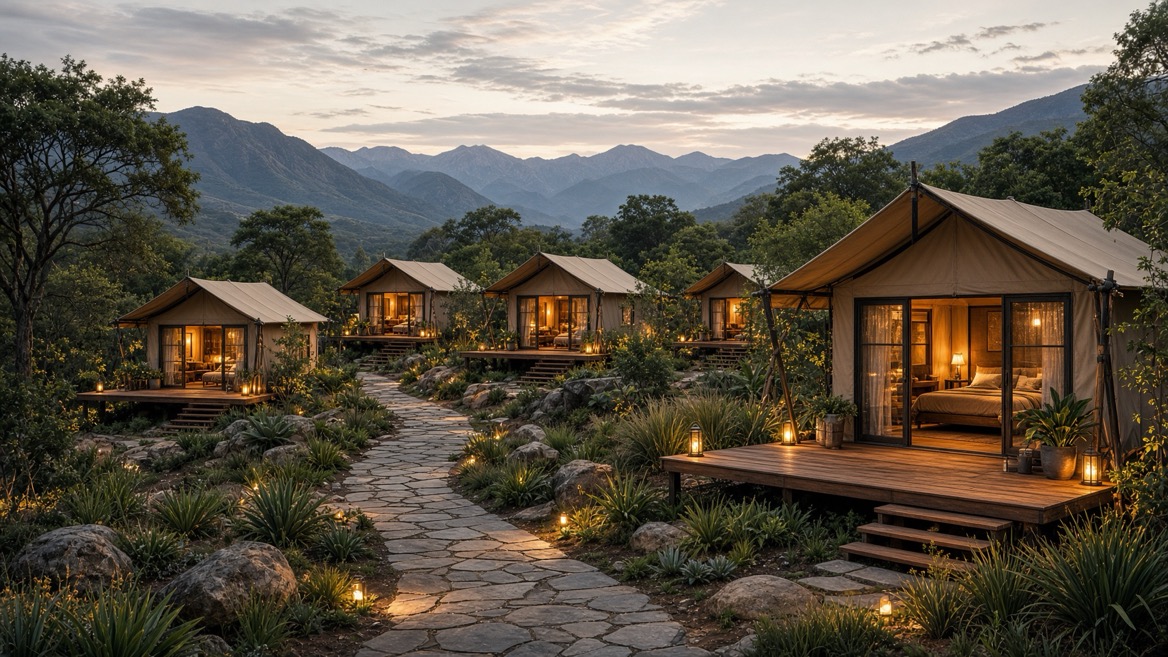
Welons Prefab is a Guangzhou-based manufacturer and one-stop solution provider focused on modular buildings and prefab container houses. Its product scope includes prefab frame tent solutions, large frame prefab tents, container houses, special-shaped prefab houses, and related modular accommodation systems.
For buyers looking beyond a simple canvas tent, Welons Prefab is relevant because it can serve projects that combine temporary or semi-permanent tent housing with modular building elements. Typical applications may include:
Site offices and temporary project accommodation
Worker dormitories and camp facilities
Dining halls, meeting rooms, exhibition spaces, and warehouses
Resort reception areas and service buildings
Hybrid tent-and-container accommodation concepts
Industrial facilities requiring fast deployment
Distributor and private-label modular housing programs
The company positions itself around flexible construction solutions and has stated a daily production capacity of 300 units. For overseas buyers, this type of capacity can be valuable when a project needs repeatable modular units rather than one-off handmade tents.
Welons Prefab is particularly suitable for small and medium-sized brands, importers, contractors, and project buyers who need responsive engineering communication and deeper OEM customization than a catalog-only supplier can provide.
Its practical advantages include:
Flexible configuration: Buyers can discuss dimensions, internal layout, wall panels, flooring, doors, windows, sanitation modules, electrical provisions, and exterior finishes.
OEM and private-label support: Appropriate for buyers who need branded projects, tailored layouts, or product differentiation rather than standard retail tents.
Hybrid product capability: Useful when the project requires a tent-like appearance combined with insulated modular rooms, steel frames, container modules, or prefabricated service areas.
Communication efficiency: Important for buyers who require drawing confirmation, bill-of-material clarification, packing plans, and technical revisions before mass production.
One-stop project orientation: Better aligned with offices, accommodation camps, meeting facilities, canteens, warehouses, and display spaces than a supplier focused only on recreational camping tents.
A buyer should ask Welons Prefab for the exact specification package for the selected model: frame section and coating, fabric or panel type, insulation value, wind and snow design assumptions, floor loading, fire-performance documentation, electrical scope, packing list, and installation drawing.
Liri Architecture Technology, previously known as Zhuhai Liri Tent Co., Ltd., was established in 1997 and specializes in aluminum-PVC clear-span structure tents and rental-related architectural tent solutions.
Liri is more relevant for commercial and engineering applications than for small camping tents. Its core strengths are likely to appeal to buyers needing large clear spans, temporary event buildings, warehouses, sports venues, industrial storage, aircraft hangar-type structures, or high-volume temporary facilities.
Its strengths include:
Long operating history in the architectural tent sector
Large-span aluminum frame structures
Commercial, sports, event, logistics, and warehouse applications
Potential suitability for projects requiring quick construction and demountable structures
More engineering-oriented product positioning than consumer camping tents
Buyers should clarify whether a proposed structure is intended for short-term deployment, semi-permanent use, or long-term fixed installation. Local building permits, wind loads, snow loads, anchoring methods, fire requirements, and drainage requirements should all be reviewed before purchase.
Guangzhou Jumei Tent Technology is a glamping tent and commercial tent supplier that describes itself as established in 2018 and associated with China’s Yards Group. Its stated focus includes industrial and commercial tents, glamping tent products, and prefabricated structures.
Jumei may be a practical candidate for buyers developing:
Eco-resorts
Boutique campsites
Safari accommodation
Luxury tented hotels
Destination-event spaces
Seasonal hospitality expansions
For hospitality buyers, the central evaluation should go beyond exterior design. Request details on fabric weight, fabric coating, waterproof rating, UV resistance, frame composition, floor connection, ventilation, thermal layers, insect protection, bathroom integration, and maintenance requirements.
A visually attractive tent can become expensive if it does not perform in high humidity, high wind, heavy rain, coastal salt exposure, or large day-night temperature swings.
Stars Glamping Tent is a Guangzhou-based supplier focused on luxury glamping tents and modular hospitality systems. Public reporting describes the company as founded in 2018, with a 20,000 m² manufacturing base, a 4,000 m² simulation exhibition hall, and reported production capacity of up to 500 tents per month.
Its portfolio reportedly includes villa tents, octagonal tents, shell designs, dome-related products, safari-style lodging, and other resort-oriented structures. A public report also states that a CE attestation of conformity issued by UDEM covered specified glamping dome, safari lodge, and prefabricated house product families under EN ISO 5912:2020.
This supplier may be a good fit for:
Resort developers seeking distinctive accommodation units
Luxury camping operators
Mountain, desert, beach, or forest lodge projects
Developers that prioritize visual differentiation and guest experience
Buyers requiring a full tented-room concept instead of a basic shelter
Before using any CE document for a local approval process, buyers should verify whether the exact model, size, frame configuration, and intended use match the document’s scope. A certificate for one tent model does not necessarily cover a modified larger model, a different fabric, or a location-specific wind-load requirement.
Changzhou Huanyu Tent & House Manufacturing is listed as a producer of wedding tents, marquee tents, glamping tents, hotel tents, safari tents, tipi tents, canopy tents, and dome tents.
This broad offering may be helpful for buyers comparing several types of tent housing within one procurement program. For example, a resort developer might require safari tents for accommodation, a marquee for dining, and canopy structures for public areas.
Potential strengths include:
Diverse tent categories
Relevance to both hospitality and event applications
Ability to compare conventional tent forms with newer dome or lodge concepts
Possible suitability for mixed-use projects
The main procurement risk with multi-category suppliers is assuming that every category has the same engineering maturity. Ask for photos and references from projects similar to yours, as well as technical drawings and actual material samples for the chosen model.
Foshan City Shunde District Chuangcai Tents was founded in 1996 and is described as an early manufacturer of tents and luxury shade products, with experience in design, development, and manufacturing.
Foshan sits within the Pearl River Delta manufacturing ecosystem, where buyers can access nearby suppliers for aluminum profiles, hardware, furniture, lighting, glazing, outdoor fixtures, and customized project components.
Chuangcai may be suitable for buyers requiring:
Outdoor commercial shading
Event tents and premium canopies
Semi-permanent shade structures
Customized tent frames and covers
Hospitality or leisure-site exterior structures
For architectural shade products, buyers should request a complete specification for the membrane material, UV stabilization, fabric tensile strength, weld or seam method, frame coating, drainage design, and expected service life.
Mobi Garden, founded in 2003, is a recognized Chinese outdoor sports gear company with extensive tent and camping-product experience.
Although it may not be the first choice for heavy modular tent housing or container-integrated structures, it is relevant for buyers who need outdoor tent products at brand, retail, or distributor scale. It can be considered when the project is closer to premium camping, mobile lodging, or outdoor recreation equipment.
Mobi Garden may suit:
Outdoor brands seeking OEM or co-developed products
Retail and e-commerce distributors
Camping equipment importers
Buyers that need established mass-production capability
Programs requiring quality control across a broader outdoor product range
For commercial accommodation projects, buyers should first verify whether the company can support larger semi-permanent tent structures, platform systems, insulation packages, and building-level documentation.
Zhejiang Nature Outdoor is identified in public reporting as a publicly listed manufacturer specializing in inflatable and air-supported outdoor products, with OEM/ODM production for international outdoor brands.
This supplier category is most relevant for buyers needing reliable manufacturing systems, export discipline, product development, and scalable production in outdoor equipment. Depending on the product line, it may suit inflatable shelters, outdoor structures, camping products, and brand programs.
Potential buyer advantages include:
Experience with international outdoor-product supply chains
OEM/ODM capability for branded programs
Greater suitability for standardized, higher-volume orders
Potential strength in testing, sampling, and factory process control
A buyer sourcing tent housing should distinguish between inflatable consumer products and engineered accommodation structures. The correct supplier must understand long-term anchoring, site drainage, humidity management, floor systems, and guest safety—not merely fabric assembly.
Yangzhou Jinquan Travel Products is publicly described as a listed manufacturer producing tents and outdoor equipment on an OEM/ODM basis for international brand customers.
Yangzhou and nearby Jiangsu manufacturing areas are important sourcing locations for outdoor products, technical textiles, metal frames, bags, camping equipment, and export packaging. Yangzhou Jinquan may be suitable for buyers requiring structured supplier processes, branded product development, and production at scale.
This supplier type is most relevant for:
International outdoor brands
Large-volume tent and accessory programs
Retail buyers requiring consistent quality control
Buyers seeking OEM/ODM capability with export-market experience
Procurement teams with established product specifications
For tent housing buyers, the key question is whether the factory’s relevant product line includes semi-permanent lodges, large family tents, glamping systems, or only conventional consumer camping products.
Shandong Taipeng Intelligent Home is described as founded in 2002 and focused on outdoor leisure furniture, multifunctional tents, tarps, canvas products, and home textiles.
This type of supplier may be useful when sourcing textile-heavy structures, canvas components, tent covers, tarpaulins, liners, or outdoor leisure products. It can be considered for buyers that require a combination of tent materials and associated soft goods.
Potential sourcing uses include:
Canvas-style tent covers
Tarps and rainfly components
Basic outdoor tent systems
Textile accessories and liners
Private-label leisure-product programs
For luxury tent housing, buyers should confirm whether the supplier can provide structural engineering, platform integration, waterproof seam standards, insulation systems, and hospitality-grade finishes—or whether a separate modular building partner is required.
A tent house should be specified like a building system, especially if it will host paying guests, workers, school groups, or long-term occupants.
The structural frame usually determines safety, service life, transport cost, and installation speed.
Common options include:
Aluminum alloy: Often used in clear-span event structures and lightweight glamping frames. It resists corrosion and reduces transport weight, but buyers should ask for alloy grade, profile dimensions, wall thickness, and connection details.
Galvanized steel: Common for safari tents, prefab tent houses, modular platforms, and more permanent structures. Buyers should ask whether the steel is hot-dip galvanized, pre-galvanized, powder-coated, or painted.
Painted steel: Can be economical but needs more careful corrosion control, especially in tropical, coastal, humid, or high-rainfall locations.
Stainless steel hardware: Useful in coastal or high-humidity environments, but not always necessary for every component. The grade should be specified, especially for exposed fasteners.
Tent housing fabrics are not interchangeable. The quotation should clearly identify the exact material.
Common material categories include:
PVC-coated polyester fabric
PVDF-coated architectural membrane
Acrylic-coated canvas
Poly-cotton canvas
Oxford polyester fabrics
Blackout inner liners
Insulated sandwich wall panels for hybrid tent houses
Important specification questions:
What is the fabric weight in gsm?
What is the base cloth composition?
What is the coating type and thickness?
Is the material flame-retardant, and to which standard?
What is the waterproof performance?
What is the UV-resistance requirement?
How are seams welded, stitched, taped, or reinforced?
What is the expected service life under the target climate?
Can the fabric color vary between production batches?
Are repair patches and spare fabric included?
For semi-permanent tent housing, buyers should pay particular attention to condensation control. A waterproof outer layer alone is not enough. In humid or cold environments, the design may need a breathable liner, air gap, insulation, roof ventilation, vapor management, and controlled airflow.
Buyers sometimes ask for “CE” or “RoHS” without identifying the applicable product category. This can create confusion.
CE marking applies to products within the scope of specific EU legislation. Whether it applies to a tent house depends on its components, destination-market requirements, and relevant directives or standards.
RoHS is typically relevant to electrical and electronic equipment, not to an entire tent structure. It may matter for lighting, electrical controls, or appliances supplied with the unit.
ISO 9001 concerns quality-management systems; it does not prove that a particular product meets a structural or fire-performance requirement.
Fire certificates must be checked against the actual fabric, coating, product model, and test method.
Material test reports can help verify steel grade, galvanizing, fabric properties, coating, and other inputs.
If the project is in the EU, United Kingdom, United States, Australia, Middle East, or another regulated market, consult a local engineer, code consultant, or authority having jurisdiction before finalizing the design.
The tent housing market has a recurring problem: two quotations may look similar on paper, while the delivered products differ substantially in material quality and long-term performance.
A supplier may quote “50 mm insulation” or “0.8 mm PVC fabric,” but the actual performance can vary because of density, coating formulation, base fabric, insulation core, panel construction, and measurement tolerance.
How to avoid it:
Request a detailed bill of materials with material brand, grade, thickness, gsm, density, coating, and permissible tolerances. Ask for physical samples before production. Do not approve production from a product image alone.
Some suppliers provide polished renderings but cannot provide frame sections, connection methods, anchoring details, or location-specific wind and snow assumptions.
How to avoid it:
Require a technical drawing package before deposit payment. It should show plan layout, elevation, frame member dimensions, connection details, anchoring, door and window positions, floor build-up, packing dimensions, and installation sequence.
Almost every tent supplier claims that its tent is waterproof. The real issue is not only the fabric; it is the roof pitch, seam construction, door overlap, wall-to-floor connection, drainage, flashing, fabric tension, and site preparation.
How to avoid it:
Ask the supplier to explain how water is managed at roof seams, eaves, entrances, side walls, platform interfaces, and around windows. Require rain-test videos or third-party inspection during a sample build if the project is large.
A low quotation may exclude the platform, flooring, interior liner, insulation, anchors, bathroom module, electrical system, air-conditioning support, transport packaging, or installation tools.
How to avoid it:
Use a scope matrix that separates “included,” “optional,” and “excluded” items. Confirm Incoterms, packing method, loading plan, spare parts, installation tools, and the number of workers recommended for assembly.
This is one of the most important risks in overseas sourcing. A supplier may send a certificate belonging to an affiliate, an old factory name, another product model, or an expired management system.
How to avoid it:
Verify the issuing body’s website, certificate number, company legal name, factory address, scope, expiration date, and product coverage. If the certification body cannot confirm the record, treat the document as unverified.
A frequently overlooked issue is container utilization versus on-site labor cost.
Many buyers focus heavily on ex-factory price and choose the supplier that offers the lowest unit cost. But tent housing projects can become expensive if components are poorly packed, panels are oversized for container loading, frames require too many separate parts, or installation instructions are unclear.
A lower-priced tent house may require more containers, more local lifting equipment, more installation labor, more missing-part replacements, and more site rework. For remote resorts, islands, mining camps, or mountain locations, those costs can exceed the initial price difference.
Before signing a purchase order, request:
A container-loading plan for 20GP, 40GP, and 40HQ options
Gross and net weight per unit
Number of packages per unit
Largest package dimensions
Packing material specification
Estimated assembly time and labor requirement
Tool list and lifting-equipment requirement
Spare-parts list for 1%–3% contingency
A packing photo from a similar shipment
A sample installation video or live remote demonstration
This step is particularly valuable for buyers importing into countries where labor, inland transport, crane rental, and site access are expensive.
A structured supplier-verification process can reduce quality disputes before mass production begins.
Your RFQ should include:
Intended use: resort, office, dormitory, warehouse, exhibition, emergency shelter, or industrial facility
Required unit dimensions and occupancy
Installation country and climate
Wind, rain, snow, humidity, and temperature conditions
Expected service life
Fire and building-code requirements
Required accessories and interior systems
Target quantity and annual forecast
Branding, color, and private-label requirements
Preferred trade term: EXW, FOB, CIF, DDP, or other agreed Incoterm
Do not compare only total prices. Build a comparison table using the same requirement list for each supplier.
| Comparison Item | What to Confirm |
|---|---|
| Frame | Material grade, thickness, coating, corrosion protection |
| Fabric | Base cloth, coating, gsm, flame performance, UV resistance |
| Insulation | Thickness, density, wall/roof configuration |
| Flooring | Frame, decking, moisture barrier, load capacity |
| Doors and windows | Material, glazing, locks, insect screens, weather seals |
| Electrical | Voltage, cable standard, sockets, lighting, distribution box |
| Bathroom | Plumbing scope, fixtures, drainage, waterproofing |
| Accessories | Curtains, liners, furniture, HVAC brackets, repair kit |
| Documentation | Drawings, installation manual, packing list, certificates |
| Logistics | Container loading, packing method, shipping port, lead time |
For first-time cooperation, a sample unit is often the most economical risk-control measure.
The sample process should include:
Approved drawing and specification sheet
Signed color and material samples
Video or photo inspection during production
Pre-shipment inspection
Packaging inspection
Installation test or partial pre-assembly
Written change-control process for any modifications
Clear acceptance criteria before mass production
A remote factory audit can begin with live video, but major orders should ideally include an independent inspection or physical audit.
During the audit, check:
Actual production lines rather than showroom-only displays
Raw-material warehouse and traceability labels
Fabric cutting and welding equipment
Steel cutting, welding, grinding, and coating processes
Quality-control records
Finished-goods storage
Packing and container-loading area
Previous export packaging examples
Installation manual quality
Sample project photos and customer references where available
A pre-shipment inspection should verify:
Quantity
Dimensions
Fabric color and defects
Frame parts and hardware count
Weld and coating appearance
Door and window function
Packaging labels
Spare parts
Documents
Container loading condition, where possible
For large projects, consider a staged inspection: raw materials, first article, mid-production, pre-shipment, and container loading.
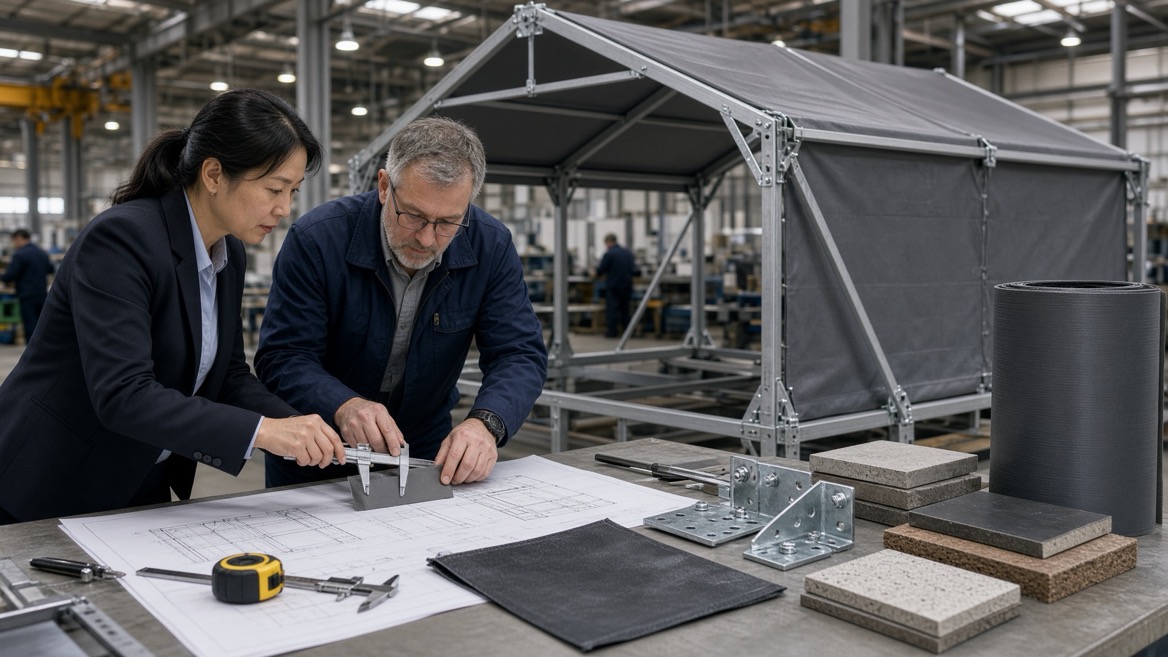
China offers a deep and increasingly capable supply base for tent housing, glamping accommodations, safari lodges, large-span tent structures, modular buildings, and container-integrated shelter systems. The right supplier depends on whether your priority is hospitality design, industrial coverage, retail-scale outdoor products, rapid-deployment modular facilities, or OEM/private-label development.
For buyers seeking a flexible supplier for prefab tent houses, modular buildings, container houses, offices, dormitories, meeting rooms, warehouses, exhibition spaces, and customized project solutions, Welons Prefab is a practical manufacturer to include in the first round of RFQs. Its Guangzhou location, modular-building focus, stated daily production capacity, and customization-oriented approach make it especially relevant for SMEs, distributors, contractors, and buyers that need clear communication through the OEM development process.
Before choosing any supplier, request a technical specification sheet, detailed quotation scope, material samples, production timeline, project drawings, packing plan, and documentation package. The best purchasing outcome usually comes from comparing total delivered value—not simply the lowest ex-factory price.
Planning a tent housing or modular accommodation project? Prepare a detailed RFQ with your site conditions, target quantity, layout, preferred materials, required certifications, and destination port. Then request a tailored design and quotation from Welons Prefab or other shortlisted manufacturers based on the same specification package.
Ask for the full certificate, including certificate number, legal company name, registered address, certification body, scope, issue date, and expiry date. Then search the issuing certification body’s public database or contact the organization directly. Confirm that the scope covers manufacturing activities relevant to tent housing rather than an unrelated trading or office activity.
No. ISO 9001 indicates that the company has a quality-management system within a stated scope. It does not replace structural calculations, fire testing, electrical compliance, local permits, wind-load design, snow-load design, or site-specific engineering approval.
MOQ depends on the level of customization. Standard tents may have relatively low MOQs, while custom frames, special fabric colors, printed branding, insulated wall systems, non-standard windows, and bespoke furniture can increase minimum quantities. For project-based tent housing, suppliers often quote by unit or project rather than using a fixed consumer-product MOQ.
Possibly, but buyers must define what product or component needs to meet which requirement. CE-related documentation may apply to specific products or components under applicable EU rules, while RoHS may be relevant to electrical equipment such as lighting or control systems. Request documents for the exact product configuration rather than accepting generic certificates.
Inspect the approved specifications, quantity, frame materials, fabric quality, dimensions, hardware, doors, windows, accessories, packing labels, documents, and spare parts. For complex projects, also confirm that the supplier has completed a pre-assembly or fit-check. If shipment is containerized, request loading photos and seal information.
China State Council: Five-Year Plan for the Construction Industry — Includes China’s policy target for prefabricated buildings to exceed 30% of new construction.
State Council Information Office: Carbon Peaking and Carbon Neutrality Plans — Reports 672 million m² of new prefabricated-building projects under construction in 2024.
General Administration of Customs of the People’s Republic of China — Official trade statistics covering the HS Chapter 94 category that includes prefabricated buildings
Welons Prefab: Company and Product Information — Modular building, prefab container house, and frame tent solution information
Liri Architecture Technology: Company History — Background on the company’s aluminum-PVC clear-span tent business


