
Views: 236 Author: Welons Prefab Houses Publish Time: 2026-09-01 Origin: Site


Content Menu
● Why Modular Accommodation Matters for Rural Tourism
>> Common Apple Cabin Applications
● What Is an Expandable Container House?
>> Common Expandable Container House Applications
● Apple Cabin vs Expandable Container House: Key Differences
● Guest Experience and Booking Appeal
>> Expert View: Design Should Match the Guest Profile
● Investment Cost and Revenue Logic
>> Apple Cabin Revenue Potential
>> Expandable Container House Revenue Potential
● Site Conditions and Installation Planning
>> Review These Factors Before Ordering
● Durability, Comfort, and Maintenance
>> Key Technical Questions for Suppliers
>> Maintenance Strategy for Tourism Operators
● Which Option Fits Your Rural Tourism Model?
>> Choose an Apple Cabin If You Want To:
>> Choose an Expandable Container House If You Want To:
● How to Select the Right Manufacturer
● FAQ
>> 1. Is an Apple Cabin suitable for a glamping resort?
>> 2. Can an expandable container house be used as a rental cabin?
>> 3. Which is more cost-effective for a rural tourism project?
>> 4. Do modular cabins need permits for tourism use?
>> 5. Can Apple Cabins and expandable container houses be customized?
>> 6. How long does it take to install an expandable container house?
>> 7. Can modular accommodation work in cold or hot climates?
For rural tourism investors, choosing between an Apple Cabin and an expandable container house is not simply a question of appearance or purchase price. It is a decision about guest positioning, site conditions, operating speed, transport efficiency, compliance requirements, maintenance planning, and the long-term income potential of a tourism property.
Both modular accommodation solutions can help resorts, glamping parks, farm stays, scenic-area lodges, eco-retreats, and countryside rental businesses add rooms faster than conventional construction. However, they serve different investment strategies. An Apple Cabin is typically designed to create a premium, highly recognizable guest experience, while an expandable container house is often selected for flexible layouts, rapid deployment, and scalable accommodation capacity.
For investors planning rural tourism projects, the best option depends on one key question: Are you selling a memorable stay, or are you primarily solving for affordable accommodation capacity?

Rural tourism has become more experience-driven. Guests increasingly want more than a standard room. They look for privacy, scenery, comfort, photogenic architecture, and a stronger connection to nature. At the same time, tourism operators must control construction risk, shorten project timelines, and avoid excessive disruption to rural land.
Modular buildings are well suited to this environment because much of the production work is completed in a controlled factory environment before delivery. This approach can reduce on-site labor requirements and make project scheduling more predictable.
The broader market direction also supports this model. The global camping and caravanning market was valued at approximately USD 66.37 billion in 2025 and is projected to reach USD 143.93 billion by 2033. This reflects growing demand for flexible outdoor accommodation, destination stays, and alternative hospitality formats.
For a rural tourism investor, modular accommodation offers several practical advantages:
Faster project launch than conventional site-built accommodation
Lower dependence on local construction labor
Easier expansion in phases as bookings grow
More consistent quality control from factory production
Less wet construction on environmentally sensitive sites
Stronger potential for themed hospitality concepts
Flexible use for guest rooms, reception areas, cafés, staff housing, meeting rooms, and service facilities
However, not all modular structures create the same guest value. This is where the Apple Cabin vs expandable container house comparison becomes important.
An Apple Cabin is a modern modular cabin recognized by its smooth, rounded, capsule-like exterior. It is often designed with a steel or aluminum structural frame, insulated wall systems, large glazing areas, integrated interiors, and a contemporary façade that suits resorts, glamping sites, mountain retreats, lakeside destinations, and boutique rental properties.
The name does not always refer to one universal structural specification. Different manufacturers may offer different dimensions, frames, wall materials, window systems, insulation packages, and interior configurations. In practical terms, the Apple Cabin category usually refers to a high-design modular micro-hospitality unit rather than a standard shipping-container-derived structure.
For rural tourism, its strongest advantage is emotional appeal. A well-designed Apple Cabin can become part of the destination’s visual identity. Guests may choose the property not only because it is located near a scenic attraction, but because the cabin itself looks distinctive in photos, videos, and online booking listings.
Boutique glamping resorts
Mountain-view accommodation
Forest cabins
Lakeside and beachfront stays
Vineyard or farm-stay guest suites
Wellness retreats
Premium camping parks
Scenic-area VIP rooms
Private rental cabins
Tourism showroom or reception spaces
Apple Cabins are often best positioned as premium accommodation products, especially when they include panoramic windows, private decks, luxury bathrooms, climate control, customized interiors, and landscape-oriented layouts.
An expandable container house is a prefabricated building designed to remain compact during transport and expand after delivery. The central structure is delivered in a folded or compressed format, then the side sections are unfolded on site to create a wider internal living area.
This makes the expandable container house especially attractive for projects that need to transport large quantities of accommodation units efficiently. Common models are available in 20-foot, 30-foot, and 40-foot formats. Industry reference specifications indicate that a 20-foot expandable unit may provide around 37 m² after expansion, while 30-foot and 40-foot models may reach approximately 55 m² and 74 m² respectively.
Unlike a conventional fixed-width container room, the expandable design can create a more practical interior footprint after installation. It may accommodate bedrooms, bathrooms, a living area, a kitchenette, storage, or shared-use facilities depending on the layout.
Rural resort guest rooms
Family holiday units
Staff dormitories
Seasonal tourism accommodation
Reception offices
Campsite service buildings
Restaurant back-of-house areas
Public toilets and shower blocks
Temporary accommodation during tourism development
Remote construction or site management offices
Expandable container houses are usually favored when the operator needs usable floor area, volume deployment, flexible planning, and transport efficiency.
| Comparison Factor | Apple Cabin | Expandable Container House |
|---|---|---|
| Primary positioning | Premium, design-led tourism accommodation | Flexible, practical, scalable accommodation |
| Visual identity | Strong, distinctive, modern, photogenic | More functional and configurable |
| Guest perception | Boutique, private, memorable | Spacious, practical, value-oriented |
| Interior layout | Usually compact but refined | Often larger and easier to divide into rooms |
| Transport format | Delivered as a finished or semi-finished modular unit | Folded or compressed for transport, then expanded |
| Best for | Glamping, boutique resorts, scenic accommodation | Resorts, dormitories, family units, large-scale projects |
| Customization focus | Exterior style, interior finishes, glazing, decks | Dimensions, room layout, bathrooms, kitchens, combinations |
| Project scale | High-value rooms with stronger nightly-rate potential | Medium- to large-volume accommodation deployment |
| Brand impact | Can become a destination landmark | Supports operational capacity and expansion |
| Investment logic | Higher value per unit and stronger guest appeal | More floor area and flexible cost allocation |
The comparison should not be reduced to “luxury versus budget.” A well-configured expandable container house can also be attractive and comfortable. Likewise, an Apple Cabin can be used in practical tourism settings. The real difference is in how each building type supports the business model.
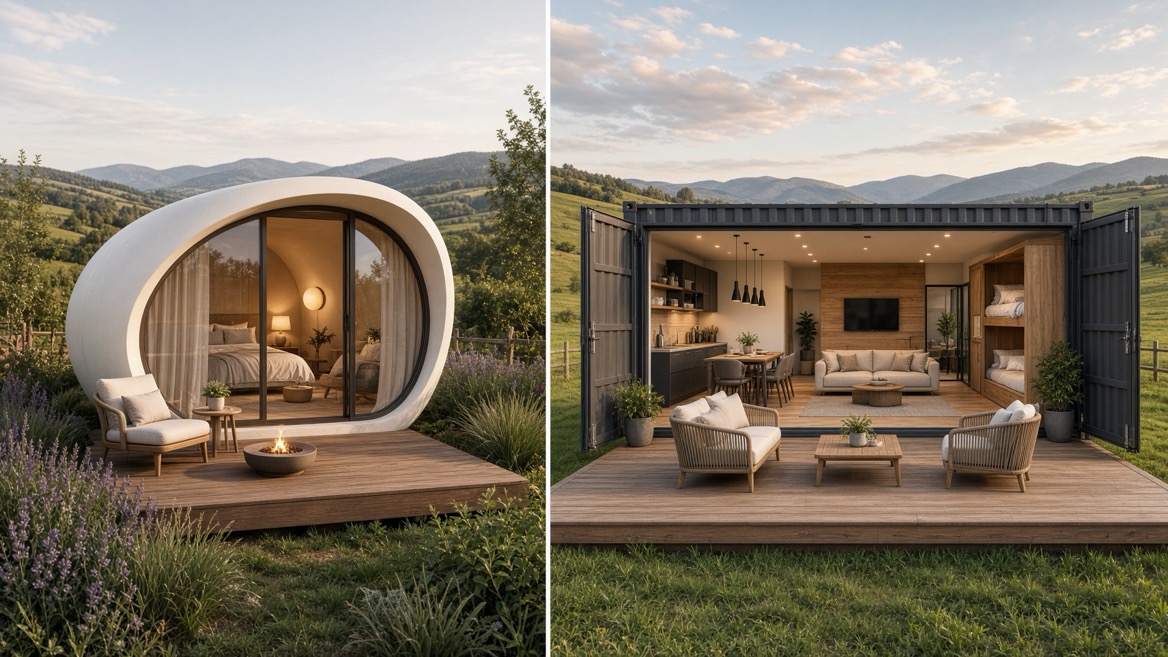
In rural tourism, guest experience affects more than satisfaction scores. It directly influences booking conversion, repeat visits, user-generated content, and online visibility across travel platforms.
An Apple Cabin is usually the stronger choice when the business model depends on visual differentiation. Its curved exterior, panoramic glass, compact luxury layout, and contemporary façade can help a tourism operator create a clear brand story.
For example, a forest retreat may install six Apple Cabins facing a valley, each with a private deck, floor-to-ceiling window, insulated wall system, queen bed, compact bathroom, and outdoor soaking area. The operator can market the experience as a private “sky-view cabin stay” rather than a standard rural room rental.
This approach can support a premium room category because the guest is paying for:
Privacy
Landscape access
Architectural character
A more exclusive feeling
Better photography opportunities
A curated interior experience
A stronger emotional connection to the destination
An expandable container house can still create a good guest experience, particularly when it includes exterior cladding, timber accents, large windows, patios, and high-quality interiors. However, its commercial strength usually comes from its ability to provide a larger and more flexible room layout.
For example, a family-oriented countryside resort may use 30-foot expandable container houses with two bedrooms, one bathroom, a living room, and a compact kitchen. This format can work well for guests traveling with children, multi-generation families, self-driving tourists, and long-stay visitors.
A common investment mistake is purchasing accommodation based only on the lowest factory quotation. A lower initial purchase cost may not create the highest return if the building does not match the guest profile.
Use Apple Cabins when your ideal guest is likely to value design, privacy, scenery, and a distinctive stay.
Use expandable container houses when your ideal guest needs more usable space, multiple beds, family functionality, or value-oriented group accommodation.
The purchase cost of a modular building is only one part of the investment calculation. Rural tourism operators should evaluate the full project cost and the expected revenue contribution of each accommodation type.
The most useful calculation is not simply “Which unit is cheaper?” It is:
Return Potential=(Annual Room Revenue−Annual Operating Cost)/Total Installed Investment
Building purchase cost
Interior furniture and appliances
Transportation
Site lifting and placement
Foundation or support system
Electrical, plumbing, and drainage connections
Decking and landscaping
Permits and engineering documents
Fire-safety systems
Wastewater management
Marketing photography and launch costs
Apple Cabins may require a higher investment in finish quality, glazing, furniture, landscape integration, and guest-facing details. However, their design appeal may support a higher nightly rate when the project is positioned correctly.
This is particularly relevant in destinations where guests are willing to pay for:
Sunset or mountain views
Private outdoor space
Romantic stays
Honeymoon or anniversary packages
Boutique glamping experiences
Social-media-friendly accommodation
Premium wellness experiences
The Apple Cabin model works best when the operator has a clear strategy to turn design into revenue. A visually attractive cabin without professional landscaping, guest amenities, photography, or service standards may not achieve its price potential.
Expandable container houses may offer better room capacity per investment, especially for family suites, staff housing, group accommodation, or multi-room layouts. Their larger expanded footprint can help operators create more beds and more functional internal space.
This may make them more suitable for:
Holiday parks
Large rural resorts
Seasonal tourism villages
Worker and staff accommodation
Educational camps
Adventure-tourism lodging
Budget-conscious family stays
Projects that need phased growth
For operators managing 20, 50, or 100+ accommodation units, expandable container houses can provide a more practical path to scale. Their transport-efficient folded form may also reduce logistical pressure for projects in remote areas, although actual shipping costs depend on unit dimensions, port access, road conditions, and destination regulations.
Rural tourism sites vary greatly. A lakeside site, mountain slope, forest edge, farmland, and coastal location all create different requirements for foundation design, access roads, drainage, wind resistance, insulation, and utility connections.
Before selecting either an Apple Cabin or expandable container house, investors should complete a site feasibility review.
Road access and transport clearance Check road width, turning radius, bridge weight limits, overhead cables, and final access to the installation area. A beautiful remote site is not commercially useful if a completed module cannot reach it safely.
Ground condition and foundation strategy Flat, stable ground may allow a simpler support system. Sloped, wet, rocky, or flood-prone sites require more engineering attention. Common support options may include concrete pads, strip foundations, screw piles, steel supports, or elevated platforms.
Climate performance Ask for details about insulation thickness, thermal breaks, window glass specifications, roof construction, waterproofing, ventilation, snow load, wind load, corrosion protection, and HVAC capacity.
Water, sewage, and electricity Guest accommodation requires reliable power, clean water, wastewater disposal, drainage, heating or cooling, and emergency systems. These items should be designed before the units arrive.
Landscape and privacy The value of a rural tourism room often depends on its view and privacy. Place cabins to avoid direct window-to-window exposure. Use vegetation, deck orientation, pathways, and lighting to create private guest zones.
Local approvals and land-use rules Approval requirements vary by country, region, land classification, building use, foundation type, and utility connection. Permanent or utility-connected accommodation commonly requires permits and supporting documentation.
Do not treat a modular unit as a permit-free product simply because it is factory-made or movable. Once it is used for paid overnight accommodation, installed on a foundation, connected to utilities, or operated as part of a tourism business, local rules may apply.
A reliable manufacturer should be able to support the buyer with drawings, technical specifications, electrical plans, plumbing layouts, structural information, and customization documentation. However, the final approval responsibility often rests with the project owner and local design or engineering partners.
For rural tourism investment, appearance attracts bookings, but durability protects profit. A modular building should be evaluated as an operating asset, not a one-time purchase.
Apple Cabins and expandable container houses both require careful attention to materials and detailing. The supplier quotation should clearly define what is included and what performance level is being offered.
What is the main frame material and steel thickness?
Is the frame galvanized, painted, or otherwise treated for corrosion resistance?
What insulation material and thickness are used?
What is the wall, roof, and floor build-up?
What window glass is included: single, double, low-emissivity, or laminated?
What wind, snow, and seismic conditions can the structure meet?
How is roof drainage designed?
What waterproofing method is used at joints and openings?
What electrical standard is provided?
Are plumbing fixtures, pipes, and water heaters included?
Can the unit be adapted for local voltage and plug standards?
Is the bathroom pre-installed and pressure-tested?
What warranty applies to the structure, roof, windows, finishes, and equipment?
For Apple Cabins, pay particular attention to curved-panel joints, glazing installation, exterior cladding, roof drainage, and the performance of panoramic windows.
For expandable container houses, examine the folding mechanism, expansion joints, door and window sealing, floor alignment, wall connections, and the long-term performance of moving structural components.
A rural resort should create a planned inspection schedule rather than waiting for visible damage.
Inspect roof drainage and exterior sealant every season
Check doors, windows, locks, and glazing seals regularly
Clean HVAC filters and test heating or cooling before peak season
Monitor moisture around bathrooms, kitchens, and floor edges
Repaint or repair exterior protective coatings as needed
Inspect decks, handrails, steps, and lighting for guest safety
Maintain spare parts for handles, locks, lights, faucets, and electrical components
A professional maintenance plan helps protect guest reviews, reduces emergency repairs, and extends the commercial life of the accommodation asset.
Build a premium glamping or boutique accommodation brand
Charge higher rates through design and scenic positioning
Create a recognizable visual identity for your resort
Attract couples, younger travelers, photographers, and experience-led guests
Build a small number of high-value units
Use large windows, decks, and landscape integration to create emotional appeal
Differentiate your property in a competitive tourism market
Add more rooms or beds quickly
Serve families, groups, staff, or longer-stay guests
Create practical one-bedroom, two-bedroom, or multi-room layouts
Develop a tourism project in phases
Balance budget, usable floor area, and installation speed
Deploy accommodation in remote, seasonal, or high-volume locations
Combine units with reception rooms, service spaces, staff housing, or dining facilities
For many rural tourism investors, the best solution is not choosing one building type exclusively.
A hybrid project can use Apple Cabins as premium guest suites and expandable container houses as family rooms, staff accommodation, kitchens, reception offices, or utility buildings.
For instance, a 20-unit eco-resort could include:
Eight Apple Cabins for premium couples’ accommodation
Six expandable container houses configured as family suites
Two expandable units for staff accommodation
One expandable unit for reception and administration
One expandable unit for laundry and storage
Two modular dining or event spaces
This strategy allows the operator to create a strong guest-facing brand while keeping essential back-of-house and high-capacity accommodation costs under control.
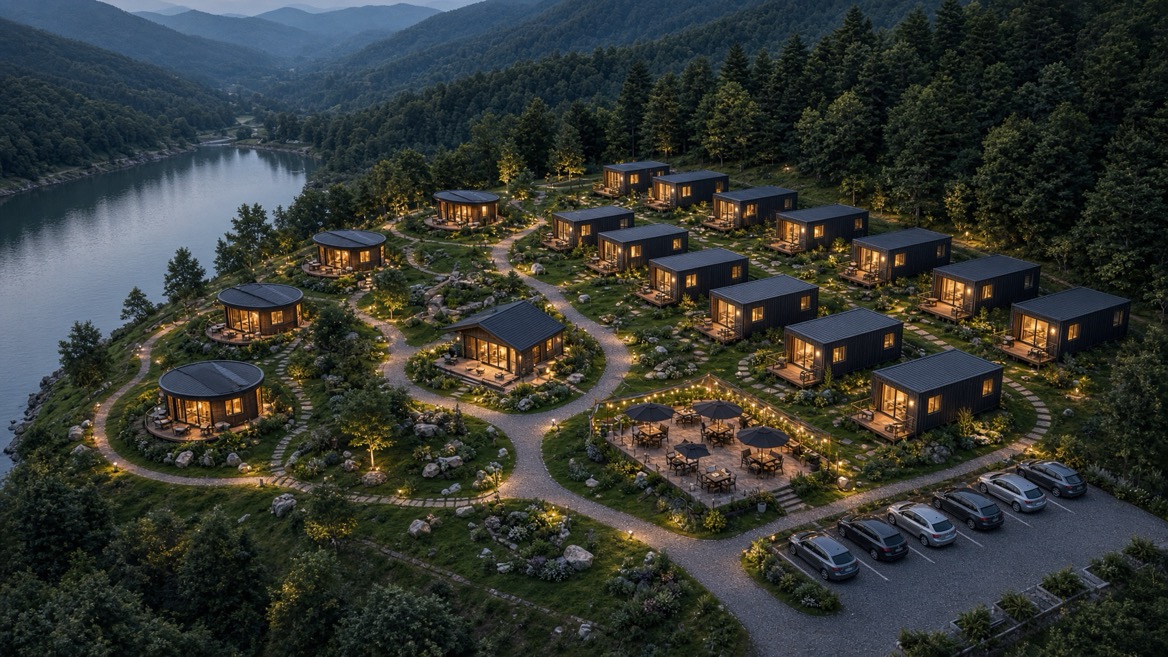
A manufacturer should be evaluated on more than product photos. For a rural tourism investment, the supplier must understand manufacturing quality, logistics, customization, technical documentation, and long-term project support.
Welons Prefab has 11 years of experience in modular construction and prefabricated container house manufacturing, offering Apple Cabins, prefab container houses, OEM services, wholesale support, and customized project solutions. With a production capacity of up to 300 units per day, Welons Prefab can support both small boutique projects and larger accommodation developments.
When comparing suppliers, request the following before placing an order:
Detailed product drawings and dimensions
Material specification sheet
Foundation requirements
Electrical and plumbing layouts
Product photos and videos from completed projects
Production schedule and lead time
Loading plan and shipping method
Installation guide
Warranty terms
Customization options
Packaging details
Spare-parts list
Quality inspection process
Communication plan during production and delivery
The strongest supplier is not necessarily the one offering the lowest initial unit price. It is the one that can provide a realistic, documented, and reliable solution for your site, target market, and tourism business model.
For a high-end rural retreat, scenic glamping project, boutique resort, or social-media-driven accommodation business, the Apple Cabin is usually the stronger choice because it creates a premium guest experience and a more distinctive destination identity.
For family tourism, large-scale resort expansion, staff lodging, practical guest suites, and phased accommodation development, the expandable container house often offers better flexibility, larger usable space, and more efficient deployment.
The right decision should be based on your guest profile, local site conditions, approval requirements, operating model, room-rate strategy, and expansion plan. A successful project does not buy a building first and develop a business around it later. It starts with the guest experience and revenue model, then selects the modular accommodation solution that supports both.
If you are planning a rural tourism, glamping, resort, farm-stay, or eco-lodge project, contact Welons Prefab to discuss your target market, preferred room layout, customization requirements, installation conditions, and bulk-order needs. A professional solution can combine Apple Cabins, expandable container houses, and supporting modular spaces into one practical tourism development plan.
Yes. An Apple Cabin is particularly suitable for premium glamping resorts because its modern exterior, panoramic windows, compact layout, and customizable finishes can create a more memorable guest experience. It works especially well for couples, scenic destinations, wellness retreats, and boutique accommodation projects.
Yes. Expandable container houses can be configured as rental cabins with bedrooms, bathrooms, kitchens, living areas, air conditioning, insulation, and outdoor decks. They are often suitable for family stays, group accommodation, self-driving tourists, and longer-term rural holiday rentals.
Expandable container houses are often more cost-effective when the project needs more usable interior space, more beds, or a larger number of units. Apple Cabins may require a higher investment in design and finishing, but they may support higher room rates when used in a premium tourism concept.
In many locations, yes. Permit needs depend on local land use, zoning, foundation type, utility connections, building size, occupancy purpose, and whether the unit is considered temporary or permanent. Tourism accommodation projects should confirm local requirements before ordering units.
Yes. Typical customization options include size, room layout, bathroom configuration, window placement, insulation level, exterior color, cladding, flooring, furniture, electrical standards, air-conditioning systems, decks, kitchens, and branding elements.
The on-site expansion process can be relatively fast once the foundation, utility connections, access route, and lifting equipment are ready. However, the complete project timeline also depends on transportation, site preparation, local approvals, utility work, landscaping, and final inspections.
Yes, provided the structure is designed for local conditions. Buyers should specify climate requirements before production, including insulation thickness, window performance, heating or cooling capacity, roof design, waterproofing, wind resistance, and corrosion protection.
The Business Research Company — Hotel and Other Travel Accommodation Global Market Report 2026
Grand View Research — Camping and Caravanning Market Size, Share & Trends Analysis Report
Market Research Future — Modular Construction Market Research Report
WZH House — What Is an Expandable Container House from China
Camp Hortree Prefab — Expandable Container House Permit Guide
Ready Nest — Apple Cabin: Stylish and Portable Modular Home Solutions
Easy Prefab House — Apple Cabin Modular Prefab Tiny House for Resort and Glamping


