
Views: 298 Author: Welons Prefab Houses Publish Time: 2026-09-21 Origin: Site


Content Menu
● Why Source Premade Container Homes from China?
>> China's Manufacturing Clusters
● Top 10 Premade Container Homes Manufacturers in China
>> 1. Welons Prefab — Flexible OEM and One-Stop Project Support
>> 2. CIMC Modular Building Systems — Large Volumetric Modular Projects
>> 3. GS Modular — Permanent Heavy-Steel Modular Construction
>> 4. Henan K-Home Steel Structure Co., Ltd. — Construction Camps and Flat-Pack Container Housing
>> 5. Guangdong Oriental Guangsha / GS Housing Manufacturing Base — High-Volume Modular Production
>> 6. WELLCAMP — Flat-Pack Container Houses and Temporary Camp Solutions
>> 7. DEEPBLUE Smarthouse — Light Steel and Residential Prefabricated Housing
>> 8. PTH House — Flat-Pack Houses and Steel Structure Solutions
>> 9. Moneybox House — Expandable and Foldable Container Homes
● Manufacturer Comparison Table
● Technical Checklist for Premade Container Homes
>> Material Specifications That Must Appear in Your RFQ
● Common Buying Problems and How to Avoid Them
>> 1. Steel Thickness Is Lower Than the Approved Specification
>> 2. "Fireproof" Is Used Without a Defined Test Standard
>> 3. Quotation Excludes Essential Project Costs
>> 4. The Supplier Confuses "Container-Style" with Shipping-Container Compliance
● The Less-Discussed Insider Risk: "Sample Unit Quality" vs. "Batch Quality"
● Buyer's Guide: How to Verify a Manufacturer
>> Step 1: Validate the Legal Entity
>> Step 2: Verify Current Certificates
>> Step 3: Ask for Product-Specific Evidence
>> Step 4: Arrange a Factory Audit
>> Step 5: Confirm Logistics Before Production
>> 1. How can I verify that a manufacturer's ISO certification is still valid?
>> 2. Is CE marking enough for a premade container home sold in Europe?
>> 3. What is the most important specification to control in a container home?
>> 4. Should I order a sample before placing a bulk order?
>> 5. How do I compare two quotations that appear very different in price?
China remains one of the most important sourcing bases for premade container homes, flat-pack container buildings, and steel modular structures. For procurement managers, however, the key question is not simply where to find a low quotation—it is how to identify a supplier that can consistently deliver compliant materials, predictable lead times, accurate engineering documents, export-ready packing, and dependable after-sales support.
This guide reviews 10 China-based manufacturers and modular-building providers with different strengths, from flexible container-house suppliers for distributors and project contractors to large-scale volumetric modular specialists for hotels, accommodation, and permanent buildings. It is designed for buyers evaluating long-term supply partnerships, OEM projects, wholesale programs, construction camps, commercial facilities, and overseas modular-building developments.
China's prefabricated-building market was valued at approximately USD 65.18 billion in 2025 and is forecast to reach USD 97.86 billion by 2031. Modular buildings accounted for an estimated 53.25% of the country's prefabricated-building market in 2025, reflecting strong demand for factory-built steel systems, project accommodation, and faster site deployment.
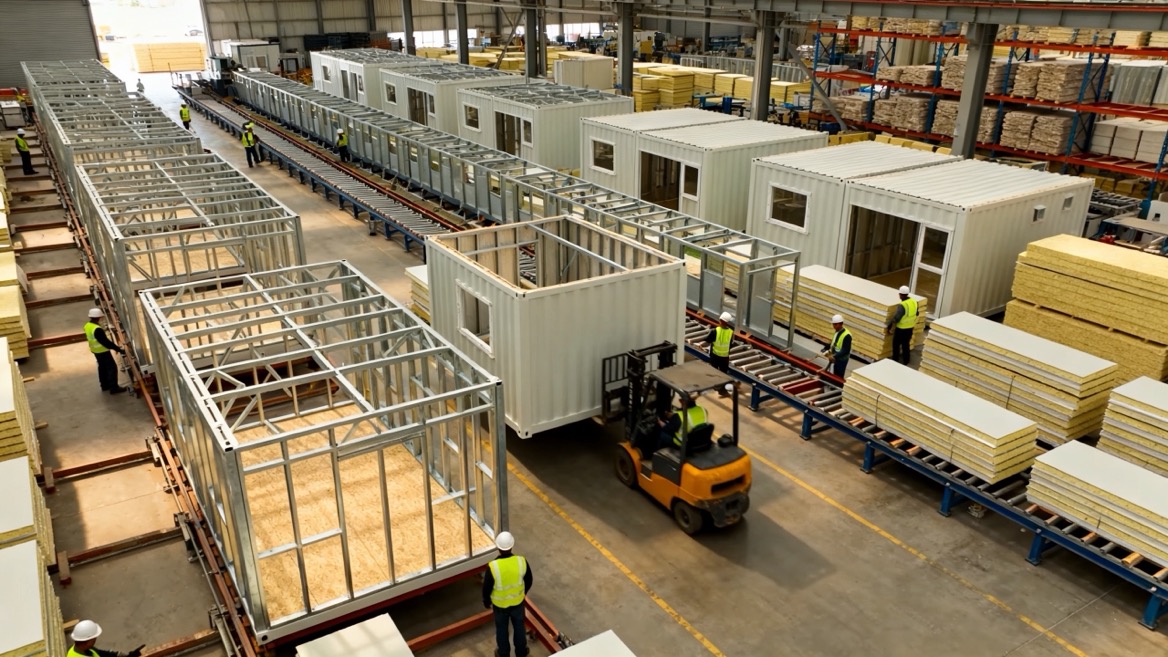
Chinese manufacturers have developed strong advantages in steel fabrication, sandwich-panel production, containerized logistics, modular design, and export-oriented supply chains. The industry is especially concentrated in Guangdong, Zhejiang, Shandong, Hebei, Henan, Jiangsu, and Fujian, where suppliers can access steel coils, galvanized profiles, insulation materials, doors, windows, electrical fittings, and shipping infrastructure within relatively short lead times.
For overseas buyers, the value is not limited to unit price. A capable Chinese supplier can help standardize a repeatable modular product line while adapting details such as wall thickness, insulation type, floor loading, electrical layout, plug type, window configuration, branding, color scheme, packing method, and installation manuals for the destination market.
China's prefabricated-building exports reportedly rose from USD 1.7 billion in 2020 to USD 4.3 billion in 2025, with major demand coming from the United States, Southeast Asia, Australia, and Western Europe.
- Guangdong: Strong for export logistics, containerized solutions, steel modular buildings, hardware supply, and global project management. Guangzhou, Foshan, Shenzhen, Jiangmen, and Dongguan are particularly relevant.
- Henan: Competitive for flat-pack container houses, construction-camp products, sandwich panels, and high-volume standardized site accommodation.
- Shandong and Hebei: Established steel-processing and steel-structure supply bases, often suitable for industrial projects, warehouses, worker camps, and customized steel buildings.
- Zhejiang and Jiangsu: Broad manufacturing ecosystems with access to export ports, electrical components, fittings, light-gauge steel processing, and prefabricated-building supply chains.
The right location depends on the product type. A buyer sourcing a foldable container house for distribution may prioritize price, loading efficiency, and rapid customization. A buyer developing a permanent modular hotel or multi-storey accommodation project should prioritize structural engineering, code alignment, traceable materials, project-management capability, and installation support.
This is not a ranking based solely on online visibility or marketing claims. The manufacturers below were selected based on publicly available company information, production capability, manufacturing specialization, export orientation, engineering scope, and relevance to professional container-home procurement.
| Evaluation Area | What Buyers Should Check | Why It Matters |
|---|---|---|
| Manufacturing capability | Factory size, production lines, welding and coating processes, output capacity | Indicates whether the supplier can support repeat orders and project schedules |
| Product scope | Flat-pack, foldable, expandable, detachable, volumetric, steel-frame, custom modules | Helps match the supplier to the intended use case |
| Engineering support | Drawings, load calculations, connection details, electrical layouts, installation documents | Critical for permits, local contractors, and project execution |
| Material traceability | Steel grade, galvanized layer, panel core, insulation density, fasteners, paint system | Prevents specification substitution and premature corrosion |
| Quality process | Incoming inspection, welding checks, dimensional control, packing inspection, third-party inspection support | Reduces defects before loading |
| Compliance capability | ISO systems, CE-related documentation where relevant, local-code support, test reports | Important for regulated projects and cross-border sales |
| Export experience | Overseas projects, Incoterms, container loading, customs documentation, installation guidance | Reduces logistics and communication risk |
| OEM/ODM flexibility | Branding, dimensions, layouts, finishes, accessories, packaging, manuals | Essential for distributors and private-label programs |
| Commercial transparency | Clear quotation scope, sample policy, delivery schedule, warranty terms | Helps avoid hidden costs and unclear responsibilities |
A supplier's ISO certificate alone does not prove that a container home meets the building code in your destination country. Quality-management certification, product test reports, structural calculations, fire performance, electrical standards, and project-specific approval are separate matters. Buyers should request evidence relevant to the exact building system and destination market.
Location: Guangzhou, Guangdong, China
Established experience: 11 years in the modular-building and prefab-container sector
Main products: Prefab container houses, modular buildings, fast-assembly homes, mobile toilets, sandwich panels, rock wool boards, customized steel structures
Reported production capacity: Up to 300 units per day
Suitable for: Distributors, contractors, SMEs, construction-camp operators, project developers, OEM brands, and buyers needing mixed product categories
Welons Prefab is a practical choice for buyers looking for a responsive manufacturer rather than a rigid catalog-only supplier. The company focuses on modular buildings and prefab container houses for offices, dormitories, canteens, meeting rooms, warehouses, exhibition halls, industrial plants, and temporary or semi-permanent facilities.
Its main advantage is flexibility across the entire project cycle: concept matching, design, manufacturing, storage, transportation coordination, on-site installation support, and after-sales service. This is particularly useful for smaller and mid-sized importers that need more than a standard container unit but may not meet the order size required by very large modular-construction groups.
Welons Prefab states that it has a daily production capacity of 300 units and offers customized steel structures, standard container houses, fast-assembly prefab homes, mobile toilets, color-steel sandwich panels, and rock wool boards. Its broad product range allows buyers to consolidate related site-accommodation and modular-building purchases with one supplier.
For OEM buyers, Welons Prefab is positioned as a suitable partner for:
- Customized floor plans and exterior dimensions
- Private-label branding, color schemes, packaging, and manuals
- Different insulation specifications for hot, cold, humid, or coastal markets
- Office, dormitory, sanitary, storage, and commercial modular layouts
- Mixed-container procurement programs, such as office modules plus toilets, guardhouses, storage units, and sandwich panels
- Logistics and installation guidance for overseas projects
A buyer should still define the technical brief carefully. For example, the purchase order should specify steel thickness, galvanized coating, panel core material, insulation density, floor load, roof drainage, electrical wiring standard, door and window brand, corrosion-protection system, and packing details. These items should be confirmed in approved drawings before production begins.
Location: Jiangmen, Guangdong, China
Founded: 2004
Main products: Volumetric modular buildings, hotels, apartments, student accommodation, workforce accommodation, data-center-related modules, EPC-oriented modular solutions
Reported capacity: More than 50,000 modules per year; approximately 2,500 modules per month
Suitable for: Large developers, hotel operators, institutional buyers, high-volume housing projects, and permanent modular construction
CIMC Modular Building Systems is one of the most prominent Chinese providers in the high-volume volumetric modular-building segment. As part of CIMC Group, it applies containerization and industrialized manufacturing experience to modular construction, with a focus on finished room-sized modules rather than only flat-pack site buildings.
The company was founded in 2004 and reports in-house production capacity of more than 2,500 modules per month. Its Jiangmen manufacturing base is reported to include 200,000 square meters of module-integrated workshops and an annual delivery capacity exceeding 50,000 modules.
CIMC is especially relevant for procurement teams sourcing:
- Modular hotels and hospitality rooms
- Student accommodation
- Workforce accommodation
- Apartments and residential developments
- Permanent steel modular structures
- Large institutional and commercial modular projects
- International projects requiring coordinated design, manufacturing, logistics, and installation planning
Its historical work in volumetric modular construction makes it more suitable for complex, engineered projects than for small container-house wholesale orders. Buyers should expect a more project-led procurement process, including structural design, interface management, transport planning, lifting strategy, local compliance review, and installation sequencing.
CIMC's container-manufacturing heritage can also be useful for overseas transport planning, particularly where modules must be moved by sea and coordinated with port handling, oversized cargo requirements, and site delivery constraints.
Location: Foshan, Guangdong, China
Main products: Permanent steel-frame modular buildings, modular integrated construction, custom commercial and residential modules
Reported manufacturing capability: Five production bases; reported annual capacity of 240,000 sets
Suitable for: Buyers requiring engineered permanent structures, regulated projects, and higher-specification steel modular systems
GS Modular, part of GS Housing Group, specializes in permanent steel-frame modular construction rather than low-cost temporary container accommodation. Its offering covers R&D, design, compliance planning, manufacturing, installation, and steel modular building solutions for commercial, residential, institutional, and more complex construction projects.
The company reports a 96,000-square-meter factory in Foshan and states that it holds 52 national invention patents. It also describes international compliance capability involving ASTM, CE, GOST-R, and ISO-related systems, although buyers should verify the current applicability of certificates and test reports for their exact project and market.
GS Modular may be a stronger fit when the procurement specification includes:
- Heavy steel-frame modules
- Multi-storey or permanent applications
- Structural engineering documentation
- Higher wind, seismic, or snow-load requirements
- Custom architectural finishes
- Commercial buildings, apartments, schools, clinics, or institutional facilities
- Code-sensitive projects in North America, Australia, Europe, or the Middle East
The company reports 1,350 internal inspection points within its production-control process and describes its systems as supported by ISO management processes and third-party verification.
For buyers, the main question is not whether a factory says it can meet a foreign market standard. The important question is whether it can provide a complete project-specific compliance package, including engineering calculations, material certificates, fire data, connection details, testing documentation, and documentation aligned to the authority having jurisdiction.
Location: Xinxiang, Henan, China
Founded: 2007
Main products: Container houses, portable site offices, sandwich panels, light-steel structures, prefab homes, toilets, camp facilities
Reported capacity: Up to 1,000 container-house sets per month
Suitable for: Construction camps, site offices, dormitories, schools, emergency facilities, regional distributors, and standard container-house imports
Henan K-Home is an established supplier in the flat-pack container-house, construction-camp, sandwich-panel, and light-steel-structure segments. The company states that it was established in 2007, operates a 100,000-square-meter facility, and employs approximately 260 people.
Its product range is relevant for buyers looking for repeatable, standardized site infrastructure:
- Flat-pack container offices
- Worker dormitories
- Portable toilet units
- Camp accommodation
- Guardhouses
- Modular schools
- Emergency medical or temporary facilities
- Sandwich panels and supporting steel structures
K-Home reports projects in more than 80 countries and states that it can provide CE, SGS, and ISO-related documentation. Its website also reports a production capacity of approximately 1,000 container-house sets per month.
However, buyers should not rely on historic certificate claims without verification. For example, a CE certificate shown publicly by the company had an expiry date in 2022. A responsible procurement process should ask for the current certificate, the issuing body, scope, product model, expiration date, and a method for authenticating the certificate directly with the certification organization.
This makes K-Home a useful example of a broader procurement rule: documentation must be checked at the time of purchase, not copied from a previous tender or a supplier's website.
Location: Foshan, Guangdong, China
Main products: Modular buildings, prefab container structures, customized container solutions, energy-storage containers
Reported facility: Nearly 70,000 square meters
Reported systems: ISO 9001, ISO 14001, ISO 45001
Suitable for: Buyers needing scalable production, integrated steel systems, and project-specific modular products
Guangdong Oriental Guangsha Residential Technology, associated with the GS modular manufacturing ecosystem, serves buyers that require larger production capability combined with engineering support and customized containerized products.
The company reports a nearly 70,000-square-meter production base in Foshan and states that it holds ISO 9001, ISO 14001, and ISO 45001 management-system certifications. Its broader product range includes modular buildings, prefab container structures, and containerized energy-storage systems.
This manufacturer can be relevant for:
- Customized steel modular buildings
- Permanent or semi-permanent accommodation
- Industrial site offices
- Commercial units
- Modular infrastructure support buildings
- Energy-storage enclosure projects
- Export projects that require a consistent steel-structure supplier
A buyer sourcing from this type of supplier should request evidence for coating thickness, welding specifications, surface preparation, fire-rated wall assemblies, electrical enclosures, drainage design, lifting-point design, and module connection details. These technical details often determine whether a project succeeds after arrival, particularly in hot, humid, coastal, high-wind, or heavy-rainfall environments.
Location: Guangdong, China
Main products: Flat-pack container houses, folding houses, detachable container homes, portable toilets, guardhouses, labor-camp buildings
Suitable for: Construction contractors, mining camps, temporary offices, humanitarian projects, and bulk modular-site accommodation buyers
WELLCAMP is widely known in the container-house supply category for temporary accommodation and modular camp applications. Its product range typically focuses on standardized detachable container houses, folding structures, sanitary units, security cabins, and related site facilities.
This type of supplier is often most suitable where the buyer's priority is:
- Fast deployment
- High container-loading efficiency
- Repeatable standard dimensions
- Fast installation by semi-skilled labor
- Lower initial unit cost
- Temporary or relocatable site use
- Large quantities of office, dormitory, sanitation, and storage units
For buyers considering flat-pack systems, the central technical question is not merely "How quickly can it be assembled?" It is whether the system can maintain roof drainage, wall alignment, panel sealing, floor rigidity, and corrosion protection after repeated dismantling and relocation.
Ask for a time-lapse installation video, detailed assembly manual, bill of materials, spare-parts list, packing list, and photos of the unit after at least one reassembly cycle. A unit that looks acceptable in a factory showroom may perform differently after several field installations.
Location: Ningbo, Zhejiang, China
Main products: Light-steel villas, prefab houses, modular homes, resort cabins, residential structures
Suitable for: Residential developers, holiday-resort operators, villa distributors, and buyers prioritizing architectural customization
DEEPBLUE Smarthouse is more relevant for buyers seeking residential prefabricated homes and light-gauge steel systems rather than simple construction-camp container units. Its product direction usually includes modular homes, villas, cabins, and customized housing solutions for residential or resort applications.
The company is worth considering when the buyer needs:
- Residential-style exterior design
- Higher interior finish expectations
- Light-gauge steel framing
- Villa or resort cabin programs
- Customized floor plans
- Private-label housing solutions
- Export support for packaged residential systems
For this category, buyers should verify the distinction between a "container home" and a "light-steel prefab home." The two may look similar in marketing images but differ significantly in structural system, transport method, foundation requirement, local permitting pathway, insulation strategy, installation workflow, and total project cost.
A transportable container module may reach the site nearly complete, while a light-steel kit may ship compactly but require more local assembly. Neither approach is automatically better. The correct choice depends on local labor cost, crane access, freight cost, foundation readiness, and permitting requirements.
Location: Hangzhou, Zhejiang, China
Main products: Flat-pack container houses, folding houses, light-steel villas, steel structures, portable buildings
Suitable for: Distributors, construction-site projects, export traders, and mixed prefab-building orders
PTH House operates in the broader prefabricated-building market, offering flat-pack container houses, folding units, portable buildings, light-steel villas, and steel-structure products. This creates a useful product mix for buyers that want to serve multiple customer segments under one supply relationship.
Potential applications include:
- Construction-site accommodation
- Remote work camps
- Sales offices
- Portable classrooms
- Resort support buildings
- Temporary clinics
- Storage units
- Containerized staff facilities
The major advantage of a mixed-product supplier is sourcing convenience. The risk is that technical depth can vary across product categories. Buyers should avoid assuming that a factory experienced in container offices is equally qualified to deliver permanent residential buildings or code-compliant multi-storey steel projects.
For each product category, ask for factory references, technical drawings, material schedules, completed-project photos, export documents, and third-party inspection records relevant to that exact system.
Location: China
Main products: Expandable container houses, folding houses, detachable container homes, portable sanitary units
Suitable for: Dealers, disaster-relief suppliers, temporary housing operators, and buyers focused on fast on-site deployment
Expandable container homes are attractive because they can reduce transport volume while offering more usable floor area after installation. Moneybox House and similar specialists are commonly considered by buyers who need deployable homes, portable retail units, temporary accommodation, or quick-install site facilities.
This product category can be commercially attractive, but it requires extra technical diligence. The folding and expanding mechanisms introduce components that are less relevant to standard flat-pack houses:
- Hinges and hinge-pin material
- Roof flashing at folding joints
- Gasket and seal durability
- Alignment tolerance after repeated opening
- Electrical routing across moving panels
- Floor-level transitions
- Rainwater ingress at expandable seams
- Locking mechanisms for high-wind conditions
The least-discussed risk is that an expandable home may perform well after one factory opening but develop leaks or alignment problems after transport vibrations, repeated deployment, or installation on an uneven foundation. Buyers should request a live video showing the same unit being folded, transported within the factory yard, reopened, and water-tested at all moving joints.
Location: Anhui and broader China supply network
Main products: Steel sheets, galvanized steel, color-coated materials, steel-related building components, prefab-building supply support
Suitable for: Buyers building their own container-home supply chain or requiring controlled steel-material sourcing
Not every buyer needs a complete container home from one factory. Larger distributors, regional fabricators, and project contractors may benefit from sourcing materials and fabrication components separately. Steel suppliers and integrated building-material groups can support container-home production through galvanized steel, pre-painted steel coils, roofing sheets, insulated panels, and related components.
This approach is most relevant if you:
- Operate local assembly or fabrication facilities
- Need to control steel grade and coating thickness directly
- Want to localize final assembly
- Need a supply chain for maintenance parts
- Are developing a private-label modular-building line
- Want to source container-house components rather than finished units
The downside is supply-chain complexity. Once a buyer separates steel, panels, windows, electrical systems, flooring, and fabrication, it becomes responsible for interface management. For most first-time importers, a complete system from a qualified prefab-house manufacturer is lower risk. For experienced distributors, component sourcing can improve margin control and reduce dependence on one finished-product supplier.
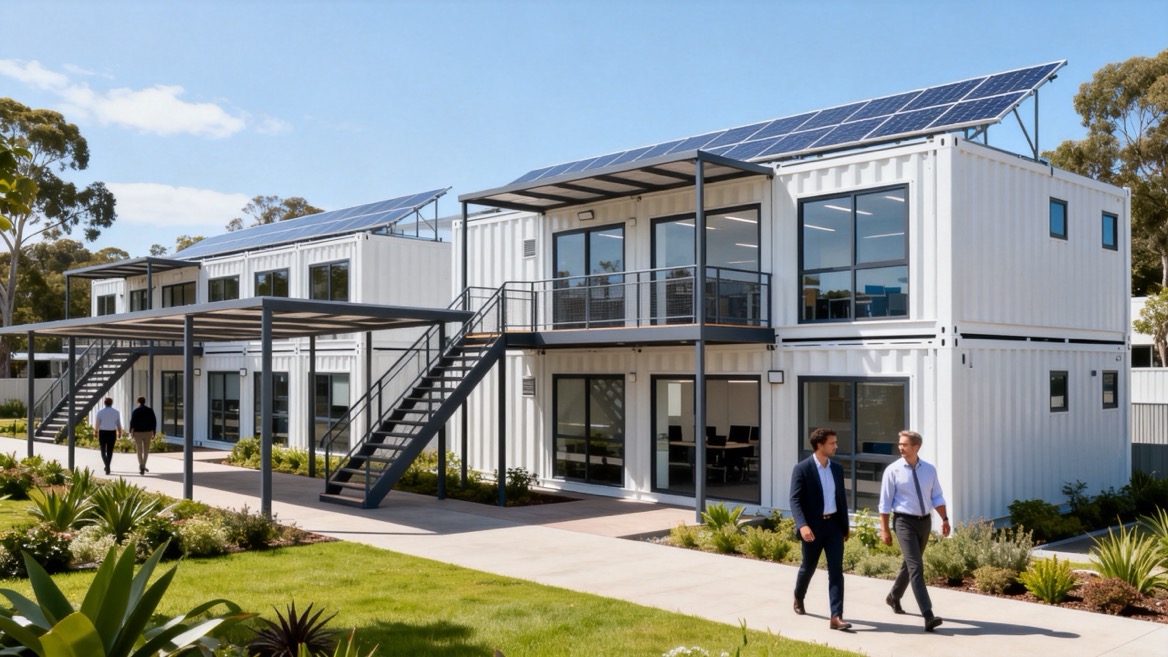
The following comparison is intended as a starting point for supplier qualification. Capacity figures are supplier-reported and should be reconfirmed during RFQ, factory audit, and production planning. MOQ is project-dependent and should never be assumed without a written quotation.
| Manufacturer | Primary Focus | Reported Capacity | Typical MOQ Approach | Publicly Reported Credentials or Capability | Recommended Buyer Profile |
|---|---|---|---|---|---|
| Welons Prefab | Container homes, modular buildings, customized steel structures | Up to 300 units/day | Flexible; suitable for mixed and OEM orders | Full-cycle design, production, logistics, installation, and after-sales support | SMEs, distributors, contractors, OEM brands |
| CIMC Modular Building | Volumetric modular hotels, apartments, accommodation | 50,000+ modules/year | Project-based | Design, manufacturing, logistics, installation; 2,500+ modules/month | Large developers and permanent modular projects |
| GS Modular | Permanent heavy-steel modular construction | 240,000 sets/year reported | Project-based | ASTM, CE, GOST-R, ISO-related compliance capability reported | Regulated, engineered, permanent building projects |
| Henan K-Home | Flat-pack container houses and camp facilities | 1,000 sets/month reported | Often suitable for bulk standard orders | ISO 9001:2015 and CE claims; third-party inspection support | Camps, offices, dormitories, distributors |
| Guangdong Oriental Guangsha | Customized modular buildings and containerized solutions | Confirm during RFQ | Project-based | ISO 9001, ISO 14001, ISO 45001 reported | Industrial and customized modular projects |
| WELLCAMP | Flat-pack and folding container houses | Confirm during RFQ | Standard and bulk orders | Containerized temporary-building specialization | Contractors and temporary accommodation buyers |
| DEEPBLUE Smarthouse | Light-steel homes and villas | Confirm during RFQ | Project-based | Residential and resort-oriented customization | Villas, resorts, housing distributors |
| PTH House | Flat-pack, folding, and steel prefab systems | Confirm during RFQ | Product-dependent | Broad prefab and steel-structure range | Mixed-product importers |
| Moneybox House | Expandable and folding homes | Confirm during RFQ | Model-dependent | Fast-deployment portable-house focus | Dealers and rapid-deployment projects |
| Steel-material supply partners | Coils, panels, and building components | Material-based | Often tonnage or batch-based | Steel and component sourcing | Experienced fabricators and private-label systems |
The phrase "premade container home" covers several very different systems. Before requesting quotations, define which system you actually need.
| Product Type | Typical Use | Main Advantage | Main Procurement Risk |
|---|---|---|---|
| Flat-pack container house | Site offices, dormitories, worker camps | Efficient shipping and repeatable assembly | Water leakage, thin steel, weak floor system |
| Detachable container house | Offices, accommodation, classrooms | Flexible layout and reusable parts | Connection quality and assembly accuracy |
| Folding container house | Rapid deployment and emergency use | Very fast installation | Hinge durability and roof-joint leakage |
| Expandable container house | Compact shipping with larger usable area | Larger interior after unfolding | Moving-wall alignment and sealing performance |
| Volumetric modular unit | Hotels, apartments, hospitals, student housing | High factory completion level | Oversized logistics and code coordination |
| Light-steel prefab home | Villas, resorts, residential projects | Flexible architectural design | More site assembly and local contractor dependence |
A serious RFQ should not simply say "container house, 20 ft" or "prefab home, good quality." It should specify measurable requirements.
- Main structural steel grade and thickness
- Galvanized coating weight or zinc coating specification
- Wall and roof steel-sheet thickness
- Paint system and dry-film thickness
- Insulation type: EPS, rock wool, PU, PIR, or glass wool
- Insulation density and thickness
- Fire-performance requirement for wall and roof assemblies
- Floor system, floor load, plywood or cement-board specification
- Door type, thickness, lock type, and hardware grade
- Window frame material, glass type, insect screen, and sealing method
- Electrical standard, voltage, sockets, circuit breakers, and cable size
- Plumbing layout, pipe material, drainage slope, and sanitary fixtures
- Roof drainage and flashing design
- Wind load, snow load, seismic requirement, and lifting design
- Target service life and corrosion-protection requirement
- Installation time, crew size, tools required, and foundation tolerance
- Packing method, loading quantity, shipping marks, and spare-parts kit
One of the most frequent risks is substitution of a thinner steel sheet, lighter galvanized profile, or lower-cost painted steel after quotation. A difference of only 0.1 mm may appear small, but across a large structure it can affect stiffness, impact resistance, corrosion life, and long-term maintenance.
How to avoid it:
- Require a detailed bill of materials before deposit payment.
- State minimum thickness tolerances in the purchase order.
- Request mill certificates for critical steel components.
- Use a third-party inspector with an ultrasonic thickness gauge.
- Check at least the base frame, roof frame, corner posts, wall sheets, and floor-support members.
- Include a pre-shipment inspection clause in the contract.
A supplier may describe rock wool panels as "fireproof," but this does not automatically prove that the complete wall assembly meets your local fire requirements. A panel core, metal skin, adhesive, joint treatment, electrical penetration, door, and ceiling system can all affect final fire performance.
How to avoid it:
- Specify the required fire classification and test standard.
- Ask whether the report covers the panel material or the complete assembly.
- Confirm panel thickness, density, facing, and manufacturer match the report.
- Do not accept an unrelated report for a different product.
- Ask whether the destination country requires a local test, product approval, or engineer's review.
A low product quotation can exclude items that are necessary for installation: foundation anchors, staircases, corridors, roof gutters, electrical fittings, plumbing, air conditioning provisions, loading, overseas packing, manuals, tools, and spare parts.
How to avoid it:
Request a quotation broken into the following categories:
- Building structure
- Wall and roof system
- Doors and windows
- Flooring
- Electrical package
- Plumbing package
- Sanitary package
- Internal finishes
- Accessories
- Packing and loading
- Freight terms
- Installation support
- Spare parts
- Exclusions
A container-style prefab house is not necessarily an ISO shipping container. It may be designed for loading inside a shipping container, transported as break-bulk cargo, or shipped as a modular unit on a flat rack. It may not be suitable for repeated intermodal shipping like a certified freight container.
How to avoid it:
Ask the supplier directly:
- Is this an ISO freight container, a container-style modular building, or a flat-pack system?
- Can it be shipped inside a standard 40HQ container?
- Is it designed for flat-rack or break-bulk transport?
- Is a CSC plate included if the unit is intended to function as an intermodal container?
- What is the gross weight, lifting method, and center of gravity?
- What are the maximum stacking and transport limitations?
A well-finished showroom unit can be misleading. The highest risk in container-home procurement often appears not in the sample itself but in batch consistency.
A factory may assign its most experienced welders, painters, and installers to the sample unit. Once bulk production starts, work may be distributed across different teams, subcontractors, or production lines. The result can be variation in weld quality, sealant application, panel alignment, electrical routing, door gaps, and paint coverage.
The most effective way to control this risk is to inspect the first production batch—not only the final shipment.
1. Approve the technical drawing and bill of materials before production.
2. Approve a pre-production sample or pilot unit.
3. Conduct an in-process inspection when 10% to 20% of the order is complete.
4. Measure steel thickness, frame dimensions, panel quality, and coating condition.
5. Check welding, fasteners, roof flashing, electrical routing, door/window operation, and floor flatness.
6. Require corrective actions before bulk completion.
7. Conduct final random inspection before loading.
8. Verify packing, labels, installation manuals, spare parts, and container loading photographs.
For an OEM distributor, a batch-control checklist is usually more valuable than a single beautiful product video.
Request the supplier's:
- Chinese business license
- Company legal name in Chinese and English
- Factory address
- Bank-account beneficiary name
- Export license or export-agent arrangement
- Trademark registration, if private-label branding is involved
- Manufacturing scope listed on the business registration
The company receiving payment should be consistent with the legal manufacturer or clearly identified export company. If the invoice company, bank beneficiary, factory entity, and certificate holder are all different, request an explanation before proceeding.
To verify whether an ISO certificate has expired:
1. Request the full certificate PDF, not only a cropped image.
2. Check the legal entity name and factory address.
3. Check the certification scope, such as manufacturing of modular buildings or steel structures.
4. Confirm the issue date and expiry date.
5. Identify the certification body and accreditation mark.
6. Search the certificate number through the issuing body's official verification system, where available.
7. Contact the certification body directly if the project is high value.
8. Confirm that the certificate covers the factory producing your order, not an unrelated affiliate.
Do not assume a certificate applies to all factories under a group. Large suppliers may have several production locations, and the certificate scope can be site-specific.
For the exact model you intend to buy, request:
- Structural drawings
- Material schedule
- Welding procedure or relevant quality process
- Steel mill certificates
- Insulation test report
- Fire-related test report where required
- Electrical component list
- Installation manual
- Packing list
- Previous project references
- Third-party inspection reports, if available
- Warranty terms
- Spare-parts list
A practical remote or on-site audit should cover:
- Raw-material storage and identification
- Steel-cutting equipment
- Welding stations
- Welding quality control
- Surface preparation and painting
- Sandwich-panel production or incoming panel checks
- Assembly line
- Electrical installation area
- Finished-goods inspection
- Packing and loading area
- Sample units and recent export orders
- Quality records and traceability documents
If travel is not possible, hire a qualified third-party inspection company to conduct a factory audit and pre-shipment inspection.
Transport restrictions can determine the correct house type before manufacturing begins.
For example:
- A flat-pack system may maximize units per shipping container.
- An expandable house may reduce shipping volume but require more careful handling.
- A volumetric module may need flat-rack, Ro-Ro, or break-bulk shipping.
- A permanent modular building may require port-to-site route surveys, cranes, and oversized-load permits.
- A remote island project may need compact packing because on-site lifting equipment is limited.
Do not finalize the building design before confirming the destination port, inland route, crane capacity, local road restrictions, and installation equipment.
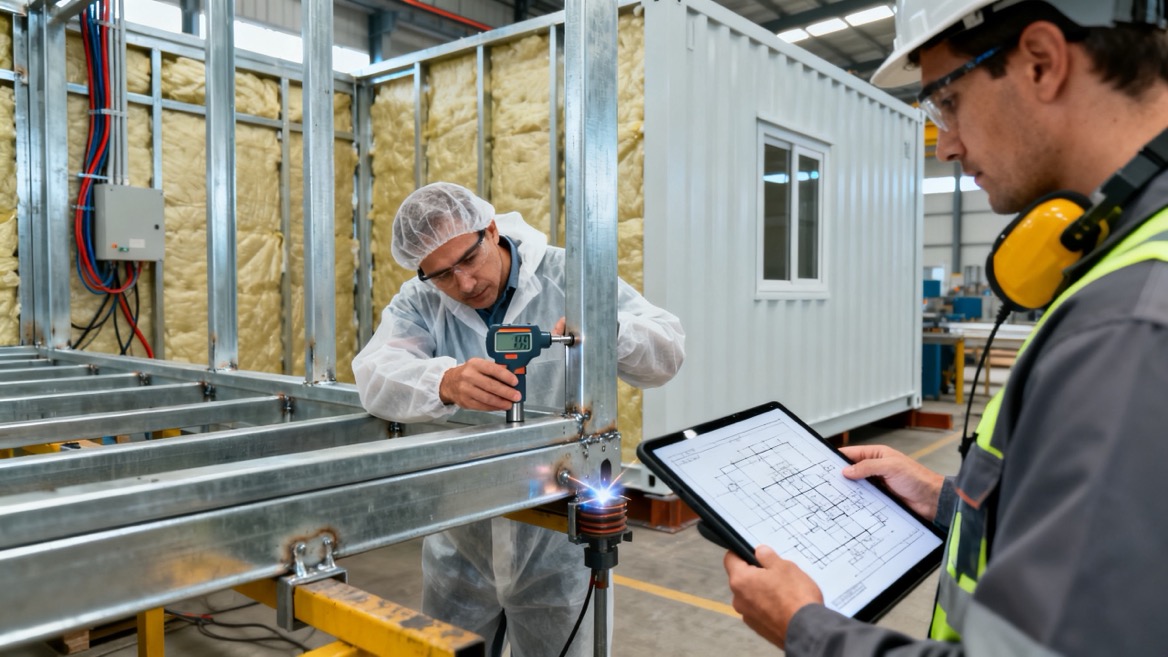
China offers a wide range of premade container home suppliers—from high-volume flat-pack and folding-house factories to advanced providers of permanent volumetric modular buildings. The best supplier is not necessarily the one with the lowest starting price or the largest factory. It is the supplier whose engineering capability, materials, documentation, quality controls, capacity, logistics plan, and communication process match your project requirements.
For distributors and growing brands, Welons Prefab offers a balanced option for OEM customization, mixed-product sourcing, practical communication, and one-stop support across design, production, transport coordination, installation guidance, and after-sales service. With reported capacity of up to 300 units per day, Welons Prefab can be especially relevant for buyers seeking scalable yet flexible container-home solutions rather than a one-size-fits-all catalog product.
Before selecting a manufacturer, prepare a clear technical brief, request detailed drawings and material schedules, verify certificates and test reports, inspect the first production batch, and confirm the logistics route before production starts. Those steps will do more to protect your investment than choosing a supplier based only on a low initial quotation.
Looking for an OEM-ready premade container home supplier in China? Contact Welons Prefab with your target market, floor plan, product dimensions, technical requirements, expected quantity, and delivery port to receive a project-specific solution and quotation.
Ask for the complete certificate, including the certificate number, issuing certification body, scope, legal entity, factory address, issue date, and expiry date. Then verify it through the issuing body's official certificate database or contact the certification body directly. Confirm that the certificate applies to the specific manufacturing site producing your order, not merely a related trading company or another factory.
No. CE-related documentation may be relevant for certain construction products or components, but it does not automatically make an entire modular building compliant with every national or local building requirement. Buyers must also consider structural design, fire safety, energy performance, electrical requirements, accessibility, planning approval, installation method, and local building regulations. Obtain project-specific advice from qualified local professionals before placing a large order.
There is no single universal specification, but the highest-priority items are typically structural steel thickness, corrosion protection, insulation system, roof waterproofing, floor load, electrical safety, door/window quality, and the engineering basis for wind, snow, and seismic loads. For coastal or tropical projects, corrosion resistance and waterproofing often deserve extra attention.
Yes, particularly for new suppliers, private-label products, residential projects, or technically demanding destination markets. A sample allows you to evaluate material quality, fit and finish, installation time, transport packing, sealant quality, electrical layout, and documentation. For larger projects, a pilot unit should be treated as the approved production benchmark and referenced in the quality agreement.
Create a side-by-side specification sheet. Compare steel grade and thickness, galvanized coating, insulation core and density, floor system, window glass, electrical components, plumbing, paint system, accessories, packing, installation support, warranty, and Incoterms. A cheaper quotation may omit critical components or use thinner materials. Compare the total delivered and installed scope, not just the ex-works unit price.
- [China International Trade Administration]
- [General Administration of Customs of the People's Republic of China]
- [China Association of Building Energy Efficiency]
- [International Organization for Standardization]
- [European Commission: Construction Products Regulation]


