
Views: 220 Author: Welons Prefab Houses Publish Time: 2026-08-20 Origin: Site


Content Menu
● Why Mining Camps Need Different Building Types
● Space Capsule House for Mining Camps
● Modular Container House for Mining Camps
● Which Option Performs Better?
● A Practical Hybrid Camp Strategy
● Three Questions Before You Buy
>> 1. What is the camp's expected life cycle?
>> 2. How many people must the camp support?
>> 3. What environmental conditions will the units face?
● Procurement Checklist for Mining Camp Buildings
● Why Welons Prefab Can Support Mining Projects
● FAQ
>> 1. Are space capsule houses suitable for mining worker accommodation?
>> 2. Can modular container houses be used for a complete mining camp?
>> 3. Which is faster to install: a space capsule house or a modular container house?
>> 4. Can mining camp container houses withstand harsh climates?
>> 5. Can a mining camp be relocated?
>> 6. Can capsule houses and container houses be used together?
For mining operators, choosing between a Space Capsule House and a Modular Container House is not simply an architectural decision. It affects workforce comfort, deployment speed, transport efficiency, maintenance, safety planning, and the long-term value of the camp.
From my experience evaluating prefab accommodation solutions for remote projects, the best option depends on the camp's purpose. Space capsule houses are often stronger for premium single-occupancy accommodation, executive lodging, site reception, and remote tourism-linked mining developments. Modular container houses are usually the more practical solution for scalable worker dormitories, offices, canteens, clinics, warehouses, and multi-function mining camp facilities.
For a growing or operational mine site, a well-planned combination of both systems can often create the most balanced result.
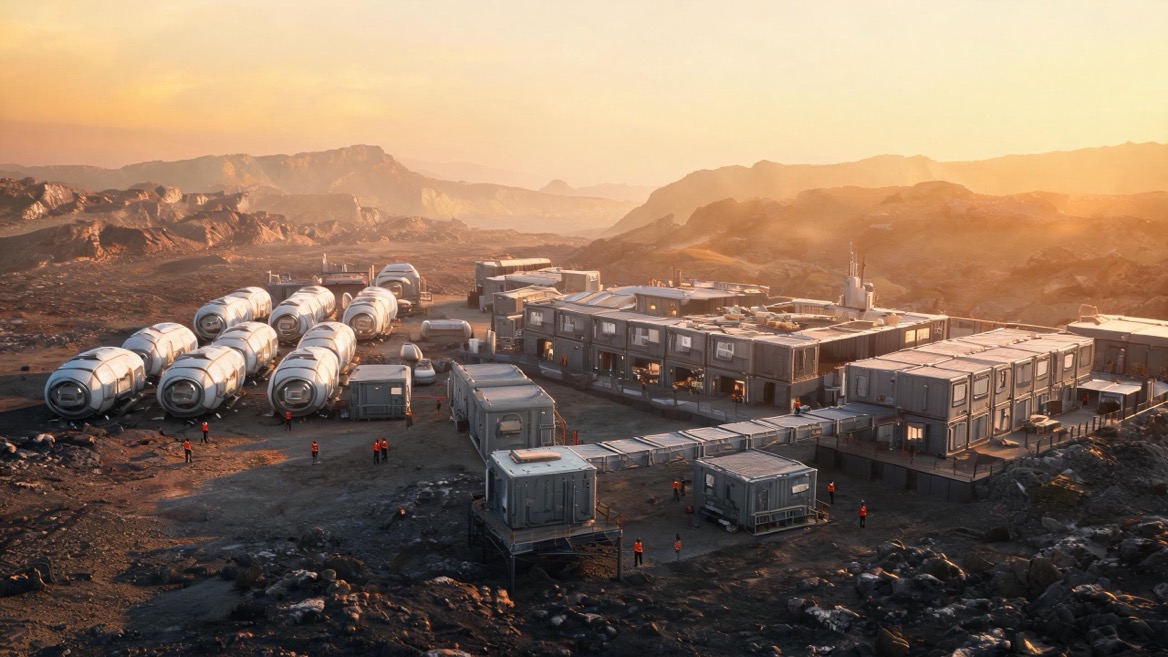
A Space Capsule House is a factory-finished prefabricated unit with a streamlined exterior, integrated interiors, large glazing areas, insulation, electrical systems, sanitary fittings, and optional smart-control features. It is generally delivered as a nearly complete unit.
A Modular Container House is a standardized steel-frame building module designed for transport, rapid assembly, connection, expansion, relocation, and repeated use. It can be configured as a single unit or combined into multi-room, multi-storey, and multi-building mining camp complexes.
For mining accommodation, the decision should be based on operational requirements rather than appearance alone.
| Comparison Factor | Space Capsule House | Modular Container House |
|---|---|---|
| Best use | VIP rooms, managers' rooms, reception, premium accommodation | Worker dormitories, offices, canteens, clinics, warehouses |
| Interior experience | High-end, integrated, private | Functional, adaptable, scalable |
| Deployment model | Usually delivered largely finished | Shipped in modules or flat-packed and assembled on site |
| Camp expansion | Limited by unit dimensions and transport requirements | Easy to add units, corridors, staircases, and floors |
| Capacity planning | Better for low-density occupancy | Better for medium- and high-density accommodation |
| Building appearance | Futuristic and distinctive | Practical, standardized, professional |
| Relocation potential | Possible, but transport can be more specialized | Strong, especially for temporary or moving projects |
| Customization | Interior finishes, layout, glazing, appliances | Layout, room type, insulation, façade, structure, services |
| Suitable mining phase | Exploration support, executive lodging, showcase areas | Exploration, construction, operation, expansion, relocation |
Mining camps are not ordinary residential developments. They operate in environments where distance, weather, worker welfare, logistics, safety, and service continuity matter every day.
A complete camp may need:
- Worker dormitories
- Management offices
- Meeting rooms
- Dining halls and kitchens
- Medical clinics
- Recreation rooms
- Security gates
- Laundry rooms
- Warehouses and workshops
- Toilets and shower blocks
- Generator, water, and wastewater support areas
Industry guidance consistently identifies accommodation, dining, offices, medical facilities, recreation space, and utility buildings as core elements of a functioning mining camp.
This is why a single building type rarely solves every requirement. A mining operator needs a camp system, not just individual rooms.
A Space Capsule House can bring a more refined accommodation experience to remote mining areas. Many units are designed as complete living modules, often including a bedroom, bathroom, lighting, climate-control preparation, glazing, furniture, and electrical systems.
Typical capsule designs use steel framing, insulated wall systems, coated metal cladding, and insulated glass. Common models are approximately 8.5 m or 11.5 m long, with widths and heights around 3.3 m, although specifications vary by manufacturer.
Better privacy and comfort. A self-contained capsule can create a quiet personal space for senior managers, engineers, visiting clients, and long-shift personnel.
High visual value. Its distinctive exterior can improve the appearance of reception areas, executive camps, or visitor accommodation.
Fast room readiness. When delivered with interior systems already installed, the unit can reduce on-site finishing work.
Useful for premium camp zones. Capsule units can work well near management offices, remote inspection sites, environmental monitoring stations, or project demonstration areas.
However, mining camps must be evaluated through an operational lens.
A capsule house may be less suitable when the project requires:
- Hundreds of worker beds
- Repeated camp expansion
- Multi-storey dormitory blocks
- Standardized shared washroom facilities
- Frequent relocation between mining areas
- Tight transport budgets for remote sites
- Large kitchens, dining areas, workshops, or warehouses
Large finished modules can also require careful route planning, lifting equipment, and site access verification. Before selecting capsule units, procurement teams should confirm road width, turning radius, bridge limits, crane availability, and final-site foundation conditions.
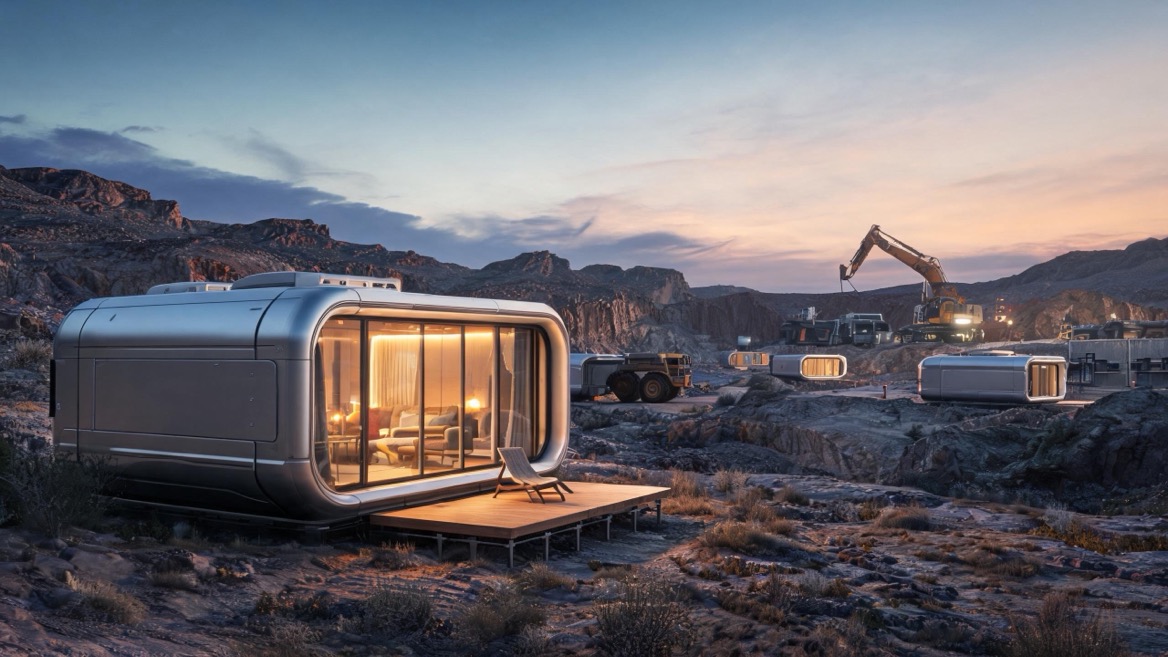
A Modular Container House is generally the stronger core solution for workforce accommodation and operational facilities. Its biggest advantage is that it supports repeatable, scalable, and functional camp planning.
A standard container-style module can be used independently or combined with other units to create dormitories, offices, storage areas, kitchens, toilets, meeting rooms, and multi-level buildings. One industry guide notes that a standard unit around 2.45–3 m wide by 6 m long can support living or working functions for roughly four to six people, depending on the layout and occupancy standard.
Scalability. Add units as the workforce grows. A small exploration camp can later become a larger construction or operations camp.
Layout flexibility. Modules can form corridors, room rows, U-shaped compounds, dining zones, administrative blocks, and separate male/female accommodation areas.
Transport efficiency. Detachable or flat-pack systems can reduce shipping volume and make inland delivery easier where roads are difficult.
Practical maintenance. Standardized walls, doors, windows, electrical components, and steel framing simplify replacement and repair planning.
Multi-storey capability. Engineered systems can support stacked structures where land area is limited or a compact camp layout is required.
Better functional coverage. The same building platform can serve accommodation, office, dining, medical, security, and warehouse needs.
A container house is highly practical, but it still requires thoughtful design.
Without proper planning, a container camp can feel crowded, noisy, or too basic. To avoid this, operators should specify:
- Appropriate room size and occupancy
- Thermal insulation suitable for local climate
- Heating, cooling, and ventilation systems
- Fire alarms and emergency exits
- Sound-control measures
- Durable flooring and wall finishes
- Sanitary facilities sized for peak usage
- Shaded walkways and drainage
- Recreation and rest areas
Remote-camp guidance commonly highlights room privacy, climate control, fire safety, hygiene, and ergonomic furniture as important worker-accommodation considerations.
| Mining Camp Requirement | Better Choice | Why |
|---|---|---|
| 20–50 premium rooms | Space Capsule House | Delivers stronger comfort, privacy, and visual appeal |
| 200+ worker beds | Modular Container House | Easier to standardize, expand, and manage |
| Temporary exploration camp | Modular Container House | Better mobility and flexible scaling |
| Executive or client accommodation | Space Capsule House | Creates a more premium living environment |
| Offices and meeting rooms | Modular Container House | Easier to connect into larger functional layouts |
| Canteen and kitchen | Modular Container House | Supports larger open interior planning |
| Warehouse and workshop | Modular Container House | Better suited to practical industrial functions |
| Tourism-linked mine site | Hybrid solution | Capsule units for guests, container modules for operations |
| Harsh climate location | Depends on engineering | Insulation, wind rating, corrosion protection, and utilities matter more than exterior style |
| Relocatable camp | Modular Container House | Designed for repeated transport and reassembly |
For many mining developments, the best answer is not "capsule versus container." It is a hybrid mining camp plan.
For example, a 300-person camp could use:
1. Modular container houses for worker dormitories, toilets, showers, offices, laundry, dining, kitchen, clinic, security, warehouse, and maintenance areas.
2. Space capsule houses for senior managers, site visitors, specialist engineers, and short-term executive accommodation.
3. Connected container corridors, shaded walkways, and centralized utility lines to improve circulation and simplify maintenance.
4. Separate quiet accommodation zones away from vehicle routes, generator areas, workshops, and dining logistics.
5. A phased layout that allows future expansion without disrupting existing camp operations.
This approach creates a clear distinction between high-volume operational housing and high-comfort individual accommodation.
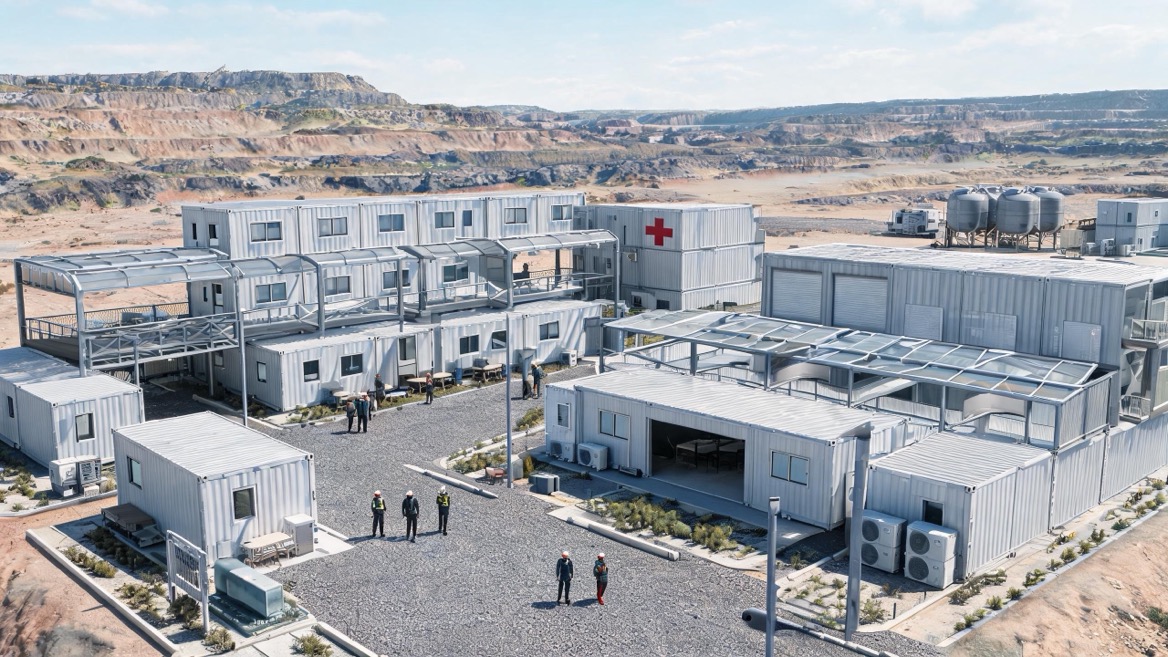
A six-month exploration camp needs a different solution from a 10-year operational mining village.
For short-duration projects, prioritize transport efficiency, fast installation, and relocation. For long-term operations, prioritize durability, corrosion protection, worker experience, utility integration, and lifecycle maintenance.
Do not calculate only current headcount. Include:
- Peak construction workforce
- Shift rotation
- Contractors and temporary visitors
- Medical and emergency capacity
- Future expansion allowance
- Gender-separated accommodation requirements
- Storage and service personnel
A camp designed only for today's workforce can become expensive to modify later.
Mining sites may experience heat, cold, heavy rain, dust, high winds, coastal corrosion, or seismic activity. The building specification should be engineered for actual site conditions.
For example, mine-camp compliance can involve national building rules, worker-accommodation requirements, mining safety obligations, electrical systems, plumbing, wind loads, and fire performance requirements. Local regulations always need project-specific confirmation before manufacturing begins.
Before placing an order, ask your supplier for the following:
- Structural drawings and engineering calculations
- Wind, snow, seismic, and floor-load design criteria
- Steel grade and corrosion-protection specification
- Wall, roof, and floor insulation details
- Fire safety options and escape-route planning
- Electrical, plumbing, HVAC, and drainage drawings
- Unit dimensions, weight, and shipping plan
- Foundation requirements
- Assembly instructions and installation support
- Spare-parts list and maintenance recommendations
- Production schedule and quality-control process
- Custom branding, interior finishes, and furniture options
For global mining projects, also verify that the design can be adapted to local laws before production. A factory-built module should never be treated as automatically compliant in every destination market.
Welons Prefab has 11 years of experience manufacturing Space Capsule Houses, Prefab Container Houses, and modular building solutions for offices, dormitories, canteens, meeting rooms, warehouses, exhibition spaces, and industrial facilities.
With a stated daily production capacity of 300 units, Welons Prefab can support projects that require fast volume delivery, customized layouts, OEM manufacturing, wholesale supply, and integrated project coordination.
For mining camps, the practical value lies in creating a tailored building mix:
- Modular container dormitories for workforce accommodation
- Office and meeting-room modules for site administration
- Canteen and kitchen structures for daily operations
- Warehouse and workshop modules for equipment support
- Premium capsule units for management, visitors, or specialist staff
- Flexible layouts designed around the site's workforce, climate, transport route, and future expansion plan
The right mining camp is not the most visually impressive one. It is the one that keeps people safe, comfortable, productive, and supported throughout the project lifecycle.
Contact Welons Prefab today to discuss your mining camp headcount, site conditions, accommodation standard, destination country, and delivery schedule. Our team can help you build a customized Space Capsule House and Modular Container House solution for your project.
They can be suitable for single-occupancy rooms, management accommodation, and premium staff lodging. For large worker dormitories, modular container houses are usually more economical and easier to scale.
Yes. They can be configured as dormitories, offices, dining halls, kitchens, medical rooms, toilets, showers, warehouses, security stations, and recreation facilities.
A fully finished capsule may be ready for use quickly after delivery, but modular container systems are often faster for building a complete large-scale camp because they can be transported, connected, and expanded in standardized phases.
They can, provided the design is specified for the actual site. Key factors include steel protection, insulation, wind resistance, roof design, drainage, HVAC capacity, and locally required structural standards.
Yes. Modular container houses are particularly suitable for relocation because they can be disassembled, transported, and reassembled. The exact relocation process depends on the structural system and condition of the units.
Yes. A hybrid plan is often effective: use container modules for high-capacity operational functions and capsule houses for premium, private, or visitor-facing accommodation.
1. [RTO House — Space Capsule House: China's Futuristic Prefab Tiny Home] [rtophouse]
2. [GS Housing — Mining Camp Housing Guide] [gshousinggroup]
3. [CDPH — Mine Camp Accommodation: Modular Solutions for Remote Mining Operations] [cdph]
4. [Rapid Camps — Remote Mining Camps Guide] [rapidcamps.com]
5. [Shipping Containers — Mining Camp Compliance: Standards & Regulations] [shippingcontainers]
6. [CDPH — Mine Camp Accommodation: 30% Faster, Weather-Proof Camps] [cdph]


