
Views: 259 Author: Welons Prefab Houses Publish Time: 2026-10-23 Origin: Site


Content Menu
● Why Source Prefab Container Homes from China?
● How These Manufacturers Were Selected
>> Understand What "Container Home" Means Before Ordering
● Manufacturer Comparison: Capacity, MOQ, and Certification
● The Top 10 Prefab Container Homes Manufacturers in China
>> 1. Welons Prefab — A Featured Option for Flexible Customization and Full-Cycle Support
>> 2. GS Housing — Large-Scale Camps and Repeatable Modular Accommodation
>> 3. Lida Group — Integrated Camps and Steel-Structure Packages
>> 4. Chengdong / CDPH — Overseas Engineering and Remote-Site Accommodation
>> 5. K-HOME — Project-Specific Container Buildings and Workforce Facilities
>> 6. CBOX — Multiple Container Formats and Standardized Supply
>> 7. CIMC Modular Building — Permanent Modular Development
>> 8. PTH — Complete Workforce Housing and Mixed Building Systems
>> 9. HoMagic — Design-Led Integrated Prefabricated Buildings
>> 10. Moneybox House — Customizable Container and Prefabricated Building Supply
● Technical Specifications That Deserve More Attention Than the Headline Price
>> Specify Steel by Grade and Thickness
>> Separate Insulation Claims from Building Performance
>> Read Certifications According to Their Actual Scope
● Buyer's Guide: From Factory Verification to Delivery
>> 1. Verify the Manufacturer and Contracting Entity
>> 2. Issue One Controlled RFQ to Every Supplier
>> 3. Approve Materials and a First Article
>> 4. Inspect Before Components Become Inaccessible
>> 5. Compare Landed, Installed Cost
● An Often-Overlooked Procurement Trap: Inspect the Building Interfaces
● Conclusion: Select a Manufacturing Partner, Not Just a Product
>> 1. How can I check whether a manufacturer's ISO certificate has expired or been suspended?
>> 2. Does a CE-marked container house automatically qualify for installation in Europe?
>> 3. How should a buyer verify capacity for a large order?
>> 4. What contract terms help prevent material substitution after sample approval?
>> 5. Can a temporary container-house design be upgraded into a permanent home?
China offers international buyers a broad manufacturing base for prefab container homes, workforce accommodation, modular offices, and prefabricated commercial buildings. However, finding a supplier is easier than identifying a factory that can consistently deliver the right materials, documented quality, and destination-specific compliance.
For procurement managers, the most useful comparison is not simply which manufacturer advertises the largest factory. It is which supplier can translate a project brief into an approved design, a traceable bill of materials, a realistic production schedule, and an installation-ready shipment.
This guide compares ten Chinese manufacturers serving different purchasing needs, from flexible customized orders to large engineering camps and permanent modular developments. Welons Prefab appears first as the featured supplier for buyers evaluating configurable products and full-cycle support.
Editorial disclosure: This is a commercially commissioned procurement shortlist, not an independently audited ranking. Company capabilities are drawn from public supplier information and the commissioning company's brief. Published capacity figures are supplier claims unless otherwise stated; current factory conditions, certifications, prices, and delivery commitments require verification.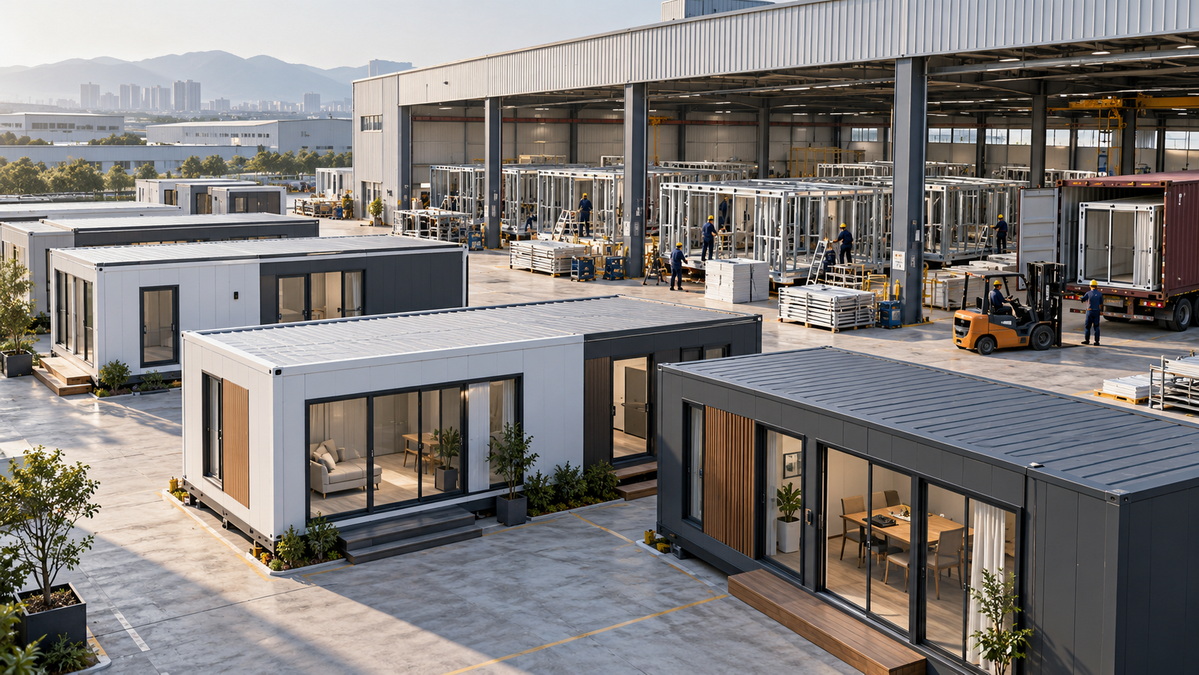
China's advantage lies in its manufacturing ecosystem rather than any single low-cost product.
Steel fabrication, sandwich-panel production, doors and windows, electrical components, sanitary fittings, and export logistics can be coordinated within established regional supply networks. This gives buyers access to multiple building formats and customization options without developing every component independently.
The manufacturers in this guide illustrate several regional concentrations:
- Guangdong, including Foshan, Guangzhou, and Jiangmen, supports container-house production, steel fabrication, and export-oriented modular manufacturing.
- Shandong, including Qingdao, has established suppliers of steel structures, prefabricated buildings, and engineering-camp accommodation.
- Beijing–Hebei provides integrated housing expertise associated with overseas construction projects.
- Henan and Zhejiang offer additional manufacturing bases for container buildings, light-steel housing, and workforce facilities.
International demand also extends beyond temporary accommodation. The Modular Building Institute's 2026 industry report places the U.S. permanent modular construction market at $20.5 billion in 2025, representing approximately 5.1% of construction activity in the segments studied. This is U.S. permanent modular construction data—not a measure of Chinese container-home exports—but it demonstrates the scale of an important destination market.
For buyers, the practical opportunity is supplier choice. The corresponding responsibility is selecting the correct building system and compliance pathway before comparing quotations.
A useful supplier shortlist should make its evaluation criteria visible.
The following framework prioritizes evidence procurement teams can request and examine. It does not assign numerical scores because comparable audited information is unavailable across all ten suppliers.
| Evaluation dimension | Evidence buyers should request | Why it matters |
|---|---|---|
| Manufacturing identity | Business license, factory address, production walkthrough, contracting entity | Distinguishes an operating manufacturer from an undisclosed intermediary |
| Engineering and development | Drawings, structural calculations, design-change records, prototype process | Shows whether customization extends beyond colors and finishes |
| Quality control | Incoming-material checks, welding inspections, coating records, final inspection reports | Reduces hidden substitutions and inconsistent batches |
| Delivery reliability | Current workload, material availability, production milestones, shipment history | Tests whether advertised capacity translates into available capacity |
| Compliance | Current certificates, relevant test reports, declarations, project-specific approvals | Separates management-system credentials from building acceptance |
| Commercial flexibility | Trial-order terms, customization boundaries, spare-parts support, warranty allocation | Supports repeat purchasing and distributor relationships |
The central principle is traceability: the delivered building should be traceable to the approved drawings, specified materials, inspection records, and agreed factory.
The term can describe materially different products:
1. Converted freight containers, where an intermodal container is modified for occupation.
2. Purpose-built flat-pack or detachable container houses, manufactured as building systems rather than converted freight containers.
3. Folding or expandable units, designed to reduce transport volume or increase usable space after deployment.
4. Permanent volumetric modules, engineered as parts of a complete building.
These categories differ in transport, assembly, structural design, and inspection requirements. A manufacturer experienced in construction-site cabins is not automatically qualified to supply permanent residential buildings in every jurisdiction.
Capacity figures below use different units, time periods, and product definitions. They should not be treated as directly comparable. "Not verified" means this review did not establish a reliable current figure; it does not mean the capability is absent.
| Manufacturer | Published capacity or production indicator | MOQ status | Certification or approval position |
|---|---|---|---|
| Welons Prefab | Reports 300 units per day | Confirm by product and customization scope | Certificate numbers, scope, and validity require verification |
| GS Housing | Reports 500 units per day and 200,000 sets annually | Project quotation required | Obtain current certificates and product-specific evidence |
| Lida Group | Comparable current unit output not verified | Project quotation required | Advertises ISO 9001, ISO 14001, ISO 45001, and CE/EN 1090 credentials |
| Chengdong / CDPH | Publishes 85,000 units of annual capacity | Project quotation required | Lists ISO 9001, ISO 14001, ISO 45001, and product-related credentials |
| K-HOME | Multiple manufacturing bases; comparable output not verified | Confirm standard-unit and customized-order thresholds | Advertises ISO and CE credentials; verify applicable scope |
| CBOX | Publishes 50,000 containers annually and up to 200 sets daily for a single container type | Confirm by product format | Obtain current product-specific documentation |
| CIMC Modular Building | BOPAS listing states 8,000+ modules annually | Development-specific package | BOPAS database lists an approved system with defined scope and limitations |
| PTH | Comparable current unit output not verified | Project quotation required | Request manufacturing-system and destination-specific evidence |
| HoMagic | Reports eight production bases; comparable unit output not verified | Project quotation required | Verify credentials against the actual contracting and manufacturing entities |
| Moneybox House | Reports approximately 25,000 m² of factory space; output not verified | Confirm by model and fit-out | Request current certificates and relevant test reports |
Sources: manufacturer disclosures and the BOPAS accreditation database. Published capacity is not a delivery guarantee, and none of the entries should be read as confirmation of a universal one-unit MOQ.
Experience and establishment: Welons Prefab reports 11 years of professional experience in the commissioning brief. Its reviewed About Us page does not state a legal incorporation year, so buyers should confirm this through the business license rather than infer a founding date.
Market orientation: International customers, with the company highlighting the Philippines as an important part of its group background and expansion.
Welons Prefab presents a broad product range covering standard container houses, fast-assembly prefabricated homes, mobile toilets, sandwich panels, rock wool boards, and customized steel structures. Applications include offices, dormitories, canteens, meeting rooms, warehouses, exhibition spaces, and industrial facilities. The company reports daily production capacity of 300 units.
Its relevance to small and midsize brands is the combination of configurable products and services extending from design and production to logistics, installation, and after-sales support. The commissioning brief also identifies OEM, wholesale, and customized supply as core offerings.
Customization fit: Buyers can evaluate Welons for branded product configurations, room layouts, component selections, and coordinated building packages. Development depth should be demonstrated through drawings, prototype revisions, and a documented approval process rather than assumed from a general customization claim.
Procurement checkpoint: Request a named technical contact, agreed response times, a controlled bill of materials, and a first-article approval plan. These provide a practical test of communication efficiency and deep OEM support. Welons is a candidate for value-focused sourcing, but any cost advantage should be established through like-for-like quotations—not promotional claims.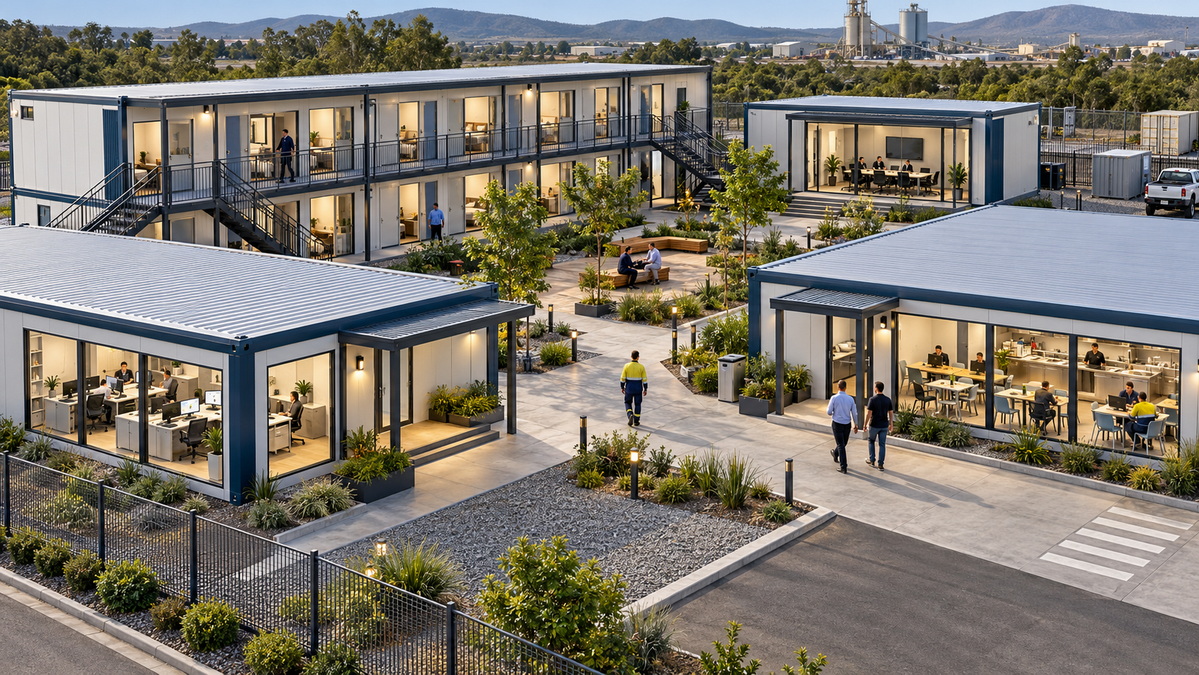
Established: 2001.
Market orientation: Domestic projects and international engineering-camp applications.
GS Housing integrates design, manufacturing, sales, and installation for flat-pack container houses, folding modular buildings, and related prefabricated products. Its website reports six production bases, daily output of 500 units, and annual capacity of 200,000 sets. These figures make it relevant to buyers planning substantial batches of standardized accommodation.
Customization fit: Project layouts, accommodation blocks, offices, and supporting camp facilities are more relevant evaluation areas than decorative private labeling.
Procurement checkpoint: Ask which production base will fulfill the order and how the proposed model fits that factory's available production slots. Group-level capacity should not substitute for a dated delivery plan.
Established: 1993.
Market orientation: Chinese and international engineering-construction buyers.
Qingdao-based Lida Group combines prefabricated accommodation with steel-structure capabilities. This makes it a practical candidate when the purchasing package includes dormitories, offices, warehouses, workshops, and other facilities rather than container homes alone. The company advertises ISO 9001, ISO 14001, ISO 45001, and CE certification associated with EN 1090.
Customization fit: Coordinated building packages, project layouts, steel structures, and application-specific accommodation.
Procurement checkpoint: Establish who holds responsibility for engineering interfaces between the container buildings, steel structures, foundations, and locally installed services. Verify the exact scope of any EN 1090-related documentation.
Established: 1998.
Market orientation: Global engineering camps, including projects in the Middle East, Africa, and South America.
Chengdong focuses on integrated camp construction and modular accommodation. Its public materials describe experience across more than 100 countries, together with modular buildings, steel structures, and supporting camp products. The company also lists management-system certifications and specialized product-related documentation.
Customization fit: Dormitory layouts, offices, canteens, sanitary facilities, and climate-specific camp solutions.
Procurement checkpoint: Request references from projects with comparable occupancy, climate, remoteness, and installation constraints. A similar operating environment is more informative than a long list of unrelated projects.
Establishment background: K-HOME's public materials describe more than 15 years of manufacturing experience and overseas-market development beginning in 2007. Confirm the legal incorporation date separately.
Market orientation: Overseas construction, workforce, mining, energy, and infrastructure projects; the company reports customers in more than 70 countries and regions.
K-HOME manufactures container buildings, prefabricated structures, and steel buildings, with manufacturing bases identified in Henan and Shandong. Its stated services include design development, manufacturing, shipping coordination, and installation guidance.
Customization fit: Layout changes, building configurations, supporting steel structures, and project-specific specification development.
Procurement checkpoint: K-HOME states that its standard approach uses Chinese GB standards while offering design solutions for other requirements. Confirm the exact destination standard, responsible designer, and approval deliverables before accepting a quotation.
Established: The company traces its business to 2006 and states that its overseas business developed in 2019.
Market orientation: China's domestic container-building market and overseas customers.
Foshan-based CBOX offers detachable, flat-pack, folding, expandable, and other container-house formats. Its public information emphasizes design, development, production, installation, and service, with published output figures that should be checked against the selected product and factory.
Customization fit: Configurable container formats, layouts, finishes, and supporting facilities.
Procurement checkpoint: Resolve the actual manufacturing location and production arrangement. Public references to factories, branches, and production bases should not be interpreted as interchangeable measures of directly controlled capacity.
Established: 2004.
Market orientation: International hotel, residential, student-accommodation, and other permanent-building projects, including developed markets.
CIMC Modular Building differs from suppliers focused mainly on temporary cabins. Its services include design, technical consultancy, manufacturing, logistics, construction, and installation. Public project information covers hotels, residences, student accommodation, and commercial buildings.
Customization fit: Developer-led modular design and manufacture rather than simple catalog-based private labeling.
Procurement checkpoint: The BOPAS database lists an approved CIMC modular system, but the approval includes explicit conditions covering structural analysis, configuration, moisture control, and delivery responsibilities. Approval of a defined system is not blanket approval of every design or jurisdiction.
Established: 1998, according to its corporate materials.
Market orientation: International workforce camps, industrial facilities, and light-steel housing.
PTH, identified as Zhejiang Putian Integrated Housing, offers workforce camps, steel structures, and light-steel residential systems. Its website describes delivery coverage across more than 150 countries and complete packages incorporating dormitories, kitchens, clinics, offices, and ancillary units.
Customization fit: Camp planning, mixed building systems, higher-comfort housing configurations, and coordinated facility packages.
Procurement checkpoint: Confirm whether the proposed solution is flat-pack, panelized, or fully volumetric. The choice changes freight volume, factory completion level, installation labor, and site responsibilities.
Established: 2009, according to its About Us page.
Market orientation: Its published materials identify North America, South America, Europe, Australia, and Southeast Asia.
HoMagic describes integrated capabilities covering research and development, design, manufacturing, engineering construction, and logistics. Its product applications extend to education, healthcare, hotels, residences, engineering camps, and public facilities. It also describes automated fabrication equipment and multiple production bases.
Customization fit: Design-led modular projects, coordinated building development, and application-specific manufacturing.
Procurement checkpoint: Verify the legal contracting entity, ownership relationships, manufacturing location, and certificate holder. Statements involving a larger corporate group should be supported by documentation before they influence credit or compliance decisions.
Establishment: The reviewed website states more than ten years of product-development and production experience but does not establish an exact incorporation year.
Market orientation: International supply of modular buildings, container homes, portable facilities, and steel structures.
Guangzhou Moneybox Steel Structure Engineering describes a manufacturing and engineering model combining product development, customization, and project-oriented supply. Its range includes container houses, expandable homes, prefabricated buildings, and supporting facilities.
Customization fit: Product layouts, finishes, portable facilities, and coordinated project packages.
Procurement checkpoint: Ask for destination-specific references and a complete specification for the exact model. Confirm whether requested changes are existing production options or new development requiring additional engineering and validation.
"Galvanized steel frame" is an incomplete purchasing specification.
The contract should identify steel grade, base-metal thickness, dimensional tolerances, corrosion-protection requirements, and the supporting inspection evidence. If a supplier proposes substituting one material designation for another, the responsible engineer should approve the change.
Do not accept a general claim that two grades are equivalent without checking the relevant mechanical properties, product form, and design assumptions.
Panel thickness alone does not establish thermal comfort or fire performance.
Request documentation addressing:
- Insulation-core identity and declared properties.
- Whole-assembly thermal performance.
- Panel-joint and frame thermal bridging.
- Relevant fire-test classification and tested configuration.
- Roof, floor, wall, and service-penetration details.
A valuable illustration appears in CIMC's BOPAS listing: its service-life assessment assumes a warm-frame arrangement and requires thermal checks where insulation is bridged. That condition shows why a favorable assessment cannot be separated from the construction details supporting it.
ISO 9001 concerns quality-management systems. It does not, by itself, establish that a particular home satisfies local structural, fire, energy, or electrical requirements.
Similarly, CE marking is not a universal building permit. For construction products, buyers must identify the applicable technical specification and supporting declaration. European Commission guidance states that CE marking requires an applicable harmonized technical specification or relevant European Technical Assessment.
RoHS concerns hazardous-substance restrictions for electrical and electronic equipment within its scope. It should not be presented as a whole-building environmental certification.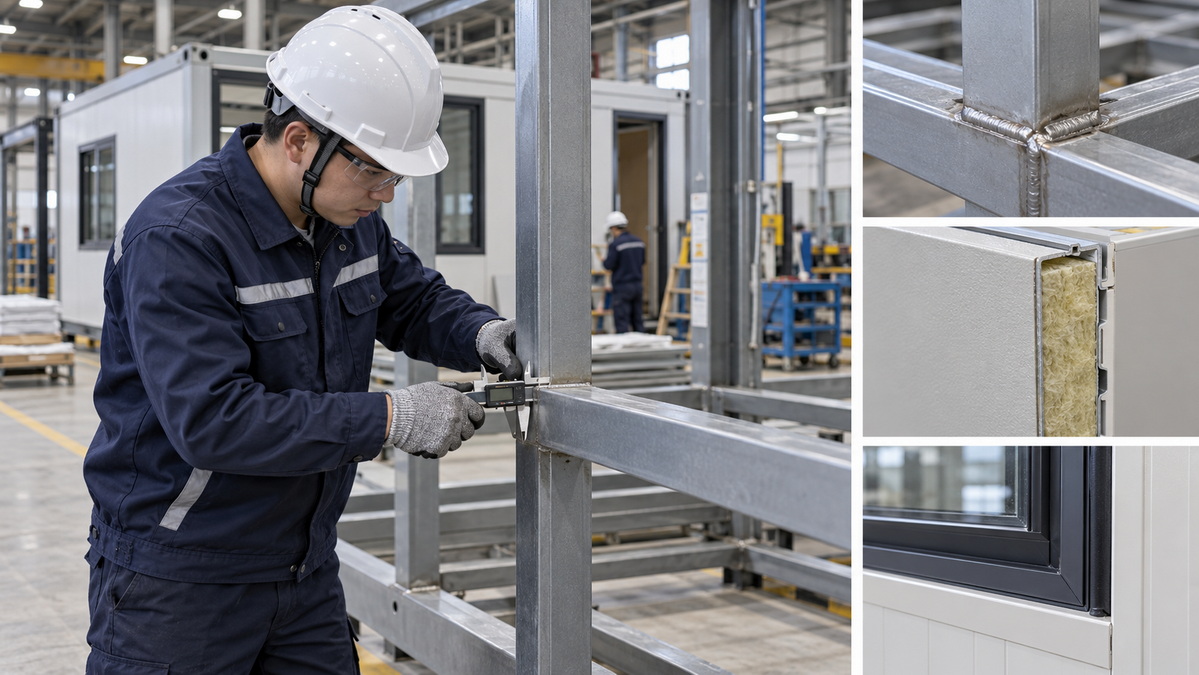
Obtain the business license, factory address, bank beneficiary details, and proposed contract entity.
Where these differ, request a written explanation of the relationship and responsibilities. A trading arrangement is not automatically unacceptable; an undisclosed arrangement makes accountability harder to manage.
Arrange a live factory walkthrough or independent audit covering production, material storage, inspection areas, and the specific product line.
Include the same occupancy, destination, climate, layout, finish schedule, service requirements, and installation assumptions.
Require suppliers to identify exclusions and deviations separately. This prevents a lower-priced offer from appearing competitive simply because it omits insulation, wiring, sanitary fittings, connection hardware, or documentation.
For repeat orders, use a staged approval process:
1. Review drawings and the bill of materials.
2. Approve representative material samples.
3. Inspect a first completed unit or representative assembly.
4. Record approved details and outstanding corrections.
5. Release bulk production against the controlled specification.
A showroom unit is useful only if its construction matches the purchased model.
Set inspection hold points before wall and floor closures conceal critical materials and services.
The inspection plan should address material identity, structural connections, coating condition, dimensional checks, electrical testing, plumbing checks, and agreed water-resistance testing. Define acceptance criteria and corrective-action responsibilities in advance.
Evaluate factory price alongside packaging, inland transport, freight, insurance, import charges, local haulage, foundations, lifting equipment, installation, utility connections, approval costs, and spare parts.
Flat-pack, expandable, and finished volumetric systems transfer different amounts of work between the factory and destination site. Comparing their factory prices alone can therefore produce a misleading result.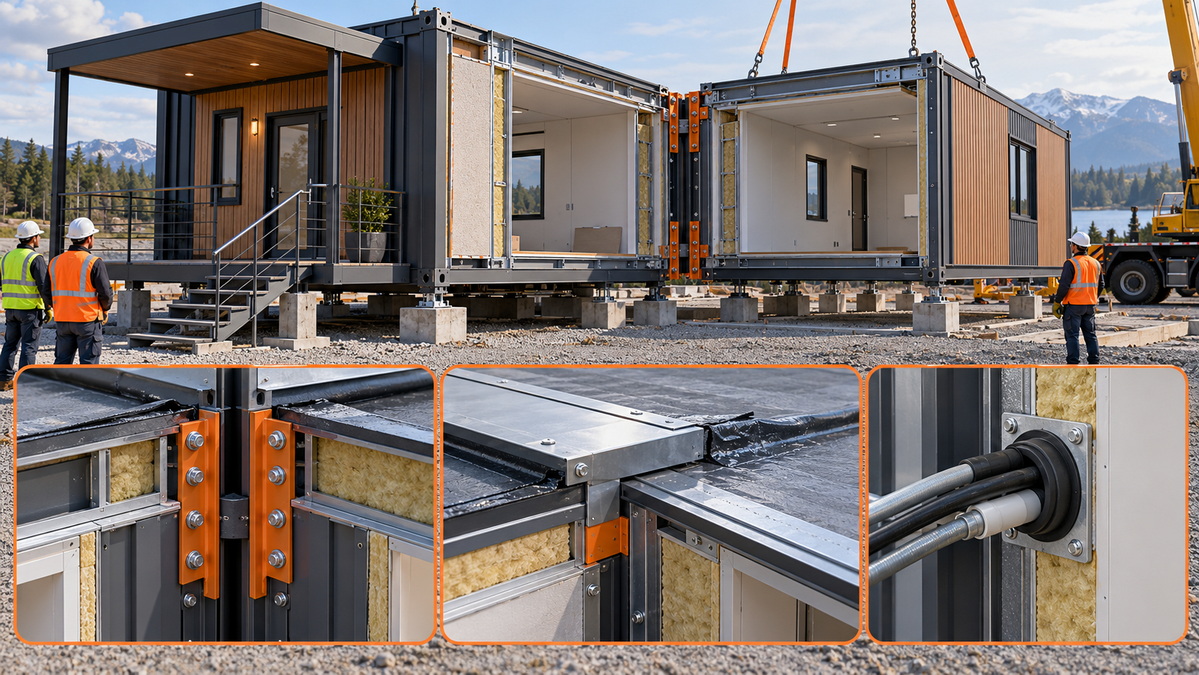
The overlooked risk is not always an obviously defective panel. It is the interface between otherwise acceptable components.
Module joints, roof drainage, service penetrations, structural connections, floor edges, and foundation interfaces deserve separate review.
A single display unit does not demonstrate how a multi-unit building performs after connection. Buyers should therefore request a representative assembly showing:
- A joint between adjacent units.
- The proposed roof and drainage arrangement.
- Structural connection and anchoring details.
- Service penetrations and utility interfaces.
- Installation tolerances and finishing procedures.
This recommendation follows a broader principle visible in system assessments: performance depends on the assembled configuration and its conditions of use, not merely the quality of individual modules. CIMC's BOPAS limitations concerning structural analysis, ventilation, moisture, and thermal bridging illustrate that distinction.
China's prefab container homes manufacturers serve different procurement models. GS Housing and Chengdong warrant consideration for substantial camp projects; Lida and PTH offer broader building-package capabilities; CIMC addresses more complex permanent modular development. Other suppliers provide different combinations of product formats, customization, and project support.
Welons Prefab is a relevant starting point for buyers evaluating configurable accommodation, OEM supply, and coordinated services from design through installation. Its reported production capacity should be assessed alongside the actual specification, available production slots, and documented inspection process—not in isolation.
For a comparable proposal, send Welons Prefab a project brief covering destination, intended use, quantity, layout, compliance requirements, finish level, and target delivery date. Request an itemized quotation, a controlled bill of materials, a realistic production schedule, and a first-article approval plan before committing to volume production.
Search the certificate number or legal company name through IAF CertSearch. Review the current status, certification scope, issuing body, and covered entity.
Match the factory and activity to the certificate rather than checking the brand name alone. If the record is missing or unclear, contact the issuing certification body directly; an unsuccessful search should prompt further verification rather than an automatic fraud conclusion.
No. Determine which product or component the marking covers, which technical specification applies, and what declaration supports it.
A CE-related document for a structural component or electrical item does not automatically approve the completed building. Local planning, structural, fire, energy, and installation requirements must still be addressed for the destination project.
Start with the exact model, quantity, fit-out level, and delivery sequence. Ask the supplier to identify material availability, allocated production lines, current workload, inspection milestones, and shipment dates.
Require a dated production plan linked to contractual milestones. Published group capacity is useful background, but it is not proof that the required production slots are available.
Attach approved drawings, a detailed bill of materials, material tolerances, inspection requirements, and the first-article approval record to the purchase agreement.
Require written approval for substitutions. Identify inspection hold points and the buyer's right to examine materials before concealed work is closed. Specify remedies for deviations rather than relying on a general promise of equivalent quality.
Possibly, but this should be treated as an engineering and approval question—not a finish upgrade.
A permanent dwelling may require a different structural basis, envelope, moisture-control strategy, fire design, services, foundation system, or inspection route. Obtain destination-specific professional review before production. Permanent-system assessments themselves can carry detailed limitations, so a supplier's successful temporary-building projects are not sufficient evidence.
- Welons Prefab's company page supports its product range, full-cycle services, and reported 300-unit daily capacity. Its 11-year experience claim and OEM positioning come from the commissioning brief; the reviewed page does not establish an incorporation year. [welonsprefab]
- Manufacturer histories and capabilities draw on published company information for GS Housing, Lida Group, Chengdong, K-HOME, CBOX, CIMC Modular Building, PTH, HoMagic, and Moneybox House. These disclosures are not substitutes for factory audits. [lidaprefabhouse]
- The 2025 market figure comes from the Modular Building Institute's 2026 U.S. permanent modular construction report. It is not Chinese export data or a container-home-only market estimate. [modular]
- Certification and approval guidance draws on European Commission materials, IAF CertSearch, and the published CIMC system entry in the BOPAS database. [bopas]


