
Views: 264 Author: Welons Prefab Houses Publish Time: 2026-10-28 Origin: Site


Content Menu
● What Does Combined Container Shipping Mean for Prefab Buildings?
>> LCL vs. FCL for Prefab Container House Shipments
● 1. Cargo Damage: Protect Panels, Frames, and Finishes
>> How to Reduce Damage During Combined Container Shipping
● 2. Customs and Documentation Problems: Prepare Before Dispatch
>> Build a Destination-Specific Document Checklist
● 3. Unpredictable Delivery Times: Plan Around Site Readiness
>> Ask for Milestones, Not Just an Arrival Date
● 4. Missing or Misrouted Components: Track the Installation Package
>> Create Package-Level Traceability
● 5. Hidden Charges and Insurance Gaps: Compare the Complete Exposure
>> Request an Itemized Delivered-Cost Comparison
● A Practical Pre-Shipment Checklist for Prefab Container Houses
● What to Do If Cargo Arrives Damaged or Incomplete
● Plan Your Next Shipment with Welons Prefab
>> 1. Is combined container shipping suitable for complete prefab container houses?
>> 2. Is LCL always cheaper than FCL?
>> 3. How can buyers reduce moisture damage?
>> 4. Does cargo insurance cover every shipping loss?
>> 5. What information should I provide for a shipping quotation?
>> 6. Does customs clearance mean my prefab building is approved for use?
Combined container shipping can make smaller imports more practical, but its risks deserve careful attention when purchasing prefab container houses, replacement parts, or modular building accessories. Damaged panels, missing fittings, unexpected charges, and delayed deliveries can affect more than transportation costs. They can disrupt installation and postpone building handover.
At Welons Prefab, we approach shipping as part of project planning—not simply the final step after production. Our perspective as a Chinese manufacturer with 11 years of professional experience is straightforward: a successful shipment must arrive complete, identifiable, and ready for its intended installation sequence.
This guide explains the five main combined container shipping risks, how to reduce them, and when a different shipping arrangement may better suit your project.
In this guide, combined container shipping means less-than-container-load shipping, commonly called LCL. Multiple shippers share space inside one freight container.
This is different from combining several prefab container house modules into a larger building. It also differs from loading multiple housing packages belonging to one buyer into a dedicated container.
LCL may suit replacement windows, electrical accessories, sample materials, or smaller component orders. However, complete building packages require a closer review of their packed dimensions, weight, lifting arrangements, and handling restrictions.
A product described as a "container house" is not automatically an approved ocean freight container. Confirm whether it will travel as packaged cargo inside a container, through another carrier-approved arrangement, or using specialist equipment.
| Decision factor | LCL: shared container | FCL: dedicated container |
|---|---|---|
| Typical consideration | Smaller, compatible component shipments | Larger orders or coordinated building packages |
| Cargo handling | Consolidation and separation add handling stages | Can reduce handling of individual packages |
| Packing requirements | Protection against repeated warehouse handling | Protection for the agreed loading and unloading method |
| Cost comparison | Include minimum charges and destination handling | Include container utilization and inland transport |
| Project coordination | Check availability of every critical package | Plan container unloading and installation sequence |
Neither option is automatically cheaper. Compare the total delivered cost and operational suitability rather than the ocean freight rate alone.
Prefab building components have different vulnerabilities. Steel frames can damage lighter packages if cargo shifts. Panel edges can deform. Glass, doors, and finished surfaces need protection appropriate to their handling environment.
Shared-container shipping introduces additional warehouse movements, making packaging design particularly important.
Moisture also deserves attention. Condensation can develop when temperature changes interact with moisture in cargo, packaging, or timber. It is not a problem exclusive to LCL shipments.
Agree on a written packing specification before production finishes.
Include:
- Edge protection for panels and finished components.
- Suitable crates or supports for fragile items.
- Clearly marked lifting points and handling restrictions.
- Moisture protection appropriate to the materials and voyage.
- Blocking, bracing, and securing arrangements.
- Package weight, dimensions, and permitted stacking conditions.
Do not treat stretch film as a complete protective system. It cannot replace structural support or proper securing.
Request photographs showing the goods before packing, completed packages, identification labels, and loading arrangements. For sensitive or valuable shipments, consider an independent pre-shipment inspection.
The most useful question is not "Is the packaging strong?" It is "Which handling conditions has this packaging been designed to withstand?"
A documentation discrepancy can interrupt cargo release even when the goods themselves are acceptable.
With LCL, inspection or release problems involving the shared container can also affect access to other shipments. The outcome depends on local procedures, the nature of the inspection, and the consolidation arrangement. One shipment's problem does not automatically mean every consignment faces an identical delay.
Prefab building orders introduce another challenge: the shipment may contain structural components, fittings, furniture, and electrical equipment with different documentation requirements.
Have the importer and customs broker review the proposed shipment before booking.
Check:
1. Commercial invoice descriptions and declared values.
2. Packing-list quantities, package numbers, dimensions, and weights.
3. Proposed tariff classifications and supporting product information.
4. Any required origin documentation.
5. Destination-specific permits or conformity documents.
6. Applicable wood-packaging treatment and marking requirements.
Avoid vague descriptions such as "house accessories" when more precise identification is available.
Solid-wood pallets, crates, and dunnage may fall under ISPM 15 requirements. Processed materials such as plywood are treated differently under the standard, so confirm the actual packaging materials rather than requesting a generic "fumigation certificate."
Keep customs clearance separate from building approval. Successfully importing components does not establish that the completed structure meets local planning, structural, fire, or electrical requirements.
A vessel schedule is only one part of the delivery timeline.
LCL shipments may involve cargo collection, warehouse acceptance, consolidation, ocean transport, destination separation, customs release, and final delivery. A quoted port-to-port journey does not represent the full period before materials become available at your site.
For prefab projects, a missing critical component can matter more than several pallets of nonessential materials arriving on time.
Request a schedule covering:
- Cargo-ready date.
- Warehouse receiving deadline.
- Planned vessel departure and arrival.
- Expected destination cargo availability.
- Customs clearance arrangements.
- Delivery booking and unloading requirements.
Distinguish estimated dates from confirmed commitments.
Ask whether the service is direct or involves transshipment, and whether destination processing depends on third-party warehouses.
Build schedule contingency around the actual route and project sensitivity. A fixed buffer suitable for one destination may be inadequate—or unnecessary—for another.
Before dispatch, verify site access, unloading equipment, storage conditions, and the readiness of foundations or installation teams. Early arrival creates little value if the project cannot safely receive the shipment.
A modular building order is not merely a collection of boxes. It is a coordinated assembly system.
A missing connection kit, incorrectly routed door package, or unidentified electrical carton can interrupt installation even when most of the shipment arrives.
The solution begins with a traceable packing list rather than a last-minute search at the destination warehouse.
Assign a unique identification number to every pallet, crate, and carton.
Connect that number to:
- The purchase order.
- The relevant building or module.
- Component descriptions and quantities.
- Packed dimensions and gross weight.
- Installation drawings or assembly references.
- Packing photographs.
Place durable labels on more than one visible surface where practical. Put an additional identification sheet inside packages that may lose external labels.
For multi-building projects, group components by installation stage or building number when feasible. Avoid mixing critical fittings for several buildings in an unmarked carton.
At receipt, reconcile package numbers before distributing materials around the site. Report missing packages immediately and retain delivery records.
A low freight quotation can conceal an incomplete cost picture.
LCL charges may include origin handling, consolidation, documentation, destination handling, customs brokerage, storage, and final delivery. Some charges depend on shipment measurements, service terms, or events that cannot be fixed in advance.
Insurance requires a separate review. Carrier liability and cargo insurance are not interchangeable, and neither should be assumed to guarantee full reimbursement.
Ask each provider to identify the same cost categories.
| Cost category | What to clarify |
|---|---|
| Origin services | Collection, export handling, documentation, and consolidation |
| Main transport | Chargeable quantity, minimum charges, and applicable surcharges |
| Destination services | Warehouse handling, release procedures, and brokerage |
| Storage | Free-storage period and charges after expiry |
| Final delivery | Vehicle type, access restrictions, waiting time, and unloading |
| Insurance | Insured value, deductible, exclusions, and claims procedure |
| Import charges | Which taxes and duties are included or excluded |
Make sure the quotation matches the agreed delivery responsibilities and named destination.
For insurance, ask specifically about loading and unloading, fragile components, moisture damage, insufficient-packing exclusions, and geographic restrictions. Review the actual policy rather than relying on the phrase "all risks."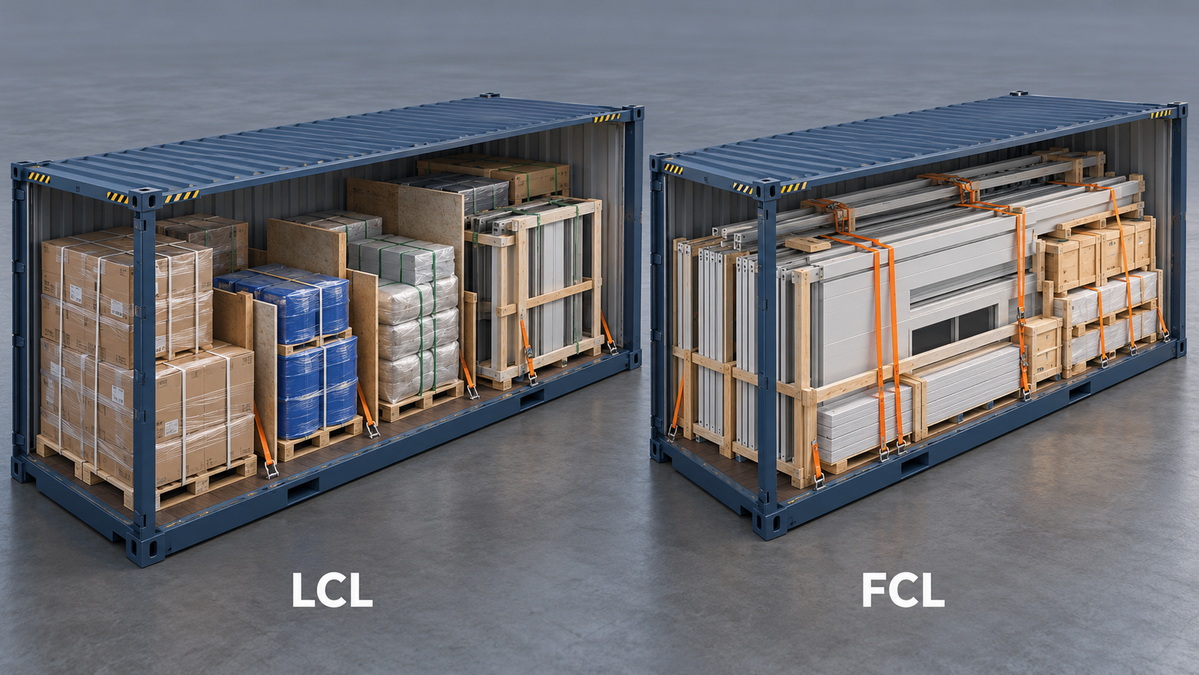
The most effective risk controls happen before goods leave the factory.
Use this seven-step process to align the manufacturer, forwarder, importer, and installation team.
1. Confirm the transport format. Establish packed dimensions, weights, package counts, and lifting requirements before selecting LCL or FCL.
2. Identify critical-path components. Flag items whose absence would stop installation.
3. Approve the packing method. Record protection, stacking restrictions, labels, and moisture-control measures.
4. Review import requirements. Obtain broker feedback before completing shipping documents.
5. Compare equivalent quotations. Use the same shipment scope and destination assumptions.
6. Verify site arrangements. Confirm access, unloading equipment, storage, and receiving personnel.
7. Create a shipment handover file. Combine packing lists, photographs, drawings, transport records, and insurance documents.
The governing principle is traceability: every component should have an identifiable location, purpose, and receiving check.
Prepare a receiving procedure before delivery day.
First, inspect package condition and count the packages before signing an unqualified receipt. Record visible damage or shortages accurately on the delivery documentation.
Next, photograph damaged packaging, labels, affected goods, and the surrounding cargo. Preserve packaging and damaged components where safe and practical.
Notify the forwarder, supplier, and insurer promptly. Ask whether a survey is required before unpacking further, repairing goods, or disposing of materials.
Keep commercial invoices, packing lists, delivery records, and repair estimates together. Follow the applicable policy and transport-document deadlines; reporting periods and claim requirements vary.
Finally, separate the claim process from project recovery. Determine whether replacement components, local repairs, or a revised installation sequence can reduce disruption without compromising safety or claim evidence.
Welons Prefab manufactures prefab container houses and modular building solutions for offices, dormitories, canteens, meeting rooms, warehouses, showrooms, and industrial facilities.
With 11 years of professional experience and a stated production capacity of 300 units per day, we support customized, OEM, wholesale, and one-stop project requirements. Production capacity should still be distinguished from the confirmed schedule for a particular order.
Before requesting a quotation, prepare your destination, intended building use, approximate quantity, preferred layout, and target delivery date.
Send these details to Welons Prefab and request a proposal covering the building specification, packing arrangement, shipping scope, and installation documentation. A clearly defined shipment helps turn factory output into a project that can be received and assembled efficiently.
It depends on packed dimensions, weight, handling restrictions, and carrier acceptance. Smaller component shipments may suit LCL. Complete building packages should be assessed individually rather than assumed to fit a shared-container service.
No. Compare origin charges, destination handling, delivery, packaging, and project-related costs. A lower ocean freight rate does not necessarily produce a lower delivered cost.
Start with dry materials and suitable packaging. Assess protective barriers, desiccants, ventilation considerations, and storage conditions for the specific cargo. No single moisture-control product compensates for wet packing materials or unsuitable handling.
No. Coverage depends on the policy wording, insured risks, exclusions, deductible, and evidence. Confirm whether the policy addresses the specific components and transport stages involved.
Provide the delivery location, cargo-ready date, package count, packed dimensions, gross weights, goods descriptions, and unloading restrictions. For a building project, include the required installation sequence and any critical delivery deadlines.
No. Import clearance and permission to construct or occupy a building are separate matters. Verify applicable building and site requirements with qualified local professionals before placing the order.
1. Yangzhou CIMC / TLC, "The Top 5 Risks of Combined Container Shipping and How to Avoid Them," January 29, 2026. Original article used to identify the five-risk framework; its unsupported universal claims and first-person service claims were not carried into this rewrite. [tlc-yz]
2. International Maritime Organization, International Labour Organization, and United Nations Economic Commission for Europe, "Code of Practice for Packing of Cargo Transport Units." Guidance supporting the discussion of packing, securing, handling, and responsibilities across the transport chain. The code is a non-mandatory global code of practice. [unece]
3. UNECE, CTU Code, "Packing and Securing Materials" and moisture-related introductory guidance. Supports discussion of protective materials, blocking, bracing, and moisture originating from cargo, packaging, and dunnage. [wiki.unece]
4. International Plant Protection Convention, "ISPM 15: Regulation of Wood Packaging Material in International Trade." Supports the distinction between regulated raw-wood packaging and excluded processed materials such as plywood, together with treatment and marking considerations. [ippc]
5. Maersk, "Less-than-Container Load (LCL) Shipping." Supports the explanation of shared-container transport and the need to assess cargo dimensions, packaging, and shipment suitability. Published service limits should be checked directly for the relevant booking. [maersk]
6. Maersk, "Terms for Less than Container Load (LCL)." Supports discussion of tariff-based charges, surcharges, storage beyond free time, and transport-document claim provisions. Actual contractual terms depend on the selected provider and shipment. [terms.maersk]
7. Maersk, "Glossary of Shipping Terms." Supports the distinction between cargo insurance and transport services, and the general explanation of insurance protection for goods in transit. Specific coverage remains subject to the policy. [maersk]


